Showing posts with label revisitations. Show all posts

Tuesday, February 25, 2014

Sister Sonic??? I barely even know her Sonic! (A revisitation)

at 7:57 PM
Sister Sonic??? I barely even know her Sonic! originally ran on October 4th, 2012.

Got a good laugh earlier when I stumbled across the 1993 history of the would-be action-RPG Sister Sonic, based on, yes, the notion of Sonic having a long-lost sister: Popful Mail!

Makes a good exclamation, doesn't it? - that's what I just demonstrated for you using a technique I call "learning through reading". If American public schools could just discover this blog and this methodology, they'd be a lot better at making our youths today legible. Legetable. Literate. Whatever. Popful Mail! In fact, Popful Mail! (emphasis mine - this ain't no Tomba!) is a somewhat unknown Sega CD adventure-RPG-platfomer - you know, in the vein of Tomba!. I'm insisting on appending RPG to that genre description because the game was developed by Nihon Falcom*, so I have to assume it'll be at least slightly more RPG than Wonder Boy. In the sense of having worse/less platforming and more dialogue. Never played it myself. Popful Mail! It kinda puts a spring in your step. I'm really trying to say it without the exclamation mark here but I can't.

Uh oh losing you - you're here to hear about Sonic's long-lost sister and perhaps see a comedy MSpaint mock-up. I know what you're up to, guy. The idea was, since Popful Mail (!) had such a moronic title and featured such forgettable RPG stock-a-block characters (to my knowledge "Popful Mail" is the name of the main character), Sega would localize it in the west as a Sonic spinball-off with a few sprite swaps and dialogue edits. You'll recognize the technique from a little game known in the West as Super Mario Bros. 2, which began its life as Doki Doki Panic (hm does that one get an exclam.?) until Nintendo jammed Mario and Co. down its throat. The logic being that Americans needed to be gradually introduced to Shy Guys, even if they came quite naturally to the Japanese. The tradition is still alive and well - 2010's Kirby's Yarny Yarn could've come into being as a simple Yarnic Tragedy, but Nintendo wanted to hedge their bets by throwing in their most popular genocidal maniac. That's why the game plays so little like traditional Kirby - just like SMB2 is vastly different from SMB and Sister Sonic would've been from Brother Sonic.
This one came out really poorly; but also, really well?

Sister Sonic: the modern, empowered woman.
No Sonic post is complete without fanart (mine doesn't count because
I'm not a fan). In case you didn't get it the third time, this is SONIA.
After some delays, the deal fell through and Falcom was left to release Popful Mail into obscurity on the Sega CD. Not that a Sega-mascotted game would've done much better on that most misguided of platforms. Christ Sega's history is hilarious. But that's a tale for another day, and one Golem can tell better than I. The rumor goes that the Sister Sonic project was abandoned because of "a massive letter-writing campaign from fans of the original game". I am EXTREMELY skeptical of this - beyond the difficulty I have believing that there was an organized, non-trivial community of Western gamers who knew of Popful Mail (and cared enough to want its original characters), it just doesn't make any logistical sense. You're telling me that a handful of these supposed letters convinced Sega that the existing US Popful Mail audience was a bigger market than the existing US Sonic audience? At the end of the day, there's zero evidence to prove or even suggest a shred of truth to this rumor - the closest mention I could find was this interview with the game's actual localizer, Working Designs, who makes no mention of fan involvement. 

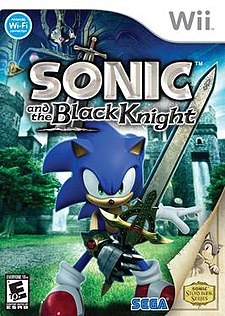
So that's about it for Sister Sonic. It's an idea that never got off the drawing board, and we lamentably had to wait until 2009 to get a glimpse of a hedgehog wielding a sword, and then until 2008 to get a Sonic RPG.
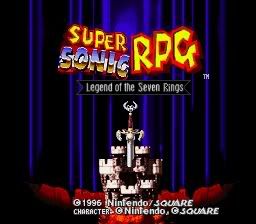
I made this image years ago and HA just noticed that I changed it from Seven Stars to Rings
*I'll tell you the story of Nihon Falcom in the near future

[revisitation note: I never did tell you the story of Nihon Falcom in the near future, but they were the developers of Ys: The Oath in Felghana. Remember, my GOTY 2013?]

Monday, February 17, 2014

Is violence necessary to every game? Destructoid says yes. (A revisitation)

at 7:41 PM
Is violence necessary to every game? Destructoid says yes. originally ran on February 13th, 2013.

I posit that the writer of said declaration has an IQ less than 100 and/or is at least somewhat autistic.

What a smashingly adult way to start an argument!

Let me try this again. Destructoid published a piece called "David Cage is Wrong: Violence Is Essential". Based on the title alone (forget who David Cage is for a second), I immediately conclude that both the author of the article and the editor of the site are patently retarded. Wait... gay? Is that a more mature personal attack? Okay. They're fairies.

I don't give a shit who David Cage is. I don't really know, except that I just Wikipedia'd, but it doesn't matter. I've never cared for industry talking heads; if you can't say your ideas in a game (or if I can't figure out what games you ever made), you aren't succeeding as a developer. See Peter Molyneux or Warren Spector. Miyamoto too, just so you don't think I'm being racis'. People who cite lofty ideas despite being totally disconnected from the current state of the medium - and likely far past their prime (I'm certainly not saying Miyamoto isn't like, one of the most important figures in gaming history, just that I don't really give a shit what he has to say in an interview in 2013). Anyway, Cage was at some conference that I also don't give a shit about, making some speech about violence being unnecessary to the gaming medium and how there are more stories to tell beyond that. Destructoid writer Allistair Pinsof objected.

Violence in games has been a major media talking point in the last few months (even more so than it's been for the past two decades) due to outrage over violence in reality. Certain factions are pointing their guns at guns, others are pointing their guns at video games. I'm not gonna "go there" on this blog, because I don't like politics or the need to have an opinion on everything. However, the discussion typically provokes a (violently!) defensive reaction from gamers about how something something something I don't care. I'm as (violently!) opposed to censorship as the next man, but that doesn't mean I have to like gaming's obsession with murder. But it's important not to blur this line: my dissatisfaction with death-obsession in games is purely from an artistic standpoint. Nothing I say on the subject is motivated by political stances or real-world consequences.
ChexQuest was banned in over thirty-two countries for its brutally realistic portrayal of cereal-on-blob violence
I don't know why I even have to say it (I don't), but violence is not essential to making an effective game.  I like plenty of violent games and think they can be both excellent and emotionally/cognitively evocative (Dishonored). I just don't think that every game has to be violent. Mr. Pinsof makes an argument to the contrary, revolving around the notion that games derive their purpose (among artistic media) from immersion, and that immersion is enhanced to its maximum potential by violence. What I've just done I call dividing. Now allow me to conquer.

It's nice that games are immersive. Truly, genuinely nice. It's one of the nicest things about them. Pinsir's unstated definition of immersion seems to incorporate interactivity, so, okay, I'll give 'em that. And I'll even agree that games do it best (to date), although I don't think it necessarily makes them an evolution of film/literature any more so than football is an evolution of theatre. Here's what gets me. Immersion is a tool, not an end. It's a technique that can be executed to various degrees in order to convey a story. That story may be in the hands of the player or it may unfold around them; it may be dictated or emergent. But the story (or the thematic content, or the idea, if you will) is what drives the presentation and the interactivity. You don't play a game to be immersed in something stupid or that you don't like. That is to say, a successfully believable and fully interactive game can still be a complete failure if it's hollow at the core.

As for the second claim, that violence enhances immersion to a degree unreachable through any other means? That's just plain yikes. I guess maybe if you define reality by whether or not you can shoot things (Pinsof's introduction actually does imply that he uses this definition), fine. You're absurdly removed from any productive discussion of the issue if that's the stance you're going to take. It's utterly subjective. What if I define my reality by whether or not I can fuck everything? Or whether I can make it into a sandwich? There are just no bounds on this. Without jumping to the completely ridiculous conclusion that violence is the most engaging action possible, I don't even know how you can start down the road of believing it's "essential" to games. I don't have a definition or scale or test of immersion factor, nor does Pinsof present one in his article, so the argument basically swirls away down the drain at this point.
Splatterhouse, according to Destructoid, achieves a level of immersion unavailable to such paltry works as Portal and The Longest Journey
Expounding on the connection between violence and immersion, Pinsof occasionally stumbles through the same galaxy as a good idea, but immediately uses his conclusion to prove his argument. He claims that pressure, tension, and threats enhance immersion, and this can be exceptionally true (see horror games like Amnesia). He then jumps straight on through to associate these things inseparably with violence. Again I feel like I'm countering a child here because this is such a shallow and short-sighted argument. What about threats like time? Making a wrong decision? Destroying a relationship? The threat of insignificance and obscurity? The false equivalence of threat==violence simply speaks of an individual who hasn't put even the slightest amount of thought into what makes a game work - or, very likely, someone who hasn't played very many games.

The closest thing he has to an interesting point, which he never leaps on, is that the potential for violence can unequivocally contribute to interactivity. A game that lets you do anything is more immersive, right? Actually, I'm not buying that one either. Not even for a dollar. Control without limitations is liberating, but can easily destroy the fragile suspension of disbelief that allows us to enter a game world. Mario shouldn't be allowed to pick up a machine gun. I don't believe he would. If he did (or could), I'd quickly lose my investment in whichever game I was playing. To experience a work, we have to allow it to be created, and in creation inherently develop rules. In the previous sentence inherently develops a grossly unnatural grammatical formulation.

You know what was always my least favorite part of essays? Conclusions. The funniest part of the aftermath on Destructoid itself (where few-to-no readers came to Pinsof's defense) was that Pinsy claimed "duh guys it's just an opinion piece!" Someone's never heard of a thesis.

Oh, and I didn't provide a link to the article because honestly, it's too stupid for you to waste your time. The writing is vapid and there's no attempt whatsoever to provide an analytic argument. So, in short, the same as every other article published by the mainstream gaming press.

Wednesday, November 27, 2013

Learning to love traditional JRPGs (A revisitation)

at 8:41 PM
Learning to love traditional JRPGs originally ran on April 24th, 2013.


One of my newest video game friends, Retro Game Challenge, has taught me a lesson I didn't expect to learn. This lesson is that maybe I can like traditional turn-based JRPG?
One of my favorite Japanese turn-based RPGs is Star Prince
Challenge is structured as a literary anthology of eight fictional '80s-styled games, each deriving heavily from a real-world classic. See this post for more discussion of the overarching narrative that explains why you're playing them. The games are presented one at a time, each with four challenges that must be completed  before the next game is revealed. Each unlocked game can be revisited at will, as the challenges usually do not include seeing the ending. The eight retro games, in order of play, are:

Cosmic Gate (based on Galaga, ex. challenge: get 200,000 pts)
Robot Ninja Haggleman (based on Ninja JaJaMaru-Kun, ex. challenge: beat level 4 without dying)
Rally King (based on R.C. Pro-Am (I think), ex. challenge: complete course 2 in 5th place or higher)
Star Prince (based on Star Force/Star Soldier, ex. challenge: beat the boss of level 2)
Rally King SP (modified "special edition" of Rally King)
Robot Ninja Haggleman 2 (very similar to RNH, with larger levels and harder enemies)
Guadia Quest (based on Dragon Warrior, ex. challenge: reach level 10 with all characters)
Robot Ninja Haggleman 3 (based on Castlevania II/Ninja Gaiden, ex. challenge: kill 100 enemies)

These capture the most popular genres of NES-era gaming, as well as some of their key evolutions. Star Prince introduces scrolling to shoot-'em-ups, Haggleman 3 adds linear progression (instead of looping) to platforming, and Rally King SP adds nothing at all to Rally King. As I discussed in the previous feature, being forced to play each game for a certain amount of time (long enough to complete the challenges) makes the new games feel like exactly that: new games. Even players coming into Challenge without existing knowledge of what's to come will be primed on the "upcoming" releases by the fake in-game Famitsu/Nintendo Power pastiche, creating a sense of anticipation.

To this end, the game I most avidly awaited was of course the last to be unlocked, Haggleman 3. The first two Hagglemans are too basic for my taste; as arcade-style platformers, they share more in common with Son-Son or Mario Bros. than what we now consider the defining work of the genre, Super Mario Bros. Plus I fucking love adventure platformers like Castlevania II and Wonder Boy III. Unfortunately, what I do not love is traditional turn-based RPGs like Final FantasyDragon Warrior, and Ultima III. I've tried to weather a number of these games and simply don't have the patience for it, nor do I derive much pleasure from incessant turn-based battling. But Retro Game Challenge gave me no choice: if I wanted to play Haggleman 3, I was going to have to stomach at least a few hours of Guadia Quest

What's shocking is that this dangling carrot was all I needed to become engaged in Guadia Quest, to the extent that I didn't even put it down after unlocking Haggleman 3. Up til that point, I had been playing Challenge as a curiosity, not because I particularly needed a refresher on retro gaming - I already play NES games on a near-daily basis. I wasn't expecting to come away with any greater understanding or appreciation of these game-types - after all, I hold games from the '80s in equally high esteem as those from the '10s. So it came as something of a surprise that an archetype I had already felt decided upon would take on new life in this form. But has Guadia Quest really changed my feelings on early JRPGs? Does enjoying this one mean  I'll suddenly be able to plumb new depths of Breath of Fire and Phantasy Star?
One of the coolest parts of Retro Game Challenge is that it includes full manuals for these fictional "classics"
I suppose first we need to ask how much Guadia Quest actually has in common with the classics - how well it would fit were it released in 1988, as Challenge posits it was. I'm not gonna run through the JRPG trope list in detail - let's just quickly summarize. These games feature quests to save the world, over-worlds full of random battles, towns as shelter/restocking/healing/save points, maze-like enemy-filled boss-topped dungeons as levels, turn-based battles, rigid immutable class systems and character growth, and Java+++ scripting language. Guadia Quest happily ticks all those boxes. Fixed-strength encounters communicate to the player what party level they should be at to conquer each location, experience and gold is scaled to battle difficulty such that tougher victories are better rewarded, and there's even a very light monster capturing system. Save-anywhere is a convenient feature NOT found in most of the classics, though save states are so common these days that it doesn't feel unusual to a retro-player in 2013. The difficulty curve is steep, with frequent death leading to multiple replays of each section. The player's party is made up of a warrior-type (high attack, no magic), a paladin (moderate attack and healing/defensive spells), and a black mage (low attack/defense, powerful offsensive spells), which is about the most basic assortment known to man. Implied die rolls decide whether each attack hits, criticals, or misses. 
"A", "B", and "Z". Boy this guy was creative with his character names. Mine were "You", "Womp", and "Yaky"
If Guadia Quest makes significant modifications to the JRPG formula, I don't know the formula well enough to notice. So it's not the gameplay itself that made the difference. It has to be something about the circumstances that led me to like this RPG yet reject Phantasy Star IV - and that's intentionally "like", not "tolerate". I think it's one particular sequence of challenges that changed the way I approached the game. The first is to reach Level 10 with each party member, a simple task of grinding as familiar to a gamer as the neckbeard on their chinny chin chin. This facilitates a sort of aimless, goalless wandering, where it doesn't really matter where you go or what you see, because you're always getting closer to your goal. There is some freedom of choice in that the player can try to survive a handful of high-level encounters or safely power through dozens of easier ones, but the goal remains abstract. It doesn't really matter which way you go.

The following challenge requires the player to obtain 1000 gold. As each battle comes with a monetary reward, this at first seems the exact same as the previous objective. But this treasure-hunt in fact highlights the adventurous nature of the genre, reminding me more of Dark Souls than Final Fantasy V. The need for greater rewards than victory-pennies (I think that was a kenning!) centers the experience around defying immediate danger in order to make it as far as possible on individual expeditions, always trying to make one more step on failing legs rather than giving up your progress by using a town portal. La-Mulana was another adventure that kindled this same spirit; the notion that powering up cannot in and of itself be an end. The difference between this type of play and run-of-the-mill grinding is that each quest for treasure has its own binary metric of success: you either find the gold, or you don't. There's no in-between, no reward for making it halfway. It brings life, purpose, and risk to each step forward. "Can I make it across the room without running into a random battle?" "Is it worth setting myself back 500 gold to get better equipment to survive deeper into the dungeons?" Like Dark Souls, there's a weight to failure - continue to screw up, and you're going to be sinking more and more gold into revival and healing items, which pulls you further and further from your goal. There's also an exhaustibility to rewards - you can't collect the same treasure chest twice, so you have to forge on to new territory.

I'm honestly not sure how well this immediacy will be preserved when I inevitably retry a classic I had previously dismissed (probably gonna be Phantasy Star III). True, it's simply a matter of mindset and didn't involve any real change to gameplay, but I was also being externally motivated to think that way. If I had a blog, you might be able to follow how well this experiment goes. Unfortunately, I don't :(

Tuesday, November 26, 2013

Right is Right: In defense of the Sacred institution of right-only scrolling (A revisitation)

at 7:52 PM
As the holidays approach, we'll be seeing the typical down time around GNG. In the past I've handled down time with dead air and a pointer to the archives, but considering our extensive history of poorly-wrought material, I've decided to try a new technique: reruns. Hopefully the unearthing of these godforsaken aberrations doesn't give birth to a sort of Lovecraftian apocalypse as mankind is slowly unraveled by their primeval horror. Either way, enjoy!

Right is Right: In defense of the Sacred institution of right-only scrolling originally ran on March 19, 2013


In recent years, the long-standing tradition of right-scrolling has come under attack from all sides, challenging its relevance and historical justification and suggesting that the definition of side-scrolling should be expanded to a more egalitarian, direction-neutral practice.

The forces behind leftward scrolling have gained power in contemporary culture and are now, pardon the strong language, trying to shove it down our throats. For those of you blissfully unaware, left-scrolling refers to a 2D setting in which the primary direction of horizontal navigation is left. You may be familiar with such delinquency from Bit.Trip Flux or Super Mario Bros. 3 (Stage 5-3). I don't know what kind of weirdo is into this sort of thing, but it isn't normal, bread-loving Americans such as myself. I would be caught dead (?) before I would be caught engaging in this kind of anti-natural behavior.

The work of Satin
If we allow left-scrolling, what will be next? Diagonal scrolling? Scrolling into the screen? Before you know it, every side-scroller cult is going to demand their 'right' to acknowledgement. Proponents claim that left-scrolling is the business of left-scrollers alone - that they should be allowed to do what they want, because it has no effect on right-scrollers not involved. My reply to this is: what kind of impression are we leaving for our children? Do we want to raise them in a world where they're bombarded with images of scrolling in every direction? Where they're assured that it's perfectly "normal" to scroll left, or even worse: that they're the weird ones for wanting games that scroll right?

Some have suggested that we permit left-scrolling, but slightly alter the name, that perhaps it doesn't have to be called scrolling at all - left-inclined games can be afforded the same civil rights (!) as right-scrollers, while being shuffled into a different category. This, however, fails to address the underlying issue, that perfectly solid, well-designed levels are being corrupted by the (probably Jew-backed) media proliferation of the unnatural practice of going left. Think of what Yoshi's Island could have been, had it not been so thoroughly perverted by left-scrolling advocates. If we legitimize this practice by legally observing left-scrolling in any form, by any label, we're taking yet another leap toward the cultural downfall of this once-grape nation. Kirby's AdventureMega Man 2Sonic the Hedgehog - these games are tainted and devalued every time we stand idly by while games like Zelda II and Ninja Gaiden 3 include left-scrolling levels.


God defined side-scrolling as movement starting at the left side of an environment, towards the right side. From the dawn of history, every culture has observed this same basic definition. The founding fathers specifically wrote in their diaries that only upstanding games like Mega Man were intended by the Constitution.

I get that a bunch of you out there are degenerates. I get that the world needs a broom closet somewhere to shove you guys, and I get that most of the time, that broom closet is the Internet. But just because you now have a forum where you can pretend someone cares about your thoughts and your weird proclivities (they don't), doesn't mean you have to spew that shit all over my games.

It all seriousness though, I can't stand left-scrolling levels. They give me goddamned brain cancer.