Showing posts with label mickey mouse. Show all posts

Tuesday, February 18, 2014

Game game game of the Yeaaaaaaaaaaaaar Awards!!!!!!!!!!!! Part 1

at 6:54 PM
I totally forgot that I wrote 50% of this back in December then it got shelved during the hiatus. So it's time for...........

Game game game of the Yeaaaaaaaaaaaaar Awards!!!!!!!!!!!! 2013 Ed.


Alright. I know I'm excited. So in order to make this extra pointless, this year's GNG Game game games of the Yeaaaaaaaaaaaaar will be chosen from games new to me in 2013, not necessarily games that were published in 2013. Think of it more as a selected selection of selections, the cream of the crop of a creamy year of gaming, the choicest cut of many fine meats I've enjoyed playing. This isn't supposed to be an objective evaluation of these games or a means of rating them, it's just a way to recognize and point out to you the viewer some selections that you should ABSOLUTELY GO PLAY RIGHT NOW WITHOUT ANY HESITATION WHATSOEVER. Every game listed below comes with a 100% unmitigated endorsement, and I'll even be so kind as to tell you a little bit about why. 

Since this is more a recommendations ceremony than an awards ceremony, each game is only eligible for a single mention. Anyway, there's nothing more annoying than reading through an awards presentation and seeing "Mass Effect 3 is the best RPG of the year, Mass Effect 3 is the best story of the year, Mass Effect 3 is the best racing game of the year". I get it. You like Mass Effect. Seriously, 75% of the past five years' "of the year" awards around the web have been dedicated in some way to Mass Effect. You could say the series has had a............................................. SHIT EFFECT. Zinged ya!

Genre that is just okay: Best Platformer

Aw I'm just kiddin' ya guys. I love platformers! I guess? They are definitely a genre that is okay to play that reveals a lot of interesting ideas about stage design, something that carries over into just about ANY type of game, but they're primitive and thus my interest tends toward the scholarly rather than the funarly.

#2: Castle of Illusion Starring Mickey Mouse, Xbox 360, Sega Australia Ltd., 2013
The game does a fantastic job of laying out 2D paths without making them look 2D
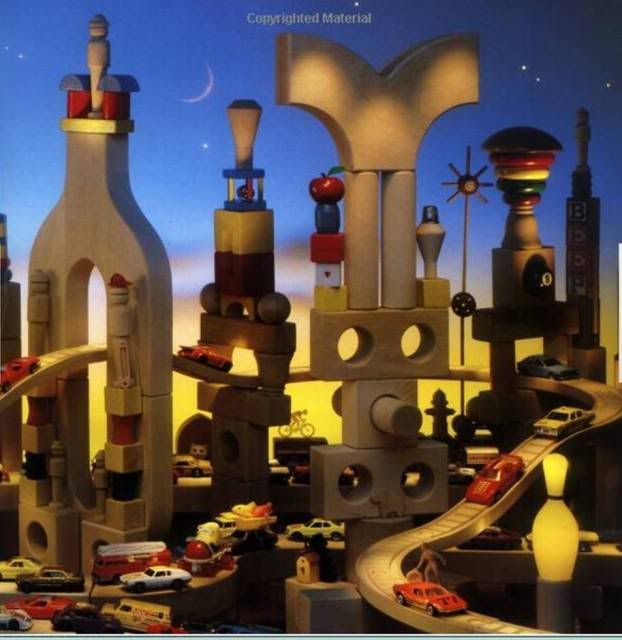
I've already gone on quite a bit about how much I love this game, but I do love this game. IT'S FUCKING MAGICAL, OKAY? I don't give a shit about the original or Mickey Mouse, I don't even particularly care for Fantasia. This was just a singularly atmospheric, gorgeous journey. It made me feel like I was actually exploring a land of colorful ghouls and giant globs of gelatin with detail after detail after detail. It sounds cliche, but everything in the game is just so overflowing with personality. It finally occurred to me what it reminds me of - those old I Spy books, with their photographed arrays of toys and trinkets arranged into surreal landscapes. The cotton-ball clouds, the cookie cookies, the playing card towers all pop with a realism that makes you feel as tiny as Mickey appears onscreen. The platforming itself is a litany of playful gimmicks that may not be Donkey Kong Country-precise, but work exceptionally well in further developing that sense of a real space without needing the crutches of hyper-realistic physics or octopus rifts.

#1: Sonic Generations, Xbox 360, Sonic Team, 2011
Got places to go, gotta follow my rainbow!
In a blaze of cat, Sonic returns to America for the first time in the 21st century for the best racing action platformer on feet that you never thought you've played before. Sonic Generations is a really satisfying game both to explore and to master, and you'll master it as you explore. It makes the trademark Sonic speed refreshing by varying its application from stage to stage without artificially varying gameplay mechanics - the level design gives clear focus to everything from "supersonic platforming" to "supersonic mazes" to "supersonic murder" without needing transformations or team mechanics or a gigantic lineup of eleven furballs. I don't begrudge the other games their gimmicks (well, some), but there's a certain elegance to Sonic Generations - that you can visit each era of Sonic's history and get a taste of the gameplay that characterized it while still playing as the same character with the same mechanics. Maybe it only works because 20 years of game design has been condensed into a 6 hour campaign, but hey, it works. And it only gets more gratifying as you learn the ins and outs of each level and push yourself to play faster and faster.

Kill 'em til they're dead: Best Shooter

Shooters are a genre that have really changed a whole bunch over the ages. Where once we had Gradius, now we have Fark Rye. Some people pretend those are different genres. For the point of this, it doesn't really matter, does it?

Honorable Mention: Kid Icarus: Uprising, Nintendo 3DS, Project Sora, 2012
Kid Uprising gets a mention for having some terrifically fun rail-shooting action, but I can't give it a wholehearted, unmitigated recommendation because of the weird 3rd-rate action stages that make up the bulk of the game. I'm not the first to say it, but the game just does not control like a third-person game should control - and when I say "should", all I'm suggesting is that I "should" feel in control of my perspective and my movement in relation to that perspective. But the auto-scrolling levels are solid (if easy) and I can't help but fawn over a game that does 3D rail-shooting. It's a genre that's existed for like twenty years and only seen like twenty games! The stereoscopic 3D looks great as well, it really gives the action a more dynamic feeling over games like Sin & Punishment, actively contributing to playability by allowing targets to be easier distinguished, grouped, and prioritized. Area-of-effect and melee attacks just feel more... distinguished when playing in 3D - you can literally better see the space they take up. IIRC (in IRC) whatsisname said they weren't making another one anytime soon, and I'm usually not a guy to demand sequels, but I really wish Sora or Nintendo or someone would take these on-rails levels and make them into a full-length game. I promise it's at least going on my to-do list for next week if no one else gets to it sooner.

#2 Saints Row: The Third, Xbox 360, Volition, 2011
Liking this game doesn't exactly make me feel awesome about myself, as it's buried in perhaps the most moronically obnoxious presentation imaginable, but it's about as fun as a sandbox shooter can get. At first I pined for the full destructibility of Volition's earlier triumph, Red Faction: Guerilla, but as I played more I realized there was a certain satisfaction to be found in adapting havoc to Row's rigid city structure. Combined with the visceral and punishing third-person shooting, the world encourages players to get creative with their tactics. I guess using a pick-up truck as a battering ram to scatter a gang and ducking behind a building to lob grenades while waiting for the helicopter cavalry to show up just never got old for me. I appreciate a game that gives me the satisfaction of "realistic" weapons and physics (like baseball bats and grenade launchers) but throws them into utterly preposterous setups - like riding around in a tank on a helicarrier and shooting down jets. There's a great balance here between something totally over-the-top like Vanquish, which completely removes the player from reality for its absurd shenanigans, and something totally gritty and down to earth like Sleeping Dogs, which doesn't let the player indulge in the violence.

It's hard to express exactly what makes this game good. All the hype I read (before having played it) and even the above just comes across as "yeah, but isn't that every sandbox game? how is that different from GTA?". But every shooting/driving sandbox I've played before Saints Row (certainly every one made by Rockstar) is totally undone by a foundation of shit mechanics. Their hearts are in the right place but their heads are up their asses. Saints Row: The Third would be good even if it was a totally linear mission-oriented game (see Red Faction: Armageddon for essentially that) and that's what makes it work in an open world. You'll just have to take my word for it. Or fuck it, whatever.

#1 Capsized, XBLA, Alientrap, 2011
I was almost disappointed when I first saw the look of Capsized, only because I said "goddamnit, this was my idea for a game world!"
Yup, it's imperfect. Yup, it's raw. Yup, that works just damn fine. Capsized manages to combine the what-the-shit chaotic physics nonsense of a game like Red Faction: Guerilla or Worms with the strategic tension and ammo management of Resident Evil 4 with the atmosphere and methodical hunting of Metroid. How well do all those things mesh? Really weirdly! And that makes for a game that doesn't play quite like any other. It may seem to share gameplay with the brain-dead Bad Bots or be inferior to the carefully-wrought Bleed or lack the laborious architecture of Shadow Complex, but Capsized wields an awesome free-spirited naturalism that emancipates it from the oppressive digital nature that we typically treasure in "precise" games. Beyond the loosely mazey level design, the mechanics are imbued with a large factor of randomness. And that ratchets up the tension and makes the insane array of tools at the player's disposal feel a little more welcome. Capsized is a great game because it's not pure playground, it's not "Grand Theft Auto in spaceballs" - it forces the player to focus the absurdity of the action to an end. Lives and ammo are in short supply for each stage, so this isn't pure fucking around. The player needs to be able to gauge when to deploy method and when to deploy mayhem, and how to try to take control or at least recover once things inevitably get out of hand. That does a pretty good job making them feel like an astronaut lost in an alien jungle overflowing with way too much life.

I'm bored just talking about it: Best RPG

I had a huge resurgence in RPG popularity this past year. What I'm trying to say is that I have not liked RPGs for a long time and in 2013 all of a sudden I played like a thousand and was really lovin' 'em. It all goes back to Retro Game Challenge's Guadia Quest, a game that showed me that with a limited scope, I could actually still love a JRPG. I even took a slight detour into roguelikes and had a good time with Shiren the Wanderer before fully circumnavigating the globe back to that seminal WRPG classic, Ultima VII. But floating (or skyrocketing) to the top of that list we had....

#2 Crimson Shroud, Nintendo 3DS, Level 5, 2012
The game had a really fun script and made just the right amount of winking nods to its D&D origins
A short RPG?! Perish the thought! In fact, 2013 taught me that short RPGs are the way 2-B. I assume nearly every mechanic in Shroud is straight outta Dungeons and Dragons, but as I'm barely familiar with tabletop rules (I have one round to my name) I can only credit it all to the game. Shroud's got a neat terse tale to tell, following the old tradition of short/scary stories that are built entirely around one big reveal. There's no need for bullshit lore and an endless backstory to every character - it's all about moving the pieces forward to that big curtain-pull. That's just plain fun, and the handful of battles along the way are unique and challenging and follow the same mentality of stripping out the chaff. Only do anything once - and that'll make Shroud that much more fun a game to revisit. 

#1 Phantasy Star IV, Sega Genesis, Sega AM7, 1995/1993(JP)
So I have to admit that part of my love affair with Phantasy Star IV simply amounts to being swept off my feet. I wasn't ready to like a 16-bit JRPG. But Phantasy Star succeeded because it was fast and funny and kicked me in my emotional nuts before I was ready, and all the painfully cliche fantasy storytelling tropes were saved until the point where a character could react to an ancient apocalyptic prophecy with "Aw, man!" and I could feel exactly the same words echoing in my brain. The dialogue is dopey and innocent but heartfelt, genuine, and just witty enough to cut down any building fatigue. It helps that the biodome paradise scifi future has a truly unique look that escapes cliches of hyper-techno, post-apocalyptic, or utopian futurism, and that the gigantic battle sprites show off tons of memorable detail. Phantasy Star IV is, simply put, a one-of-a-kind adventure spanning beautifully developed worlds and starring a cast of unforgettable characters. That's all I want out of an epic, and as an epic this game shines.
The anime-style cutscenes add a great deal of personality and drama to the story, far more than is achieved in bland talking-headPGs like those made by Square
The battle system is solidly engaging with a nice large-scale challenge structure oriented around managing HP and TP (health and magic). There is a real satisfaction to surviving a dungeon with genuine risk/reward built into the exploration, thanks to the extremely sparse magic restoratives and revives. Definitely no grinding (early Final Fantasy) or training wheels (later Final Fantasy) here - success is driven by careful management of skills, not statistical advantage. It's not an absurdly hard game per se, but every victory feels earned. You've got to give it up for a game with such a neat way of handling random map battles (not gonna spoil it) that doesn't excise them entirely but somehow makes their triviality exciting. 

------------------------------------------------------------------------------------------------------------
Come back tomorrow to see my top picks released in 2013 as well as my overall TOP 3 GAMES OF THE YEAR!!!!!!!!! Will GTAV make a sweep? Super Mario Bros.? Or will it be the underdog Flappy Bird in the top spot? You'll have to wait and see!

Tuesday, November 12, 2013

What I'm Playing, October '13

at 7:19 PM
In this feature, we commemorate games I have for the first time started and finished in the last few highly variable time units.

Alright gonna blast right through this because I forgot to fill it in at the end of October. Things got hectic with moving week and all.

Special Recognition for Starting and Finishing:

NAM-1975 (NeoGeo)

NAM-1975 belongs to that very small subset of shooting galleries like Wild Guns and Cabal that utilize an onscreen character, aka arcade third-person shooters - a class of games that I love and wish hadn't died after Sin & Punishment. NAM is credited to SNK and strongly reminds me of Metal Slug, though, as Slug was developed six years later by ex-employees of Irem, I doubt the games shared much personnel. Still, they both nail that perfect level of difficulty between reflex and memorization that I've colloquially labeled "fun". It's hard to describe what exactly makes an action game satisfying without just listing what it's not; it's not pure reflex, it's not pure memorization. At the highest level, there's something about learning to recognize certain setups and how enemies will organically and spontaneously interact to create threat patterns, and through failed attempts and experimentation developing high-level strategies to combat those emergent challenges without needing to know exactly what's coming when. To become skilled at the game, you memorize setups and strategies then reflexively identify situations and match them to tactics, rather than memorizing a sequence of spots on the screen to occupy and targets to shoot, or individually processing every single bullet and relying on reflexes for every move.

For instance, in the first level of NAM-1975, there's this water part. I've learned that the highest priority enemies are boats (and if you shoot the boats the riders will die), the second highest are choppers, and the lowest are swimmers. I've learned to dodge roll, not to run, because the angled bullet fire comes in quick bursts. I've learned not to take the Balcan (machine gun) rather than the Flamethrower, because the flamer has too little ammo and leaves me unable to attack the choppers. None of this has anything to do with knowing where to stand on screen, where to aim, or any specific mechanical inputs. It's all strategic data that I've stored in my head that allows me to intelligently structure a reaction to "there's an enemy" and "here comes a bullet".

NAM's got a blazing pace and plenty of variety, but it does fall short when it comes to boss battles. That's really the only reason it'll never threaten Wild Guns and Sin & Punishment 2 for the position of arcade TPS top-dog - every level ends with the same tedious tuck-and-roll fest, as SNK couldn't come up with any cleverer way to crank up the difficulty than to give the bosses super-fast projectiles.

Games Started:

Pokemon Y (Nintendo 3DS)

And the pacing is officially 'off'. It has now been 16 hours, nearly 120 caught Pokemon, and TWO FUCKING GYMS (at approximately the 8th and 14th hour). Y is chugging along SO slowly. Maybe I shouldn't be stopping to smell and catch every last Roselia, but Christ almighty, every time I think we're ready to move to a town that'll have a gym and give me a real battling challenge, yet another filler dungeon is tossed in. Save it, guys! I'm going to be so burned out by the time I get to the Elite Four that you can call me, uh, Flareon.

I know, I know. "It doesn't mean anything that gyms are spaced out, that's a completely arbitrary structure that you're forcing on the game based on past experiences". That's true. What keeps the trainer journey interesting isn't strictly the idea of a Pokemon Gym every two hours, it's the iterative process of collecting new Pokemon, refining your battling squad, and taking on a concentrated challenge - a test - that allows you to pass through to the next stage of the journey. In the past, those challenges have been represented by gyms. Just because gyms are less frequent doesn't mean the challenge/tests have to be... unfortunately, in Pokemon Y, that's exactly what it means. Thus far the only even remotely structured challenges have been the gyms, and even they have been easy as shit. But outside of that the worst you'll ever see are Trainers with three Magikarps that might know Tackle.
If you're asking: "So, are the Pokemon themselves still getting stupider?", let me just point you to Hawlucha.
I dunno, it's too early to say (which is insane, considering it's been 16 hours), but right now this feels like a game that is strictly made for people who enjoy catching Pokemon, not people who enjoy raising and battling them. But I will give them that there are certainly a shitload to catch and some interesting new tricks to the process, like the ever-annoying Horde battles, more spawning subtleties, a way bigger world with (I think) more optional areas (I say "I think" because I've been going everywhere anyway), and other stuff that's frankly kinda boring to bring up. Not bad stuff, just really specific.

Ultima VII (PC)

I'm not gonna do another first impressions of Ultima VII because I've barely played it since I wrote my first first impressions. I actually hate playing PC games for totally arbitrary reasons: if I've never mentioned before, I don't like sitting at my desk and using a mouse and keyboard, since I do that all day at work. Games are my relaxation time, so I like to be able to sit in bed or on the couch - I've never found a great way for this to mesh with mouse/keyboard (and yes I've tried a lap-desk, and no I don't care for it). Moral of the story is that unless I'm REALLY into a PC game or I'm in some life-phase where I have a lot of spare desk-time (like college), I generally stall after a few hours. If you can't guess from my original article, Ultima VII is probably gonna be one of those cases. The game just fans out so fucking much after that concentrated intro, which isn't a bad thing, it's just an "I have other games to play that are better at keeping me involved" thing.

The Witcher (PC)

Kinda same thing applies here as I just said for Ultima. I actually tried lap-desking this one because I like it so much, but the words are too tiny to read on my TV. I will probably chip away tiny hour-long chunks once a month for the next year until I start forgetting to play it. It doesn't help that I'm having some weird performance issues that I can't even describe well enough to search for on Google - my machine runs the game just fine, but when in free camera mode (i.e. anytime outside of combat) the camera jerks upward every few seconds, really breaking my immersion and making it hard to enjoy looking at the world.

One neat thing I was really enjoying was that the first chapter of the game shakes up the traditional hub structure by spreading the adventure field over the exact same area as the town, relegating night to Danger/Combat time and day to Talking time. The entire act is set in this broad village area with some fields and houses interspersed (there's definitely a term for this and if we were closer to my high school European history days I would know it. Virgate? Kenning?), and during the day, everyone is out and about, frolicking around, giving out quests and selling baubles. When night rolls in, the villagers shut their doors and the ghosts come out, and what was formerly the town area becomes the dungeon. It has almost a Zelda-y feel to it, like the way the towns would shut their doors and the spooks would come out when the sun set on Hyrule/Termina/Hyrule field.

Godzilla: Save the Earth (PS2)

Well, Save the Earth gets a lot of free points for being a fighting game that doesn't immediately feel like the three archetypes (Capcom, Mortal Kombat, and Tekken) we have today. I can't think of any fighting game since Tekken 6, and before that since Brawl, that had me up til 6AM just trying out every last character. But Save the Earth's widely varying roster (and that's just the eight characters I've unlocked) did just that. Aside from some rare camera wonkiness, hard-to-pick-up controls, and a far-too-long arcade mode (~1 hour *if* you win all the fights on first try), there's very little to stop the game from being completely enjoyable. That said, this is a model explicitly designed for disposable fun, so it doesn't exactly promise bottomless depth.

There's a very rock-paper-scissors feel to the fights, with each character mostly oriented around ranged, melee, or grappling attacks. Still, such basic core mechanics leave a lot of room for flashy, distinctive quirks to each character. That's kind of the calling card of the party fighter, and it's also exactly what you want in a tribute game.

As fan service, it's stellar. Even as a neophyte I'm impressed by how loyal the game is to the characters' filmic abilities and styles and how well that's worked into the gameplay. Anguirus uses his spiked back instead of blocking, Mecha King Ghidorah absorbs lazers, Mothra starts as a larva and metamorphoses mid-battle into an imago, Rodan flies instead of walking, SpaceGodzilla is totally oriented around telekinesis, etc. It's more strictly tied to what's been established in the movies than the contriving and occasionally straight-up arbitrary Marvel and DC fighters. Of course, kaiju translate really seamlessly into well-balanced one-on-one fights (I hear they made this famous RPG based on them...) so it's only natural that they all have well-defined and corresponding move-sets. Even in the movies, they pretty much each have a special beam attack, each have a special mode of transport, each have a special throw, etc. The only big disappointment for me is that Kiryu (here called Mechagodzilla III) from 2002's Godzilla x Mechagodzilla is completely lacking its signature Gundam-style detachable shoulder/wrist cannons and backpack. What's up with that? That's the whole point of Kiryu. Though it should be noted I haven't seen the movies featuring about a third of the kaiju, so I can't comment on how loyally presented they are.

Volgarr the Viking (Steam)


Actually started this in September but forgot to cover it. Volgarr is like Ghosts n' Goblins for a new era... in that it's a lot like Ghosts n' Goblins. I actually enjoy the core mechanics more than the GnG series (some have said they hearken back to Super Return of the Jedi) and the individual challenges feel more precise and fairly parsed. That is to say, after you've cleared one screen, you won't continue to be flooded from behind by respawning enemies from that territory.

I don't know if there's a lot else to say about it. It's fun - if you're a fan of Sir Arthur, definitely pick it up.

One note - it's a bit obnoxiously old school in a way that most reincarnations of old quarter-eaters aren't - there's no way to save your progress, neither through passwords or save states. Though the full game could probably be toppled in a half hour by a master, you're going to have to master it to that point to reach the end - though there are infinite continues on hand, unless you've got infinite time to pair with them, you'll have to start from the beginning every time you boot up the game. 

Games Finished:

Castle of Illusion starring Mickey Mouse (XBLA)

A gorgeous finale to a gorgeous game. I love that they managed to make Mizrabel overflowingly cinematic while still retaining the punishing difficulty of the original game's final battle. I'm normally not a fan of talky bosses, as they tend to repeat themselves (The Witcher 2) or distract from the action (Anarchy Reigns), but Sega Australia managed to pace this fight perfectly such that Mizrabel's seamless [flamboyant?] incantation actually makes the rather straightforward platforming boss battle an engrossingly magical moment. I felt like I was playing Fantasia. The voice performance by Nika Futterman as Mizrabel and the crescendoing score by Grant Kirkhope really knock the scene out of the park.

Castle of Illusion immediately joins the ranks of games worth playing just to indulge in audio/visual beauty. I can't think of any game since Baten Kaitos which I have so delighted in witnessing unfold. It's a fun game to be sure, a loving remake to be sure, and even a rare capitalization on the full potential of 2.5D, but what will really stick with me from Castle of Illusion are those menacing saffron storm clouds, the gleaming licorice dragon bursting forth from his swirling river of creams, the orchestral attacks giving way to foreboding tinkling as Mickey was thrown to and fro through watery ruins, and all the other dazzling illusions the castle held. I cannot give a strong enough recommendation for Castle of Illusion, and if you're at all interested in 2D platform design, make sure you check out the original as a companion piece - it sheds a lot of light on just how clever the remake is. 

Thursday, October 10, 2013

What I'm Playing, September '13

at 6:50 PM
In this feature, we commemorate games I have for the first time started and finished in the last few highly variable time units.

Fall at last. What a delightful treat. I've played a lot of Disney games this month for no particular reason besides that Castle of Illusion and DuckTales Remastered came out on XBLA. So, that's clearly the reason. But no other particular reason. Once I got going on the old Sega and Capcom games, it was hard to stop - they're almost universally excellent.

Special Recognition for Starting and Finishing:

Castle of Illusion starring Mickey Mouse (Sega Genesis)

Here starts the legendary coupling of Sega development studios and the Disney license. I've had trouble uncovering much information on Emirin, Thomas Yuuda, and the rest of the team behind Castle, but this was certainly the start of a good thing. The art and sound design are top-notch, the platforming is spot-on, and the Disney magic is there.

The game just has great atmosphere. It communicates both Mickey's wonder at experiencing these fantastical worlds - and his fear. Many environments are bright, colorful, and lively, yet the fact that such monolithic cheeriness is lined with danger lends the world a false, creepy, mechanical feel. An illusory aspect. This is exemplified by the toy-soldier death squads in the playroom and the dessert world's bizarro carnival music and vertigo-inducing spinning backdrop. The mood varies between scenes; one of the best parts of the game is the quiet clifftop calm-before-the-storm level, hinting at malevolent powers brewing while also offering a reprieve between the saccharine toy and dessert-themed lands.

The gameplay works fine, but it's unambitious. Compared to Mario, Mickey moves lethargically and floats in the air for ages, but the levels are appropriately paced such that the gameplay as a whole never feels slow. Each level has some identifiable gimmick, but most aren't used to much effect - many are discarded as quickly as they're introduced. So the platforming, while solid, has a bit of a thin feel. It's a journey more than a challenge. But we'll come back to that when we talk about the remake....

World of Illusion starring Mickey Mouse and Donald Duck (Sega Genesis)

This is the sequel/crossover of Castle of Illusion and QuackShot, borrowing a few mechanics from each game but generally keeping the air of a straightforward adventure platformer. Most of the thematic elements and the structure of the adventure derive from Castle, but stuff like the run button, crawling, and stunning enemies are straight outta QuackShot.


While Castle of Illusion isn't tough, World is woefully easy - really the main thing I came away thinking was what a trivially easy game it is. That's particularly disappointing considering that it's short (about 40 minutes - and that was with a number of deaths) and it reuses two (of five) worlds from Castle. The silver lining here is some level variation depending on whether the player chooses Mickey, Donald, or both (2P).

The Magical Quest starring Mickey Mouse (SNES)

Of course, Sega weren't the only ones making good Disney games. Capcom had control of the license on Nintendo platforms and put out a litany of okay platformers and a few great ones too. People like to declare which is objectively better: Magical Quest or Castle of Illusion. I'm going to go with perhaps most basic answer: neither, really. They're both good games, but they're so different that they don't really bear comparison. What I will say is that Magical Quest feels much more like a generic shooter/platformer with Mickey inserted, while Castle of Illusion and the rest of Sega's games feel like they were built as Disney from the ground up.

But character isn't Magical Quest's strength, so who cares. What we get instead is something like Mega Man X meets Bionic Commando meets Super Mario World, in perhaps the safest way possible. Instead of blending these games' mechanics, the developers chose to give Mickey swappable outfits that grant him unique sets of powers, so the game plays like a level from MMX, followed by a level from Bionic Commando, so forth.

That's really not a problem since the individual ideas work so well, particularly the puzzle-shootery Fireman Mickey. FM gets to interact with the environment a lot, pushing blocks around and putting out fires. Little touches, like that flammable objects are relit when they touch other flames (rather than based on a timer) make this segment that much more engaging. I still don't love Climber Mickey, AKA Bionic Commando, but for the duration of one easy level, I can tolerate 'im.

Aside from the Best of Capcom feel, I really took a strong Demon's Crest impression away from Magical Quest. Everything from the music to the art-style to the level design to the boss fights (which are unfortunately a lot easier than Capcom's typical fair) reeks of Crest - the first boss battle is a frickin' Disney Red Devil. The power selection reminds me of Crest as well, as it transforms Mickey's movement abilities in addition to his weaponry.

Games Started:

QuackShot starring Donald Duck (Sega Genesis)

A very mildly adventure-dosed shooter/platformer. QSsDD probably has more in common with Mega Man 7 than Castlevania II, but that's okay. We teach ya. Sorry I'm too tired to write another one of these. It's good. The run-and-stunning is a welcome twist that manages to introduce speed to the scrolling shooter without making it incessantly hard. The challenge becomes to get past an enemy before he gets unstunned. The open-ended structure is pretty minor. As far as I can tell, the second halves of the levels (as each level has an entrance/exit halfway) are stuck to a linear order. It's cool though, it's still more engaging than a completely straight shot like Castle of Illusion.

DuckTales Remastered (XBLA)

This one is exactly what it claims to be. I talked pre-release about the mysterious nature of "remakes" in the contemporary gaming landscape, but there's thankfully no ambiguity to DuckTales Remastered. 3/4 of it is the exact same game as DuckTales. Same environments, enemies, layouts - even the same secrets. The new parts are explicit extensions, like the additional cut-scenes, the new opening stage, and some new mid-level sequences like the Gizmoduck rampage on the Moon. I barely remember playing DuckTales as a child, so this is really my first time with this game.

The most striking thing about the design is how collection-oriented it is - in fact, it's something of a precursor to Donkey Kong Country. There is something hidden on almost every screen, giving the stage design a (sorta literal) second layer. Unlike DKC, DuckTales Remastered is ostensibly quite easy to complete - blowing through the stages while just grabbing the necessities is almost a trivial task, especially once you've picked up one or two life extensions. The majority of the gameplay quickly becomes collection, which is perfectly appropriate for an adventure of avaricious treasure-hunter Scrooge McDuck. Great concept/gameplay synergy.

What's unique about the collection is that most of the game's treasure is hidden in plain sight, but invisible. Thus the challenge isn't to solve puzzles or keep an eagle eye out for secret paths, but to traverse every inch of every screen. The challenge is in finding ways to reach all the boundaries, planning the use of destructible platforms, and navigating around traps and enemies.

It's a neat game that I definitely like (I even eventually warmed up to Remastered's jarring blend of 2D and 3D), but the levels feel long as fuck and kinda not all that varied. If I was allowed to play them in 10-minute sessions instead of 40 minutes at a time, they'd probably be less draining. As is, the five mega-levels feel bloated.

Castle of Illusion starring Mickey Mouse (XBLA)

Wow am I loving this game. As someone who'd barely played the original there wasn't much nostalgic connection for me here (I remember Magical Quest and World of Illusion much more fondly), but it was definitely a wise move to run through the original before getting into the remake. While Castle '13 works excellently as a standalone game, one of its most impressive feats is revising and improving upon the original while still remaining faithful both to its gameplay and intentions.

The original game's level gimmicks had a tendency to fall flat and be completely under-utilized. This remake turns that train around so hard that someone's brain exploded. In fact, each individual mechanic is typically so fun and cleverly utilized that the biggest disappointment is that, like in the original, they never get a second pass or any ongoing development.

For instance, the both games have this gelatin shit that shows up in Toyland. In the original there are a few floors made of the sticky substance that work basically like a clingier quicksand. Mickey sinks slowly into the jello and can barely jump to get out. That's the extent of it - it lasts about thirty seconds and counts less as a mechanic than a thing that just happens. In Castle '13, the red goo again makes a forgettable cameo in Toyland, but it's brought back a second time in Just Desserts. This time, there are blocks of jello positioned throughout the environment and Mickey switches into a kind of swim when he jumps into one, suspended inside of it. They are mixed up with enemies, placed over pits, and used for scaling large vertical shafts. This stage also introduces green gelatin blocks with inverted properties. Instead of sinking into these, Mickey springs off like bouncing on a trampoline. The only way to get through them is to slowly tiptoe in. The multicolored blocks are mixed up for sections where Mickey is thrown around by the bouncy green blocks and caught by the sticky red ones.

It's a great expansion of what was a throwaway idea from the classic game, allowing it to feel like Castle of Illusion while developing completely new platforming ideas. The core concept is the same, it's just that more interesting things are done with it. And that's Castle of Illusion '13 in a nutshell.

Games Finished:

Killer Is Dead (Xbox 360)

Don't know if I have anything new to say about this at the moment, plus how do you expect me to remember something I beat at the beginning of last month. The ending was interesting - it had a nice unpredictable but inevitable twist that shed considerable light on the story and will make a second playthrough even more entertaining.

I have to be honest - as the difficulty of the game peaked, I found myself tiring with the gameplay. By endgame, the No More Heroes games were so dead-set on throwing curve-balls and skipping straight to boss-fights that it was impossible to get tired. By comparison, Killer (and likewise Lollipop Chainsaw) is happy to let the formula run all the way to the credits, essentially feeling like a game with no final act. It has a very "that's it?" ending. It's in keeping with overall sobering of the Suda style that Killer exemplifies, but this is one of the places where being more like popular/critical favorites is a shortcoming rather than an improvement.

Wild Guns (SNES)

Player: I am Clint the invincible!

Final Boss: I can't believe being defeated by you!


Amazing game. One of the best on the SNES, probably one of my favorite action games of all-time. Play it.

Mario Golf (Game Boy Color / 3DS VC)

Mario Golf is interesting in that, although it's the first (to my knowledge) Mario sports game, it has little in common with later spinoffs. In particular, where the later games (particularly in the Gamecube era) became wacky over-the-top arcade-style "sports" games, akin to NFL Blitz, Mega Man Soccer, and Base Wars, the original Mario Golf is for an intents and purposes a serious golf sim. While it features no real locations or golfers, it otherwise aspires to teach the fundamentals of golf and provide a reasonable and realistic (for Game Boy) simulation experience.

That is, until the first set of credits roll. Returning to the game after conquering all four courses, the player will find a final challenge: face off against Mario in the Mushroom Kingdom Club Tournament. The MKCT, or M...T for short, doesn't change the gameplay from golf bread-and-butter, but it certainly makes the holes as wacky as possible without breaking the laws of reality. Star bunkers, microscopic greens, and fairways shaped like Shy Guys - Camelot had fun with it and put together a goofy bonus round that pays homage to the Nintendo great and makes a neat reward - and challenge - for players who put the time in to make it through the main circuit.

Undoubtedly the strangest moment in the campaign comes when the player returns to his home clubhouse after vanquishing the Mush...ament. The powers that be, or whoever, sit down for a somber, sobering debate about whether the world is ready to learn that Mario has been defeated (in golf). The conclave concludes that the news should be leaked slowly, for to reveal that Mario has lost would be to destroy every golfer's goal to conquer the unconquerable. In the immortal words of Tom Never-Talks-At-Any-Other-Part-Of-The-Game, "Golf without a dream is no golf at all". I got the weird feeling that they were telling me not to tell my friends I had beaten the game.

Thursday, September 26, 2013

When reviews are objectively wrong, or Just try the demo

at 8:43 PM
It's kind of a mystery to me that people take reviewers' word for anything when demos these days are so widespread that half the time you can try-before-you-buy - in the case of download-only titles, particularly on XBLA, you ALWAYS get a trial.  I personally only read reviews before buying if I'm extremely suspect of a game (and I take them with a grain of salt bigger than Carl Weathers' biceps) - otherwise I usually wait til after playing to see what the community reaction has been. Even when there's no demo, many simple questions can be answered by YouTubing a walkthough or (god forbid) Let's Play of the game.

Take, for instance, this month's release of Castle of Illusion starring Mickey Mouse. I grabbed the demo, liked it, and put it on my to-buy shelf behind a few other games. After voicing my positive opinion to Greg L., he was taken aback, having heard about the game's "terrible" and "laggy" controls. Not having read the reviews myself, this puzzled me - the game doesn't have laggy controls. They're as immediately responsive as DuckTales: Remastered or Super Meat Boy. Say what you will about the game's physics, any insinuation that the controls are unresponsive is flat out incorrect. We could get out a lazer-stopwatch and measure the scant microseconds that elapse between depressing the A button and seeing Mickey jump onscreen.
Investigating the complaints more, it appears that the purported control delay is an actual bug in the PC version of the game, which was released before the PS3 and 360 versions. Bizarrely (or predictably), review outlets apparently either disingenuously cross-posted their PC reviews, or were influenced by the early feedback on the game and cognitive dissonanced themselves into believing there was lag. Or the bug was specific to review copies, and I don't even think review "copies" of downloadable games exist, so that seems farfetch'd. Or the bug was patched out day one, which I also find difficult to accept, as the 360 always notifies the user when a patch is downloaded, and I saw no such notice.

What it comes down to is simple: if there's a demo, play it. See for yourself. There are certain objective qualities to games that are often inaccurately reported because of weird review circumstances or the influence of a reviewer's predisposition - that is to say, a reviewer who hated a game overall is more likely to accuse it of having an intolerable framerate or unbearable loading times. There's no reason to take anyone's word for these things.

It's truly disappointing that such a small non-issue has tainted the debut of Castle of Illusion, as I fear the tepid critical response (a 69 Metacritic average verges on outright condemnation in the 70-90 world) may dull the enthusiasm for a sequel to this lovingly crafted and beautifully executed game. There's no question that we've given the critical community too much power in deciding games' fate. I scoff at the notion that the press is in the pocket of publishers, as the correspondence between glowing reviews and high sales has a much simpler explanation - gamers are scared to make decisions for themselves.

Tuesday, September 24, 2013

The two (and a half?) sides of 2.5D - how to capitalize on depth

at 6:23 PM
2.5D is one heck of a silly-ass term introduced in the PlayStation era to describe the 2D gameplay set in a 3D environment featured in games like Klonoa, NiGHTS into Dreams, and Kirby 64. More recently the term has been applied to Trine, New Super Mario Bros., 'Splosion Man, and dozens of others. It's a bit ironic - in the fifth generation, the 2D gameplay was conservative and the 3D graphics cutting edge, while in the seventh generation, it's the 3D visuals that are the norm and the 2D playing field that subverts expectations. Anyway, I mostly just said that to prove that I know what irony is, cuz no one does anymore. Even complaining about people not understanding irony has become cliche. How ironic.

See that time I used it wrong.

2.5D did exist in some sense before polygonal graphics - I'd say it's not too much of a stretch to say that parallax scrolling (Moon Patrol, Sonic the Hedgehog) is its predecessor. Parallax similarly strives to 

Man I just had to go bitch out Wikipedia for the terrible article it has on 2.5D. Don't go there, it's ugly. The page looks like a Frankenstein's Monster of unrelated articles on isometric graphics and pseudo-3D with a teeny tiny paragraph acknowledging actual 2.5D games as we know them today. If you do go, make sure to check out my bitchin' takedown on the Talk page. See, I'm an armchair armchair Wikipedian. That is to say, one can edit Wikipedia without getting out of their seat. But I don't even do that much. I just yell on the Talk pages at the actual productive editors that they're doing it wrong. But seriously, who has time to do all that research? Let a monkey do it. Did you know that infinite monkeys given infinite cheeseburgers will inevitably produce the entire content and discussion pages of Wikipedia? This is a known scientific fact. The real question is: who's cooking the cheeseburgers? Or wait, by the infinite monkey clause, are the infinite monkeys also guaranteed to produce infinite cheeseburgers the same way they wrote Hamlet? In that case maybe it'd be easier just to do hamburgers.

Where was I? Goddamnit why did I stop mid-sentence for that? Okay. Parallax. Parallax scrolling is the adjustment of the scroll-rate of distant objects to create a 3D perspective using only 2D objects. You knew that though. When 3D models turned real, they became the preferred method for displaying 3D environments (shocking!), though 2.5D didn't really take off because 2D gameplay was simultaneously going out of vogue. With 2D's recent resurgence in popularity, 2.5D games are probably even more common than strict 2D, as these days 3D visuals are actually easier to make decent-looking on TVs than are 2D sprites.
2.5D is very popular with modern fighters
I've gotten into the bad habit of spending a few paragraphs just defining my terms and thus wasting a lot of time before getting to my actual point. It's because I don't know who the audience of this blog is. I want it to be accessible, but it's almost a prerequisite for interest in this discussion that you've played 2.5D games... in which case you likely already know what 2.5D is, so you don't need me to explain it. Hey looks like this is one of those articles with running commentary - sweet!

Even the most primitive 2D games use some approximation of 3D - any game with a backdrop has extended its world beyond a strict 2D plane. Super Mario Bros. shows us hills, clouds, and castles beyond our reach. The limitation of 2D is not a graphical one, but the very distinction between the field of play and the field of observation - traditionally, the foreground and the background. Tantalizing players with beautiful vistas and distant ruins can enhance their engagement with the world, so one of the great appeals of 3D gameplay is the ability to reach those places - the unification of the entire game world into a continuous, playable space. A player who is free in all [three] dimensions can strive toward that distant castle and everything else they see, limited only by real environmental boundaries like walls and cliffs. 2.5D offers a chance to bridge the gap between these modes - to use a two-dimensional field of play to span a three-dimensional space. While this keeps movement comfortably in the 2D realm, the plane of movement itself can wind through the third dimension.

Surprisingly, most 2.5D games do not capitalize on this opportunity. Games like Little Big Planet, New Super Mario Bros., and Donkey Kong Country Returns retain the traditional 2D distinction between background and foreground. 3D visuals endow the backgrounds with more depth than is achievable strictly in 2D, but the field of play remains as limited as ever. Check out an example from DuckTales: Remastered: 
Gameplay starts at 1:45. Observe all the background objects that Scrooge can never reach. The game takes place entirely on a flat plane parallel to the screen.

This type of game remains strictly left-to-right and is really just a visual upgrade (or downgrade, if you're of that opinion) to 2D. The player's involvement in the world isn't enhanced because the dissonance between playable and observable space is retained. Prepare for a mind-blowing MS Paint graphic I made to illustrate this type of world-thickening:
The distinguishing factor of this kind of 2.5D is the continuous depth of the background.
You can see that the only difference between 2D and this approach to 2.5D is a parallax-plus-one filling-in of empty space between layers - these are very much 2D games with 3D graphics. The camera still shows only one side of the action and the environment.

More ambitious 2.5D games take advantage of their 3D worlds to eliminate this wasted space. The 2D plane of play loops and twists through a logical 3D environment, allowing the player to fully explore (in a guided fashion) everything that they see. Check out the recent Castle of Illusion remake:
Gameplay starts at 0:20. Watch how Mickey's paths curve around to span the entire room.

This type of intertwining movement can also be seen in games like NiGHTS, Goemon's Great Adventure, and my personal favorite 2.5D game: Klonoa 2: Lunatea's Veil. Note how these - like full 3D games - only bound the player's exploration with physical barriers. There is an invisible dimensional limit on movement that forces a fixed left-right path through the world, but the end result looks like a trace of any given run of Super Mario 64 or Bubsy 3D. The camera moves along with these curved paths, keeping the player parallel to the screen - in doing so it swoops and rotates to show us many different sides of the game space. Back to MS Paint:
Convoluted image, but hopefully you can see I'm trying to represent that the plane of player movement bends within a fixed area. The camera angle at any given point can be represented by the normal vector of the plane.
The drawing in this post gives a different view of the same situation. We can see that, removing the presence of time, a 2.5D game like Klonoa is actually identical to a 3D game. Of course, we can't remove the presence of time (or at least, I can't - I don't know if I have any Tralfamadorians among my readership), so the experience is distinct. But it's also distinct from classic 2D, in that, although the gameplay could be spread out over a flat plane, the game world could not be flattened with it. 

The term 2.5D seems often to be considered a superficial distinction, as evidenced by its application to these two very different styles of presentation. While there is certainly no right/wrong, good/bad here, it seems clear to me that the latter Klonoa-derived category are indeed games attempting to bridge the gap between 2D and 3D, while the former are just glorified 2D. Don't get me wrong, I love 2D. But 2.5D has the potential to portray a space of greater depth and complexity, which expands the applicability of 2D gameplay to more realistic world models.