I finished the game over the weekend at the same time as doing Sonic 3 & Knuckles Chaos Emeralds, so some stuff blurs together. Probably anything good I say has been misattributed from the latter. I believe I left off after Flying Battery.
Press Garden is certainly the strangest of the new zones, whirling together snowy European architecture and the internal machinery of a printing press. It's a bit of fantastic surrealism more akin to Castle of Illusion than Sonic's typical Indiana Jones / circuit board dichotomy, colorfully realized all the same. Doesn't hurt that it sets the scene for some traditional gears-and-conveyors concrete design without resorting to the factory cliche. Act 1 is corridor-based (putting it in the Marble Zone genre) with the first really fresh-feeling gimmick, the bouncy conveyors - which I could've used a whole lot more of - along with an own goal-style boss battle set in a dynamic arena full of destructible environments!!. I like the idea of the crabbot enemies playing catch with saw blades, a rare enemy-enemy interaction, but in practice they're meaninglessly simple to defeat. Act 2 has a great breakable block theme that slows things down and adds new consequences to careless jumps. There's a nice inverse relationship between ice springs and ice spikes, fleshing out the concept into one of the best levels in the game.
Onto Stardust Speedway, where prospects continue to look sunnier. Unless I'm misremembering my Sonic CD, Act 1 is far remixier than those preceding, incorporating gimmicks far and wide (e.g. pull-strings from Marble Garden Zone). The use of spring cannons couldn't be a clearer ripoff of Donkey Kong Country, but hey, it's new to Sonic. Regardless of context, reviving material from CD is far more palatable than giving a ninth life to every blade of grass from Sonic 2, which left me imagining how much cooler it'd be to have a Gems-style remix drawn entirely from lesser-played adaptations like Advance and Rush. CD has been largely reclaimed as series canon, not least thanks to Whitehead's own 2011 widescreen port, and it would be nice to see the treatment spread further. This is where, for all that Mania presents itself as a love letter, it's very strictly fenced into the Totally Uncontroversial Popular Narrative (that Sonic == Genesis) and shows no interest in exploring the darker corners of the franchise beyond a wiki search for "polerbear". Mania wants to forget Sonic Heroes as badly as does MadHistoricalYoutubeFriend. This isn't the Sonic sequel that could've happened in 1995 - it's the Sonic tribute game that could've happened in 1995. The only reasonable points of comparison are the other reboots, leaving Mania looking terribly unambitious. Consider that Sonic Generations' best stage comes from Sonic the Hedgehog '06 - that's an impressive achievement. That's something new. Taking the best source material and making a good game of it is fine. It's safe. Taking the worst material and making a good game of it is inspiring.
Alright I'm getting sidetracked again. Back to... Hydrocity Zone? Really? Hydrocity? What's the rationale behind the selections here? Even as the self-appointed patron saint of the water level, the only justification I could conjure here is that water levels are a part of Sonic games, and here is the least bad selection. That's not a great reason to include something in your game. That the top path plays itself can't be blamed on dumbing down, as it's equally boring (though infinitely gracious) in Sonic 3. The new submarine boss here is great, another variation on the why-are-you-hitting-yourself formula, and the other Eggman encounter is cute, but characteristically forgettable. Surplus charm astride a void of substance.
This is the point at which Mania's overarching structure becomes distressing: we were doing one zone per game, roughly chronologically, and now we're starting to meander in the opposite direction. Optimally, here is where the old zones would exeunt, leaving Mania free to define its own personality, bursting forth from the remains of its ancestors. Unfortunately, here is where it instead decides to retrench.
One last glimmer of hope before the implosion, Mirage Saloon brings out a bright new aesthetic that deserves better gameplay pairing. We've had deserts before, but not this kind of American West ecosystem, and it's immediately a natural fit with the cartoon flavor of the characters. It's a shame Act 1 is spent rehashing the biplane variety stage, one of the series' least flexible recurring gimmicks that was only just resurrected (and also terrible) in Sonic 4: Episode II. The big handguns in Act 2 aren't notably different from the spring cannons in StarSpeed and the water spritzers are yet another non-interactive cutscene gimmick.
Here follow three old zones in a row, seemingly chosen at random, and the experience completely decoheres. I'm just playing a romhack at this point. I can't be bothered to discuss them individually, though Oil Ocean does bring the neat juxtaposition of Sonic 3's fire barrier with Sonic 2's most flammable terrain. Again, it would be even neater if S4E2 hadn't just done the exact same thing. Lava Reef I couldn't tell apart from & Knuckles, but I may've been half asleep by that point. Metallic Madness scores points with a funny joke where Sonic is thrown into the background layer to 'simulate' tininess, but where are the raps? And, though this has no effect on the quality of the game, I noticed around this point that Tails' path-finding seems to have taken a major hit in the Retro Engine. He frequently gets stuck behind a corner and incessantly jumps. Brain damage from all the near-death drownings?
Finishing it off is Titanic Monarch, certainly the highlight of the game and really the only part that's even remotely challenging. I like the use of the catapult spheres from the S&K bonus stages - they're loosely free-form yet present enough technical space to rehearse precise approaches, and they pause the action without sacrificing momentum. The warp labyrinth takes the familiar structure of the looping maze and tweaks the presentation with discrete endpoints - as someone who has always hated the falling loops of e.g. Sandopolis Zone, I found this to be a major success of spatial grounding. Does Robotnik have KEK banners tho? Wtf?
I died a couple times on the final boss; once in Oil Ocean 2 thanks to poison gas; and a bunch of times due to cheap crush collisions in Chemical Plant 1. This is an easy game which can mostly be conquered on first attempt*. The special stages are surprisingly strategic, the kind of design that improves on what was accomplished in 1994 while restraining itself to the same vocabulary, though I don't know if I have the enthusiasm to repeatedly find them. I ended up with four Emeralds. I didn't mention the return of the E-102s, but in context it's hard to care. They're lost in the noise of all the other boss fights.
Sonic Mania doesn't really illustrate to me that you can still make a good classic Sonic - nor the converse. What it does illustrate is that you can repackage content from classic Sonic and successfully sell it, and maybe this should've been expected from a team whose resume consists entirely of fangames and ports. Predictable or not, this strikes me as a bad lesson, and if the inevitable Mania 2 includes any recycled content at all ("hey, how come they never remade Press Garden Zone? that's a classic!"), I'll be leaving it on the shelf. If it's entirely new material I'll probably bite - about half the original stuff here was solid. For longtime fans, Generations and Sonic 4 are more challenging, more original, and more respecting tributes. For new fans, just play Sonic 1-3&K, they're on virtually everything for a combined price near Mania's and hold up extremely well. Just remember that it's okay to die and start over; this is not an "old-school flaw", and the second time is often even more fun than the first. If you've played those to death, then you've already played Mania. Maybe try Socket.
*My subsequent Tails run ended with 39 lives to spare, and would've been closer to 55 had I not gotten lazy on the OOZE2 boss. This is a very easy game.
Showing posts with label sonic. Show all posts
Showing posts with label sonic. Show all posts
Monday, February 19, 2018

Thursday, February 15, 2018
Then I started Mania, and yeah, this is only after Green Hill Zone, but it is hard to escape the profound feeling of *what is the point?*

|
at 12:00 PM | sonic sonic mania |
And yeah, this is only after Chemical Plant Zone, but it is hard to escape the profound feeling of what is the point?. CPZ:A2 is God's gift to anyone wanting to demonstrate that popular Sonic is pure hold-rightism. It introduces new gimmicks left and right but never fucking stops for a second to let me interact with any of them. It's like a caricature of the boring cutscene pipes first introduced in... Chemical Plant Zone Act 2 Version 1.0! And come on, are all the Act 1s going to be 90% cloned from the originals? Why not jump straight into the new stuff? Two zones in, they already feel like filler.
Finally with Studiopopolis Zone we enter fresh territory. I don't want to judge the new material too seriously on first pass, though I think it's fair to say Studio P. is essentially a reflection on Carnival Night. Both have the floating bumper formations, and the sproingy things feel like a less interesting version of Carnival Night's balloons, all globbed together without any suspension. The falling stage lights aren't really threaded throughout the level either, though they at least provide some self-sustaining challenges. Hold-righting is still in excess but not nearly as bad as CPZ2, and certain layouts like the revolving bumper crescent seem to be used repeatedly without development. I had no sense of an overarching structure of the level, but that's exactly the kind of conclusion I don't expect to be able to draw after a single run.
I don't think I can construct a paragraph about Flying Battery. It was... there. Was the only new gimmick the trash chutes? That's not really an idea. It really cannot be overstated how boring these re:Act 1s are. The Sonic franchise reuses settings a lot - too much, in fact, and this trend was set as early as Emerald Hill Zone - but that can be interesting in its own way. New aesthetics and audiovisual styles can be reinvigorating, fresh mechanics can recontextualize old challenges, and elements can be rearranged in novel or ironic ways. Even at their most derivative, sequels like Sonic 4 and Generations get some juice from the former two principles. Mania, locked into its traditional pixel art and player mechanics, needs to rely entirely on the third, innovating in the stage design. Not only does it fail to do so, it happily chooses not to try. Old layouts and challenges are copy-pasted exactly from their source material.
Looks the same, plays the same, is the same. It's a surreal experience, like Gus van Sant's notorious shot-for-shot Psycho remake, to be playing something that's exactly the same but cost fresh money. It's insulting too, and I'd prefer to believe The CW made this call to meet restraints on the schedule or budget, because otherwise it's extremely cynical as a comment on just how brainless gamers are. While critics and audiences joined voices in a collective Fuck You to Psycho '98, Sonic Mania has been greedily consumed and enthusiastically praised, leaving one to wonder if such cynicism on the developer's part would indeed be ill-placed. I'm being pretty harsh, but keep in mind that these duplicated levels constitute an entire third of the game, and the Act 2's aren't terribly impressive themselves.
Finally with Studiopopolis Zone we enter fresh territory. I don't want to judge the new material too seriously on first pass, though I think it's fair to say Studio P. is essentially a reflection on Carnival Night. Both have the floating bumper formations, and the sproingy things feel like a less interesting version of Carnival Night's balloons, all globbed together without any suspension. The falling stage lights aren't really threaded throughout the level either, though they at least provide some self-sustaining challenges. Hold-righting is still in excess but not nearly as bad as CPZ2, and certain layouts like the revolving bumper crescent seem to be used repeatedly without development. I had no sense of an overarching structure of the level, but that's exactly the kind of conclusion I don't expect to be able to draw after a single run.
I don't think I can construct a paragraph about Flying Battery. It was... there. Was the only new gimmick the trash chutes? That's not really an idea. It really cannot be overstated how boring these re:Act 1s are. The Sonic franchise reuses settings a lot - too much, in fact, and this trend was set as early as Emerald Hill Zone - but that can be interesting in its own way. New aesthetics and audiovisual styles can be reinvigorating, fresh mechanics can recontextualize old challenges, and elements can be rearranged in novel or ironic ways. Even at their most derivative, sequels like Sonic 4 and Generations get some juice from the former two principles. Mania, locked into its traditional pixel art and player mechanics, needs to rely entirely on the third, innovating in the stage design. Not only does it fail to do so, it happily chooses not to try. Old layouts and challenges are copy-pasted exactly from their source material.
Looks the same, plays the same, is the same. It's a surreal experience, like Gus van Sant's notorious shot-for-shot Psycho remake, to be playing something that's exactly the same but cost fresh money. It's insulting too, and I'd prefer to believe The CW made this call to meet restraints on the schedule or budget, because otherwise it's extremely cynical as a comment on just how brainless gamers are. While critics and audiences joined voices in a collective Fuck You to Psycho '98, Sonic Mania has been greedily consumed and enthusiastically praised, leaving one to wonder if such cynicism on the developer's part would indeed be ill-placed. I'm being pretty harsh, but keep in mind that these duplicated levels constitute an entire third of the game, and the Act 2's aren't terribly impressive themselves.
Tuesday, February 13, 2018
Revisiting lost Sonics: 4E2 & Triple Trouble
|
|
at 12:00 PM | games sonic sonic 4 sonic triple trouble |
I finally got a run at the legendary Sonic 4: Episode II. My main response is wow, that really is the worst fucking title. Not only is it awkward and generic, it's extremely misleading - I'd have played the game five years ago had I not foolishly read into the subtitle the implication that there would be any relationship whatsoever to Sonic 4: Episode I. Seriously, even after hearing Golem's praise, my reaction was always "yeah but it's still Sonic 4, how much better could it be?". But it's still Sonic 4 insofar as Mega Man X8 is still Mega Man. It has the same map screen, and the same rebootish relationship to Sonic 2 as Episode I has to Sonic the Hedgehog, but that's about it. Not even the graphics are in the same style. How is this not Sonic 5?
Who would play Episode I with its Dimps-brakes and unflinching fixation on homing attack and say, "yes, obviously Episode II will completely throw out the physics engine and quadruple the player mechanics, and oh, it'll also be a direct sequel to Sonic CD"? The gameplay additions make perfect sense as reflection and growth - the physics were weird and everyone complained about them, the new mechanics are Tails-based, and homing attack was a fun but flat way of interacting with things - they just feel buried in an "Episode II". Especially considering that in between 4.1 and 4.2 was a totally different 2D reboot (Generations), and after 4.2 is yet another (Mania). It's actually kinda disappointing; I'd be more interested in Sonic 4: Episode II: Episode 2 than with more Maniac Sonic or Classic Sonic. How 'bout a Chaotix spinoff?
Anyway I thought it was quite good, enough so to do Chaos Emeralds and Red Rings (another thing grabbed from somewhere in the series not called "Sonic 4"). The partner actions are a solid expansion of the design space without feeling too contrived or gimmicky: flight is grounded in the long history of Tails-only runs, cartwheel is a neat spindash variant, and swimTails is itself a flight variant. There are segments that foreground the abilities, but plenty of places to improvise too, so they make for a nice harmony - not always in the spotlight, but always present. And the level concepts often bounce off them directly (e.g. Windy Desert Land). It took about 15 straight deaths on the final boss to realize I was actually supposed to be using Tails for everything - playing without still feels do-able and natural, yet playing with instantly makes sense. It's the best way for mechanics to co-exist. I feel like this is exactly what Colors should've been, and it's odd to see in an iteration that has no business being so experimental. Apparently reviewers hated this, because the abilities weren't activated by holding right. "Slows down too much to make you think" was an actual review.
I liked the bosses as well. They feel out of sync with the rest of the series (the idea of tweaking an old boss is right there in 4.1, but 4.2's versions are "tweaks" the same way Ninja Gaiden '04 is a "tweak" on Ninja Gaiden '88), but in a way that draws from the added complexity of the mechanics. There's an unusual degree of dynamism in the settings and counterpoint in the attack patterns (in fact, counterpoint is a very foreign idea to the Sonic boss). They feel inspired by Contra and Rocket Knight more than anything in Sonic history.
The visuals are a mixed bag. Definitely the oddest element to change, though I gather it was done to take advantage of the relaxed constraints of non-WiiWare platformers. As far as I can tell, 4.1 had pre-rendered sprite backgrounds based on polygonal models which are now lighted and rendered real-time in 4.2. Personally I find the new style to lack the personality and vibrancy of its precursor, but I'll admit an irrational bias toward pre-rendered 3D models. Up for no debate is that Sonic's animations look far more fluid and natural this time.
The Chaos Emeralds were scary easy, and the first set I've ever done (I like that both 4.1 and 4.2 say "let's take the old minigames and remove the random bullshit" and that's perfectly effective), and along with Red Rings are a good excuse to see some of the non-scrub routes. Metal Attack isn't much, just a hard mode for a handful of 4.1 stages, but as a free bonus it's hard to complain. Metal Sonic has a great PSHHHHH jumping sound effect.
Before moving on to Mania I figured I'd give Triple Trouble a go. Even if no one likes it, I expected to gain valuable insight into the origins and motivations of Knack the ? which could be pivotal to appreciating his contemporary rebirth. I'm guessing the main criticisms are that it's too easy and there's slowdown, because I beat Eggman with 5 lives and 4 continues to spare on my very first attempt, and the water stages in particular feel like that time we learned what it's like to play Bonk 3 while being sucked into a black hole. Those issues aside, it is rather refreshing to play a Sonic game that has its own levels and ideas (Gemini Man fish eggs!), even if they lean toward the one-dimensional, and it's equally interesting to see reliance on self-propulsion (rather than constant springs and spinners) that brings the pace and exploration closer to the original than any of the sequels. It reminds me of Super Mario Land 2 in that sense - single-minded design that prioritizes going outside the box over depth, and mechanics that function as a solid simulacrum of the parent games, but still ultimately a simulacrum. For someone looking for a handheld or 8-bit platformer, it's not a bad pick, but it isn't much more than a curiosity within the franchise at large.
Who would play Episode I with its Dimps-brakes and unflinching fixation on homing attack and say, "yes, obviously Episode II will completely throw out the physics engine and quadruple the player mechanics, and oh, it'll also be a direct sequel to Sonic CD"? The gameplay additions make perfect sense as reflection and growth - the physics were weird and everyone complained about them, the new mechanics are Tails-based, and homing attack was a fun but flat way of interacting with things - they just feel buried in an "Episode II". Especially considering that in between 4.1 and 4.2 was a totally different 2D reboot (Generations), and after 4.2 is yet another (Mania). It's actually kinda disappointing; I'd be more interested in Sonic 4: Episode II: Episode 2 than with more Maniac Sonic or Classic Sonic. How 'bout a Chaotix spinoff?
Anyway I thought it was quite good, enough so to do Chaos Emeralds and Red Rings (another thing grabbed from somewhere in the series not called "Sonic 4"). The partner actions are a solid expansion of the design space without feeling too contrived or gimmicky: flight is grounded in the long history of Tails-only runs, cartwheel is a neat spindash variant, and swimTails is itself a flight variant. There are segments that foreground the abilities, but plenty of places to improvise too, so they make for a nice harmony - not always in the spotlight, but always present. And the level concepts often bounce off them directly (e.g. Windy Desert Land). It took about 15 straight deaths on the final boss to realize I was actually supposed to be using Tails for everything - playing without still feels do-able and natural, yet playing with instantly makes sense. It's the best way for mechanics to co-exist. I feel like this is exactly what Colors should've been, and it's odd to see in an iteration that has no business being so experimental. Apparently reviewers hated this, because the abilities weren't activated by holding right. "Slows down too much to make you think" was an actual review.
I liked the bosses as well. They feel out of sync with the rest of the series (the idea of tweaking an old boss is right there in 4.1, but 4.2's versions are "tweaks" the same way Ninja Gaiden '04 is a "tweak" on Ninja Gaiden '88), but in a way that draws from the added complexity of the mechanics. There's an unusual degree of dynamism in the settings and counterpoint in the attack patterns (in fact, counterpoint is a very foreign idea to the Sonic boss). They feel inspired by Contra and Rocket Knight more than anything in Sonic history.
The visuals are a mixed bag. Definitely the oddest element to change, though I gather it was done to take advantage of the relaxed constraints of non-WiiWare platformers. As far as I can tell, 4.1 had pre-rendered sprite backgrounds based on polygonal models which are now lighted and rendered real-time in 4.2. Personally I find the new style to lack the personality and vibrancy of its precursor, but I'll admit an irrational bias toward pre-rendered 3D models. Up for no debate is that Sonic's animations look far more fluid and natural this time.
The Chaos Emeralds were scary easy, and the first set I've ever done (I like that both 4.1 and 4.2 say "let's take the old minigames and remove the random bullshit" and that's perfectly effective), and along with Red Rings are a good excuse to see some of the non-scrub routes. Metal Attack isn't much, just a hard mode for a handful of 4.1 stages, but as a free bonus it's hard to complain. Metal Sonic has a great PSHHHHH jumping sound effect.
Before moving on to Mania I figured I'd give Triple Trouble a go. Even if no one likes it, I expected to gain valuable insight into the origins and motivations of Knack the ? which could be pivotal to appreciating his contemporary rebirth. I'm guessing the main criticisms are that it's too easy and there's slowdown, because I beat Eggman with 5 lives and 4 continues to spare on my very first attempt, and the water stages in particular feel like that time we learned what it's like to play Bonk 3 while being sucked into a black hole. Those issues aside, it is rather refreshing to play a Sonic game that has its own levels and ideas (Gemini Man fish eggs!), even if they lean toward the one-dimensional, and it's equally interesting to see reliance on self-propulsion (rather than constant springs and spinners) that brings the pace and exploration closer to the original than any of the sequels. It reminds me of Super Mario Land 2 in that sense - single-minded design that prioritizes going outside the box over depth, and mechanics that function as a solid simulacrum of the parent games, but still ultimately a simulacrum. For someone looking for a handheld or 8-bit platformer, it's not a bad pick, but it isn't much more than a curiosity within the franchise at large.
Tuesday, February 10, 2015
Sonic Lost World Tropical Coast Zone 2: An Essay About It
Critics and scholars alike have long debated whether Tropical Coast Zone 3 is a level in Sonic Lost World. This is an insightful debate. In this five-paragraph essay following the MLA format and citing at most least one source, one aims to convince the reader (you) that Tropical Coast Zone 3 is a level in Sonic Lost World. Tropical Coast Zone 3 is a level in Sonic Lost World because it has bottomless pits, it takes place underwater, and it has the best musical track in the game.
In an interview with Nintendo World Report, Sonic Lost World Tropical Coast Zone 3 producer Takashi Iizuka said, "It really depends on the stage so it's not that 3DS is putting more emphasis on the wall jumping. It's just that the stages we've selected for E3 happen to put more emphasis on that and the Wii U version will have stages that require wall jumping to proceed as well so they're probably about the same in the emphasis of wall jumping" (Nintendo World Report, 2013). There is no wall jumping in Tropical Coast Zone 3. In fact, the walls are made of water, to which Sonic is deathly allergic. Therefore, there is no wall jumping in Sonic Lost World Tropical Coast Zone 3.
Tropical Coast Zone 3 is also a level because it takes place underwater. You (the player and reader) may observe this because there is a lot of blue and nice little patches of coral. Because the level is shaped like a tube, one may believe that this is the one level in Sin & Punishment: Star Successor. But no, careful examination of the disc in the console yields the game's true title: Sonic Lost World, in which Tropical Coast Zone 3 is a level.
 |
| This level is a ripoff of Sin & Punishment: Star Successor. |
In conclusion, Tropical Coast Zone 3 is a level in Sonic Lost World because it has bottomless pits, it takes place underwater, and it has the best musical track in the game. My side on the debate is that Tropical Coast Zone 3 is a level in Sonic Lost World, and I feel this because it has bottomless pits, it takes place underwater, and it has the best musical track in the game.
Tuesday, February 18, 2014
Game game game of the Yeaaaaaaaaaaaaar Awards!!!!!!!!!!!! Part 1
I totally forgot that I wrote 50% of this back in December then it got shelved during the hiatus. So it's time for...........
Game game game of the Yeaaaaaaaaaaaaar Awards!!!!!!!!!!!! 2013 Ed.
Alright. I know I'm excited. So in order to make this extra pointless, this year's GNG Game game games of the Yeaaaaaaaaaaaaar will be chosen from games new to me in 2013, not necessarily games that were published in 2013. Think of it more as a selected selection of selections, the cream of the crop of a creamy year of gaming, the choicest cut of many fine meats I've enjoyed playing. This isn't supposed to be an objective evaluation of these games or a means of rating them, it's just a way to recognize and point out to you the viewer some selections that you should ABSOLUTELY GO PLAY RIGHT NOW WITHOUT ANY HESITATION WHATSOEVER. Every game listed below comes with a 100% unmitigated endorsement, and I'll even be so kind as to tell you a little bit about why.
Since this is more a recommendations ceremony than an awards ceremony, each game is only eligible for a single mention. Anyway, there's nothing more annoying than reading through an awards presentation and seeing "Mass Effect 3 is the best RPG of the year, Mass Effect 3 is the best story of the year, Mass Effect 3 is the best racing game of the year". I get it. You like Mass Effect. Seriously, 75% of the past five years' "of the year" awards around the web have been dedicated in some way to Mass Effect. You could say the series has had a............................................. SHIT EFFECT. Zinged ya!
The battle system is solidly engaging with a nice large-scale challenge structure oriented around managing HP and TP (health and magic). There is a real satisfaction to surviving a dungeon with genuine risk/reward built into the exploration, thanks to the extremely sparse magic restoratives and revives. Definitely no grinding (early Final Fantasy) or training wheels (later Final Fantasy) here - success is driven by careful management of skills, not statistical advantage. It's not an absurdly hard game per se, but every victory feels earned. You've got to give it up for a game with such a neat way of handling random map battles (not gonna spoil it) that doesn't excise them entirely but somehow makes their triviality exciting.
Genre that is just okay: Best Platformer
Aw I'm just kiddin' ya guys. I love platformers! I guess? They are definitely a genre that is okay to play that reveals a lot of interesting ideas about stage design, something that carries over into just about ANY type of game, but they're primitive and thus my interest tends toward the scholarly rather than the funarly.
#2: Castle of Illusion Starring Mickey Mouse, Xbox 360, Sega Australia Ltd., 2013
I've already gone on quite a bit about how much I love this game, but I do love this game. IT'S FUCKING MAGICAL, OKAY? I don't give a shit about the original or Mickey Mouse, I don't even particularly care for Fantasia. This was just a singularly atmospheric, gorgeous journey. It made me feel like I was actually exploring a land of colorful ghouls and giant globs of gelatin with detail after detail after detail. It sounds cliche, but everything in the game is just so overflowing with personality. It finally occurred to me what it reminds me of - those old I Spy books, with their photographed arrays of toys and trinkets arranged into surreal landscapes. The cotton-ball clouds, the cookie cookies, the playing card towers all pop with a realism that makes you feel as tiny as Mickey appears onscreen. The platforming itself is a litany of playful gimmicks that may not be Donkey Kong Country-precise, but work exceptionally well in further developing that sense of a real space without needing the crutches of hyper-realistic physics or octopus rifts.
 |
| The game does a fantastic job of laying out 2D paths without making them look 2D |
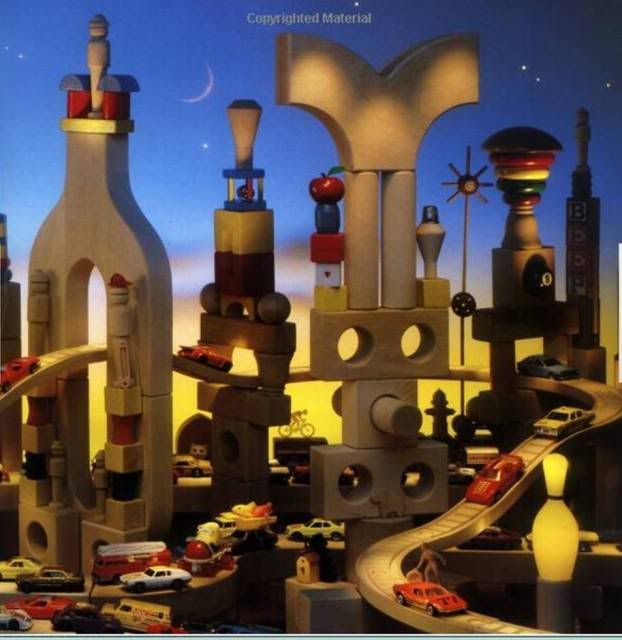
#1: Sonic Generations, Xbox 360, Sonic Team, 2011
In a blaze of cat, Sonic returns to America for the first time in the 21st century for the best racing action platformer on feet that you never thought you've played before. Sonic Generations is a really satisfying game both to explore and to master, and you'll master it as you explore. It makes the trademark Sonic speed refreshing by varying its application from stage to stage without artificially varying gameplay mechanics - the level design gives clear focus to everything from "supersonic platforming" to "supersonic mazes" to "supersonic murder" without needing transformations or team mechanics or a gigantic lineup of eleven furballs. I don't begrudge the other games their gimmicks (well, some), but there's a certain elegance to Sonic Generations - that you can visit each era of Sonic's history and get a taste of the gameplay that characterized it while still playing as the same character with the same mechanics. Maybe it only works because 20 years of game design has been condensed into a 6 hour campaign, but hey, it works. And it only gets more gratifying as you learn the ins and outs of each level and push yourself to play faster and faster.
 |
| Got places to go, gotta follow my rainbow! |
Kill 'em til they're dead: Best Shooter
Shooters are a genre that have really changed a whole bunch over the ages. Where once we had Gradius, now we have Fark Rye. Some people pretend those are different genres. For the point of this, it doesn't really matter, does it?
Honorable Mention: Kid Icarus: Uprising, Nintendo 3DS, Project Sora, 2012
Kid Uprising gets a mention for having some terrifically fun rail-shooting action, but I can't give it a wholehearted, unmitigated recommendation because of the weird 3rd-rate action stages that make up the bulk of the game. I'm not the first to say it, but the game just does not control like a third-person game should control - and when I say "should", all I'm suggesting is that I "should" feel in control of my perspective and my movement in relation to that perspective. But the auto-scrolling levels are solid (if easy) and I can't help but fawn over a game that does 3D rail-shooting. It's a genre that's existed for like twenty years and only seen like twenty games! The stereoscopic 3D looks great as well, it really gives the action a more dynamic feeling over games like Sin & Punishment, actively contributing to playability by allowing targets to be easier distinguished, grouped, and prioritized. Area-of-effect and melee attacks just feel more... distinguished when playing in 3D - you can literally better see the space they take up. IIRC (in IRC) whatsisname said they weren't making another one anytime soon, and I'm usually not a guy to demand sequels, but I really wish Sora or Nintendo or someone would take these on-rails levels and make them into a full-length game. I promise it's at least going on my to-do list for next week if no one else gets to it sooner.
#2 Saints Row: The Third, Xbox 360, Volition, 2011
 Liking this game doesn't exactly make me feel awesome about myself, as it's buried in perhaps the most moronically obnoxious presentation imaginable, but it's about as fun as a sandbox shooter can get. At first I pined for the full destructibility of Volition's earlier triumph, Red Faction: Guerilla, but as I played more I realized there was a certain satisfaction to be found in adapting havoc to Row's rigid city structure. Combined with the visceral and punishing third-person shooting, the world encourages players to get creative with their tactics. I guess using a pick-up truck as a battering ram to scatter a gang and ducking behind a building to lob grenades while waiting for the helicopter cavalry to show up just never got old for me. I appreciate a game that gives me the satisfaction of "realistic" weapons and physics (like baseball bats and grenade launchers) but throws them into utterly preposterous setups - like riding around in a tank on a helicarrier and shooting down jets. There's a great balance here between something totally over-the-top like Vanquish, which completely removes the player from reality for its absurd shenanigans, and something totally gritty and down to earth like Sleeping Dogs, which doesn't let the player indulge in the violence.
It's hard to express exactly what makes this game good. All the hype I read (before having played it) and even the above just comes across as "yeah, but isn't that every sandbox game? how is that different from GTA?". But every shooting/driving sandbox I've played before Saints Row (certainly every one made by Rockstar) is totally undone by a foundation of shit mechanics. Their hearts are in the right place but their heads are up their asses. Saints Row: The Third would be good even if it was a totally linear mission-oriented game (see Red Faction: Armageddon for essentially that) and that's what makes it work in an open world. You'll just have to take my word for it. Or fuck it, whatever.
#1 Capsized, XBLA, Alientrap, 2011
Yup, it's imperfect. Yup, it's raw. Yup, that works just damn fine. Capsized manages to combine the what-the-shit chaotic physics nonsense of a game like Red Faction: Guerilla or Worms with the strategic tension and ammo management of Resident Evil 4 with the atmosphere and methodical hunting of Metroid. How well do all those things mesh? Really weirdly! And that makes for a game that doesn't play quite like any other. It may seem to share gameplay with the brain-dead Bad Bots or be inferior to the carefully-wrought Bleed or lack the laborious architecture of Shadow Complex, but Capsized wields an awesome free-spirited naturalism that emancipates it from the oppressive digital nature that we typically treasure in "precise" games. Beyond the loosely mazey level design, the mechanics are imbued with a large factor of randomness. And that ratchets up the tension and makes the insane array of tools at the player's disposal feel a little more welcome. Capsized is a great game because it's not pure playground, it's not "Grand Theft Auto in spaceballs" - it forces the player to focus the absurdity of the action to an end. Lives and ammo are in short supply for each stage, so this isn't pure fucking around. The player needs to be able to gauge when to deploy method and when to deploy mayhem, and how to try to take control or at least recover once things inevitably get out of hand. That does a pretty good job making them feel like an astronaut lost in an alien jungle overflowing with way too much life.
Honorable Mention: Kid Icarus: Uprising, Nintendo 3DS, Project Sora, 2012
Kid Uprising gets a mention for having some terrifically fun rail-shooting action, but I can't give it a wholehearted, unmitigated recommendation because of the weird 3rd-rate action stages that make up the bulk of the game. I'm not the first to say it, but the game just does not control like a third-person game should control - and when I say "should", all I'm suggesting is that I "should" feel in control of my perspective and my movement in relation to that perspective. But the auto-scrolling levels are solid (if easy) and I can't help but fawn over a game that does 3D rail-shooting. It's a genre that's existed for like twenty years and only seen like twenty games! The stereoscopic 3D looks great as well, it really gives the action a more dynamic feeling over games like Sin & Punishment, actively contributing to playability by allowing targets to be easier distinguished, grouped, and prioritized. Area-of-effect and melee attacks just feel more... distinguished when playing in 3D - you can literally better see the space they take up. IIRC (in IRC) whatsisname said they weren't making another one anytime soon, and I'm usually not a guy to demand sequels, but I really wish Sora or Nintendo or someone would take these on-rails levels and make them into a full-length game. I promise it's at least going on my to-do list for next week if no one else gets to it sooner.
#2 Saints Row: The Third, Xbox 360, Volition, 2011

It's hard to express exactly what makes this game good. All the hype I read (before having played it) and even the above just comes across as "yeah, but isn't that every sandbox game? how is that different from GTA?". But every shooting/driving sandbox I've played before Saints Row (certainly every one made by Rockstar) is totally undone by a foundation of shit mechanics. Their hearts are in the right place but their heads are up their asses. Saints Row: The Third would be good even if it was a totally linear mission-oriented game (see Red Faction: Armageddon for essentially that) and that's what makes it work in an open world. You'll just have to take my word for it. Or fuck it, whatever.
#1 Capsized, XBLA, Alientrap, 2011
 |
| I was almost disappointed when I first saw the look of Capsized, only because I said "goddamnit, this was my idea for a game world!" |
I'm bored just talking about it: Best RPG
I had a huge resurgence in RPG popularity this past year. What I'm trying to say is that I have not liked RPGs for a long time and in 2013 all of a sudden I played like a thousand and was really lovin' 'em. It all goes back to Retro Game Challenge's Guadia Quest, a game that showed me that with a limited scope, I could actually still love a JRPG. I even took a slight detour into roguelikes and had a good time with Shiren the Wanderer before fully circumnavigating the globe back to that seminal WRPG classic, Ultima VII. But floating (or skyrocketing) to the top of that list we had....
#2 Crimson Shroud, Nintendo 3DS, Level 5, 2012
A short RPG?! Perish the thought! In fact, 2013 taught me that short RPGs are the way 2-B. I assume nearly every mechanic in Shroud is straight outta Dungeons and Dragons, but as I'm barely familiar with tabletop rules (I have one round to my name) I can only credit it all to the game. Shroud's got a neat terse tale to tell, following the old tradition of short/scary stories that are built entirely around one big reveal. There's no need for bullshit lore and an endless backstory to every character - it's all about moving the pieces forward to that big curtain-pull. That's just plain fun, and the handful of battles along the way are unique and challenging and follow the same mentality of stripping out the chaff. Only do anything once - and that'll make Shroud that much more fun a game to revisit.
 |
| The game had a really fun script and made just the right amount of winking nods to its D&D origins |
#1 Phantasy Star IV, Sega Genesis, Sega AM7, 1995/1993(JP)
So I have to admit that part of my love affair with Phantasy Star IV simply amounts to being swept off my feet. I wasn't ready to like a 16-bit JRPG. But Phantasy Star succeeded because it was fast and funny and kicked me in my emotional nuts before I was ready, and all the painfully cliche fantasy storytelling tropes were saved until the point where a character could react to an ancient apocalyptic prophecy with "Aw, man!" and I could feel exactly the same words echoing in my brain. The dialogue is dopey and innocent but heartfelt, genuine, and just witty enough to cut down any building fatigue. It helps that the biodome paradise scifi future has a truly unique look that escapes cliches of hyper-techno, post-apocalyptic, or utopian futurism, and that the gigantic battle sprites show off tons of memorable detail. Phantasy Star IV is, simply put, a one-of-a-kind adventure spanning beautifully developed worlds and starring a cast of unforgettable characters. That's all I want out of an epic, and as an epic this game shines.
So I have to admit that part of my love affair with Phantasy Star IV simply amounts to being swept off my feet. I wasn't ready to like a 16-bit JRPG. But Phantasy Star succeeded because it was fast and funny and kicked me in my emotional nuts before I was ready, and all the painfully cliche fantasy storytelling tropes were saved until the point where a character could react to an ancient apocalyptic prophecy with "Aw, man!" and I could feel exactly the same words echoing in my brain. The dialogue is dopey and innocent but heartfelt, genuine, and just witty enough to cut down any building fatigue. It helps that the biodome paradise scifi future has a truly unique look that escapes cliches of hyper-techno, post-apocalyptic, or utopian futurism, and that the gigantic battle sprites show off tons of memorable detail. Phantasy Star IV is, simply put, a one-of-a-kind adventure spanning beautifully developed worlds and starring a cast of unforgettable characters. That's all I want out of an epic, and as an epic this game shines.
 |
| The anime-style cutscenes add a great deal of personality and drama to the story, far more than is achieved in bland talking-headPGs like those made by Square |
------------------------------------------------------------------------------------------------------------
Come back tomorrow to see my top picks released in 2013 as well as my overall TOP 3 GAMES OF THE YEAR!!!!!!!!! Will GTAV make a sweep? Super Mario Bros.? Or will it be the underdog Flappy Bird in the top spot? You'll have to wait and see!
Monday, October 21, 2013
No, actually, it's not time to take Sonic out back and shoot 'im
|
|
at 3:47 PM | games sonic video game journalism |

Those Lost World reviews really slid out, huh? Maybe I don't whore the review sites anymore, but they didn't even make headlines on Joystiq or GamesRadar. Wonder if that reflects more on Sonic, or Wii U? Probably also reflects on "don't release your review embargo on a goddamn Friday". Anyway, I'm really shocked to hear that people are finding the game to be highly uneven. That's not the Sonic I knew! I guess we the Sonic fandom have learned to take reviews with a grain of salt.
I feel like the amount of Sonic coverage on this blog may actually lead one to believe I consider myself part of the Sonic fandom. Such is not the case. The above sentiment was to be considered a joke, and at this time it would be appropriate to commence laughter.
After playing through Sonic's recent output, the "it's time to put Sonic to rest" cliche (which I admit I myself parroted for years) feels somewhat exasperating. Like 'em or not, the recent games (Unleashed/Colors/Generations) are clearly driven by some core race-platforming that isn't overwhelmingly common elsewhere, and they're well-made products, even if often misguided. The kind of review and comment section feedback we get for games like Sonic Unleashed and Lost World would make an onlooker think the series has completely fallen to pieces and is vainly clutching at the threads of past glory. In fact, recapturing past glory doesn't appear to be on Sonic Team's radar at all (Generations seemed to evidence that they only care superficially about the old games) - the modern 3D series has an identity all its own (you can argue about the quality of that identity all you want, but it's there...).
It's only the tired "put Sonic to rest" outsider mantra that forces the series into a backward perspective - it demands that Sonic should be solely in the hands of people who grew up playing Genesis. While I agree that every franchise has to stay true to its identity to justify its existence, I also think its identity can evolve over time. In this case, I don't see how comparing every Sonic game to the now decades-old Sonic 2 is a valuable or realistic perspective on the series' identity - if anything it seems to reflect the stunted growth of the individuals insisting on the comparison. They're just old nerds in denial, wishing they could be 10 and playing Sonic 2 again. They oughta leave the new games to those of us who like 'em.
It's only the tired "put Sonic to rest" outsider mantra that forces the series into a backward perspective - it demands that Sonic should be solely in the hands of people who grew up playing Genesis. While I agree that every franchise has to stay true to its identity to justify its existence, I also think its identity can evolve over time. In this case, I don't see how comparing every Sonic game to the now decades-old Sonic 2 is a valuable or realistic perspective on the series' identity - if anything it seems to reflect the stunted growth of the individuals insisting on the comparison. They're just old nerds in denial, wishing they could be 10 and playing Sonic 2 again. They oughta leave the new games to those of us who like 'em.
 |
| If you were 10 when Sonic 2 came out, you are too old to matter |
And if your job requires you to keep playing Sonic games against your will (poor reviewers!), maybe try professionalism?
Friday, September 13, 2013
Aw man the final boss music in KID is the New World Symphony!
|
|
at 10:37 AM | games killer is dead music random filler sonic |
just plain cool.
for contrast, the other final (credits) music I heard last night was this :(
Tuesday, September 10, 2013
Story where it's least expected, or not: Sonic 2
|
|
at 7:06 PM | games genesis sonic theory of games |
Continuing my recent blue streak, I completed Sonic the Hedgehog 2 for Genesis for the first time this past weekend. It's an excellent platformer with memorable stages and deep mechanics, the kind - and sorry, I hate this phrase, but it's really applicable here - the kind they just don't make anymore. Each of Sonic 2's stages is its very own game worth mastering, employing unique interaction, structure, and pacing. As much as I believed the opposite five years ago, Sonic 2 is a classic for a reason. Yet the game's greatest shortcoming parallels this strength: narratively, it is irreconcilably fragmented.
I realize the first reaction to this is: "you're gonna complain about Sonic 2's story? While you're at it, why not ask for the back-story to Beethoven's Fifth?" We'll get to the latter point in a moment, but first I should clarify that I am not complaining about the actual substance of the plot. I don't care if Sonic is a space alien sent to destroy the Badniks as a way of harvesting Flickies that he can feed to his starving home planet. What I'm discussing is the necessity for story itself in order to fulfill the potential of a narrative medium. Sonic 2 has great platforming, great music, and great visuals, but - for me - where it falls short of being a great game is in connecting these elements with a story.
 What the game does provide for story - if you've somehow managed to get to this video game blog without ever having played Sonic 2, or perhaps don't remember - is a collection of untethered elements. We have Sonic, we have random robots, we have all kinds of colorful locales, but there is zero dialogue, zero exposition, and zero cut-scenes (unless you're counting the miniscule Tails-flying-a-plane moments in Sky Chase and Winged Fortress Zones). When Sonic completes a zone, the screen fades to black and immediately fades back in at the next zone. There is no communication of where he is, how he got there, or why he is there. We could assume each stage is next to the surrounding ones, but this creates some implicitly humorous notions of Sonic's world - like that there's a giant casino in the middle of an aquatic ruin. Worse yet, we don't know who Sonic is, we certainly don't know anything about this Tails asshole, and Robotnik is an enigma as well - though clearly he has it in for our hero. The one clue we do get is the animals - whenever Sonic destroys a Badnik or unlocks an end-of-zone capsule, tiny animals are set free. So apparently Sonic is a tiny animal rescuer?
By comparison, Super Mario Bros. has an equally primitive but more effectively woven story. We may not get that Mario is a plumber (not like that matters), but the "Your princess is in another castle" scenes are just enough to tell us what Mario's quest is and where it will take him. We learn he's rescuing a princess who has been imprisoned in a castle, and we know that he doesn't know where this princess is. So Mario is methodically combing through hostile castles. Fine. It gives him a reason to be where he is. We can also garner some understanding of who he's fighting just through visual design - the Koopas are obviously related to King Koopa, while the Toads are clearly the good guys / victims, so Mario must be up against some kind of occupying army. It's tiny stuff, but enough to bring together the game as a story.
But Sonic doesn't need a story just cuz Mario had one, or cuz I said so. Every work of art sets its own terms for success - there are no universal objective end criteria that always hold true. Yet a single criterion can act sufficiently as a point of evaluation: the work should live up to its own standards to accomplish what it set out to accomplish. Sonic 2 creates the expectation of narrative - it presents the player with a sequence of concrete scenes, a protagonist and antagonist, and consistent forces of conflict. It has story elements. For it to lack connective tissue is a failure to live up to its own promise, a setup without a payoff, and is in that sense a shortcoming.
 |
| Miles "Tails" Per Hour: a setup without a payoff |
In truth, symphonies almost never have these "verbal back-stories", despite the fact that they usually do contain some kind of plot. They are either abstract or representative through musical terms alone - the story is meant to be received through impression, not dictation. Games can accomplish this level of storytelling through mechanics, in that gameplay functions identically removed from context. Nonetheless, they (or at least the Sonic games) pair concrete presentation with this abstract interaction. Were we to consider mechanics the abstract element of Sonic 2's delivery, even acknowledging that they tell a story of their own, there is still an excess of concrete data presented to the player. To experience the mechanics, the player has to look at Emerald Hill Zone, has to control Sonic, and has to fight robots and Robotniks - all concrete experiences. A symphony does not present this pairing of abstract and concrete. There's no need for verbal explanation because there's no verbal data to link. Thus, for Sonic to successfully emulate a symphony still leaves it an incomplete experience on its own terms.
Interestingly, Richard Wagner maintained that symphonies were a limited format, unable to match the expressive capacity of a multimedia work (Gesamtkunstwerk).
Oddly enough, Sonic 2 stands alone among the Genesis trilogy in failing to tell a story. Sonic 3 & Knuckles introduces interstitial cut-scenes to fill the player in on character motives and scene sequencing. The levels and enemies themselves are still a bit of an arbitrary batch, but we have the general sense that time is progressing and a plot is taking place. Just check out the cut-scene where Sonic/Knuckles is thrown from the Flying Battery (Zone) into the desert of Sandopolis Zone. That's connectivity - it doesn't leave it to my imagination to figure out if there's an oilfield at the bottom of a crystal cave. Btw, to whomever named Sandopolis Zone: bravo. I admire your work.
Admirably, Sonic 1 accomplishes a similar effect passively without any explicit narration. Its progression of zones (story-wise) makes far more sense than Sonic 2's, to the point where it eludes any sensation of arbitrariness. Marble Zone looks kinda like what lies beneath Green Hill, then the forest remains in view (in the background) from Spring Yard, like Sonic is at the very foot of industrialization. Labyrinth admittedly I don't get, but Star Light works as a continuation of Spring Yard, like Sonic is crossing from the edge of the urban region to the center, where he discovers the polluted techno-futuristic metropolis of Scrap Brain. There's a steady progression from nature to civilization, delineating a clear journey for Sonic. He has left his forest home to seek out and destroy Robotnik's industrial haven. The story also appears to take place over the course of one day, the sky getting darker as the game progresses. The player can feel Sonic getting closer to Robotnik's lair, the [reverse] heart of darkness, clarifying that this is indeed a story of nature vs. artifice.
Interestingly, Richard Wagner maintained that symphonies were a limited format, unable to match the expressive capacity of a multimedia work (Gesamtkunstwerk).
 |
| Wagner's favorite game was, of course, Odin Sphere |
Admirably, Sonic 1 accomplishes a similar effect passively without any explicit narration. Its progression of zones (story-wise) makes far more sense than Sonic 2's, to the point where it eludes any sensation of arbitrariness. Marble Zone looks kinda like what lies beneath Green Hill, then the forest remains in view (in the background) from Spring Yard, like Sonic is at the very foot of industrialization. Labyrinth admittedly I don't get, but Star Light works as a continuation of Spring Yard, like Sonic is crossing from the edge of the urban region to the center, where he discovers the polluted techno-futuristic metropolis of Scrap Brain. There's a steady progression from nature to civilization, delineating a clear journey for Sonic. He has left his forest home to seek out and destroy Robotnik's industrial haven. The story also appears to take place over the course of one day, the sky getting darker as the game progresses. The player can feel Sonic getting closer to Robotnik's lair, the [reverse] heart of darkness, clarifying that this is indeed a story of nature vs. artifice.
That is to say, over time, the original series essentially inverts its story presentation. In Sonic 1, the plot is told passively with environmental progression and no explicit narration. Sonic 2 drops the logical progression and adds nothing, essentially making it The Game Without a Story. Sonic 3&K gets us back on track, but instead of returning to Sonic 1's sensibilities, it goes for active narration to link otherwise unrelated sequences. Without making a comment on overall quality, this makes 1 and 3 more complete, fulfilling experiences that live up to their own aspirations.
Friday, September 6, 2013
What I'm Playing, August '13
|
|
at 7:57 PM | beyond oasis games killer is dead mario golf sonic what I'm playing |
In this feature, we commemorate games I have for the first time started and finished in the last few highly variable time units.
August what the doctor ordered. This. K these need to be shorter. The last one was like a full-fledged review of every game I've ever played in my entire life. Considering I generally already write about the stuff I'm playing, this feature feels redundant. But I do it for posterity.
 This game caught me a bit off guard in how modern it is. Typically it gets swept into that category of "games that wish they were Link to the Past", and while in truth it doesn't fully escape that stigma, it's almost too perfect how Beyond Oasis predicts the future trajectory of the action-adventure genre. It is all action. For anything but a brawler to have this much combat in 1994 is odd enough in and of itself (combat didn't become mainstream games' bready butter til maybe 2002) - to maintain and evolve fisticuffs as a primary mechanic alongside a largely linear quest of dungeons, minor puzzles, and boss fights is almost clairvoyant. That's what sixth/seventh-gen 3D action adventures like God of War and Devil May Cry do! But that type of game didn't exist in the '90s! Apparently Beyond Oasis disagrees.
I've speculated on the possibility of a "missing link" of action-adventure that fills the gap in the '90s when arcade sideways walkers presumably would've been absorbed into Zelda-style adventures; Beyond Oasis certainly demands examination under that light. Even if it wasn't particularly influential (who knows, but I doubt it was widely played), it at least shows that Devil May Cry didn't simply appear out of the void with a new gameplay paradigm in tow.

August what the doctor ordered. This. K these need to be shorter. The last one was like a full-fledged review of every game I've ever played in my entire life. Considering I generally already write about the stuff I'm playing, this feature feels redundant. But I do it for posterity.
Special Recognition for Starting and Finishing:
Sonic Generations (Xbox 360)
Everybody Segasonic Racing, try to keep your feet right on the ground! Yay! This game has that song! Sonic Generations really makes an excellent tribute game. I was a bit concerned (due to the character and Sega's shaky history) that Generations' self-referentiality would be yet another gimmick, this time used as an excuse to recycle old content. A lot of anthologies get slapped together with sadly little effort to get new players excited about the classics. That's not at all the case here. Generations is every bit the celebration of Sonic that Smash Bros. is of Nintendo (scaled appropriately of course - Sonic is just one series) - the game is littered with references (the whole gang gets back together), in-jokes (Tails apparently shares our childhood unease with Chemical Plant Zone's purple water), all-inclusive callback mechanics (everything down to the Thunder Shield from 3 shows up!) and gives every fan what they most want: the ability to set every stage's music to [this immaculately gay version of] "Escape from the City"!
Games Started:
Beyond Oasis (Sega Genesis / Sonic's Ultimate Genesis Collection)
 This game caught me a bit off guard in how modern it is. Typically it gets swept into that category of "games that wish they were Link to the Past", and while in truth it doesn't fully escape that stigma, it's almost too perfect how Beyond Oasis predicts the future trajectory of the action-adventure genre. It is all action. For anything but a brawler to have this much combat in 1994 is odd enough in and of itself (combat didn't become mainstream games' bready butter til maybe 2002) - to maintain and evolve fisticuffs as a primary mechanic alongside a largely linear quest of dungeons, minor puzzles, and boss fights is almost clairvoyant. That's what sixth/seventh-gen 3D action adventures like God of War and Devil May Cry do! But that type of game didn't exist in the '90s! Apparently Beyond Oasis disagrees.
 I've speculated on the possibility of a "missing link" of action-adventure that fills the gap in the '90s when arcade sideways walkers presumably would've been absorbed into Zelda-style adventures; Beyond Oasis certainly demands examination under that light. Even if it wasn't particularly influential (who knows, but I doubt it was widely played), it at least shows that Devil May Cry didn't simply appear out of the void with a new gameplay paradigm in tow.
Mario Golf (Game Boy Color)
Yeah, this old boy. Okay, I have played Mario Golf before, but never stuck with it. It was a reward last month for Club Nintendo members (join up! you pretty much get a free Virtual Console or eShop game for every three Nintendo games you buy) so I snapped it up in lieu of any good golf games at all ever happening since. Why aren't there more sports RPGs? If anyone knows of a good baseball RPG, please let me know. I would like to play it. It's such a perfect union of genres - each round of golf is that much more exciting as it helps you build toward a better player and conquering the world.
Killer Is Dead (Xbox 360)
This feels like the final step in Grasshopper's recent journey from experimental art-games to full-blown immersive narrative experiences. Dead is, in a word, slick. Unlike earlier Suda-directed games like No More Heroes, it's not looking to knock you out of your seat and bewilder (or overtly mock). Dead wants you to sit down and enjoy a story, even if it is a little cryptic at times. Shadows of the Damned started to move things in this direction a few years ago, although that (along with Black Knight Sword) was locked to a succinct cinematic through-line that kept it from feeling like a full-fledged game. The player was along for the ride. Which is certainly one type of video game narrative, but a primitive one. One which shies away from control. Dead is like the Super Mario World to Damned's Sonic the Hedgehog. It's a fully realized concept for a virtual world without any obviously cut corners (which even Lollipop Chainsaw didn't manage) - the player is stepping into the life of Mondo Zappa.
None of that really matters. Grasshopper has proven time and again that rough experiments can be terrifically successful, far better than the polished turds being fawned over today. What does matter is that Dead's writing is excellent. The protagonist's name alone is rife with subtext: "Mondo" is a pun on Bond, a type of philosophical Zen question, the German word for moon (the moon plays a major role in the story), a genre of hyper-realistic gore-driven Italian films, and slang for extreme; "Zappa" reiterates the Italian connection and obviously calls to mind Frank, known as an artist, virtuoso, freak, and outsider. This is the kind of thing you have to look for if you want to get anything out of Killer Is Dead. Writing. Ideas. Thought. If you can't appreciate a five-minute dream-sequence in which you are left nothing to do but literally run around Mondo's subconscious reflecting on the game's events (the time to reflect is fittingly set at the edge of a reflecting pool showcasing the moon), you won't like this game. It's far too easy to write it off as "bizarre" and "impenetrable". Yet it is by no means arbitrary, random, or purposefully obscure. If you aren't creative enough to put together the pieces... well I'm sure in five years when it's widely accepted as an underrated gem, you'll sycophantically insist that you liked it all along, the same as you do with Killer 7 today.
You know, I wonder if there's something to be said about the fact that the video game critical community is made up mostly of journalists, while the critical film and literature communities are made up of, well, usually film studiesers and literary theorists. Games aren't generally reviewed by people who study games. They're reviewed by people who report industry news. Yeah. There's something really obvious to be said. I don't remember what though.
Games Finished:
Sonic Adventure (Dreamcast / XBLA)
Finished this up before moving on to Generations. This holds up much better than most would have you believe - it's glitchier than a fake top hat and the camera isn't particularly friendly, but the platforming really stands out from other turn-of-the-millenium efforts (or really anything else that followed). Namely in that it doesn't suck. Unlike many Crash Bandicoots, Spyros, and Banjo Kazooies of the 3D revolution, Adventure doesn't throw the baby out with the bathwater. Yes, it's a game full of babies and solid '90s fundamentals to boot.
It goes without saying though that the Adventure Fields are an atrocity and go to great lengths to mar what otherwise would be an undisputed classic. It's not so much that they're brutally unfun and occasionally broken - the problem is that they destroy the cohesion and pace of the "main" gameplay ("main" in quotes because in reality, the Adventure Fields take longer to play than the Action Things).
Thursday, September 5, 2013
The Many Supers of Sonic
Games typically end with one of three approaches: a denouement, a final exam or a climax. Take Super Metroid for instance, which closes with a denouement. When you defeat Ridley, you satisfy the incomplete battle that starts the game. From there, your only task is to trash Tourian as the overpowered tank-of-a-person Samus. Something like Mega Man ends with a final exam, reviewing every key lesson that you've learned over the course of the game. Finally, Super Mario Bros. tops off in a climax, with the loopiest dungeon maze and most fearsome Bowser fight of them all.
Over the years, Sonic games have used Super Sonic fights to fill all three roles. These portions await the player at the end of many Sonic games, oftentimes beyond the normal ending. Here are three notable examples.
It's a brutal, strict fight by 2D Sonic standards, and clearing it is cause for celebration. This fight sets the stage for a denouement, the Doomsday Zone.
If you're playing as Sonic and you've collected at least the seven Chaos Emeralds, defeating Robotnik's mech will lead you to the Doomsday Zone. Here, you're instantly upgraded to Super Sonic (normally, the transformation requires scrounging for 50 rings). Better than that, you can fly about the screen at will. Robotnik will fire missiles at you, but their sluggish pace is no match for you; you'll have no problem luring them into hitting Robotnik's mech. After that phase, Robotnik will try to escape, but this is just your opportunity to wail on him. Ram into him by hammering the jump button, and eventually his mech will explode.
Sonic & Knuckles follows a punishing fight with the opportunity to let loose. By beating Robotnik's mech as normal Sonic, you've shown mastery over the game. That mastery is matched by the Doomsday Zone sequence, in which Sonic's own powers reflect your skill; he's not bogged down by gravity, he's invincible, and in Robotnik's final phase, Robotnik has no means of retaliation.
In terms of story, this serves as a denouement because you finally catch Robotnik. In terms of gameplay, it resolves the game's test of platforming. If the game as a whole is about testing your ability to jump around or into things, Doomsday Zone is recognition that you have cleared the test.
Sonic Heroes loves paint-by-numbers gameplay. That is to say, the solution to any given situation is labelled. See a fan? switch to Knuckles so you can ride its drafts. See a pole? Switch to Sonic so you can swing off of it. See a flying enemy? Switch to Tails so you can ground it and put it within reach of your power character.
These situations are placed in a variety of platforming contexts, such as the rising lava portion of Power Plant, the fleet of battleships in Egg Fleet, and others. These contexts color each skirmish differently. Can you chain Sonic's homing attacks over the rising lava bed? Can you clear out enemies with Knuckles while dodging cannonfire from battleships? At the gameplay's core, you're always painting by numbers. To perform that homing attack, you need to recognize the call for Sonic. To clear out those enemies, you need to recognize the call for Knuckles.
And on your way to the Super Sonic scenario of Sonic Heroes, you'll have this idea drilled into your head. It'll be so far drilled that the drill will come out the other end, and your head will just be leaking this idea all over the place. First, you need to clear the main story four times, once with each team playing through more or less the same stages. Then, you'll need to get good enough at the stages to earn all seven Chaos Emeralds. Just to earn a shot at a Chaos Emerald, you'll need to find a key in the appropriate stage and then clear that stage without taking one hit.
So yeah, you'll do a lot of painting. Once you finally get to the Super Sonic sequence, you'll face Metal Overlord. Here, all platforming context is stripped away. There are no bottomless pits, and heck, there's not even a reason to press the jump button. He's got three attacks, one for each character you control. This fight revolves solely around recognizing Metal Overlord's attack, switching to the proper character, and matching his attack with yours. Oh, and using your screen-clearing special attack when your special meter is ready.
It's what you've been doing all along, and if you made it this far, you must enjoy it, so have some more. It also gets to the heart of Sonic Heroes; Metal Overlord lays down straight talk and discusses the one thing running throughout the whole game.
"Final exam" might not be the best term, since it suggests reviewing everything in the game. Rather, Sonic Heroes' final fight serves as a final exam by testing the one thing you should've learned by now.
You've boosted, drifted, grinded (ground?), punched, tiptoed and died through Eggmanland, a massive stage which can take more than an hour depending on your skill. You'll switch between Hedgehog and Werehog several times throughout the journey in one final sendoff that tries to pack everything in. But that's not the final sendoff; from there, you've got to throw down with Eggman's final mech atop a crumbling rock platform, box with an Eldritch abomination named Dark Gaia, and hurl Sonic into the abomination's eyes a few times over.
Ready for the final boss?
Sonic Unleashed doesn't know when to quit. Its Werehog stages employ trick pacing, regularly preparing you for the end only to yank it away and put you through 10 more minutes of bland brawling. Eggmanland is the king of such pacing, wearing you thin before you can see the light at the end of the tunnel. Don't game over!
So, when Sonic finally goes Super, it's a relief--kind of. On one hand, you know the end is near. On the other hand, it brings new gameplay to learn, piling more tests upon a player already tired.
In Sonic & Knuckles, flying is a relief because it empowers you; in Sonic Unleashed, it's a burden. Sonic must fly around the edge of Dark Gaia's shield, narrowly avoiding just-out-of-sight boulders. Your job is to destroy worms that produce the shield, but you've got to find them first, and even then, they poke in and out of the shield; they're vulnerable while out, invulnerable while in. This would be fine, except that Chip, your best bud, is quickly losing health at the same time. Let him die, and you need to start the Super Sonic fight over. Seeing Chip retire while I waited for a worm to rear its head was enough for me to give up on clearing this game.
That said, it is a proper climax. Super Sonic's flying and Dark Gaia's worms combine Hedgehog Sonic's speedy dashes with Werehog Sonic's bouts against batches of hearty, tough enemies. And, unlike Eggmanland, you won't be applying knowledge of specific platforming or action elements that you've already seen in the game; instead, you'll be tested for your understanding of more abstract concepts, such as adapting to high speed and and handling giant enemy health bars. Throwing you into a new situation creates the ultimate test of Sonic Unleashed's underlying themes.
So, does this article end with a denouement, final exam or climax? None of the above, I guess.
Over the years, Sonic games have used Super Sonic fights to fill all three roles. These portions await the player at the end of many Sonic games, oftentimes beyond the normal ending. Here are three notable examples.
Denouement: Sonic & Knuckles
After clearing the Death Egg, you stand far from the Earth on shaky girders suspended in space. Robotnik chases after you with a giant laser cannon not much smaller than the height of your jump, ripping apart your footing as he goes. What's more, in order to hit Robotnik's mech suit, you've got to hit his cannon and bounce off onto safe ground; miss, and you fall into the abyss of space. Die, and you'll restart the fight without any chance to collect rings.It's a brutal, strict fight by 2D Sonic standards, and clearing it is cause for celebration. This fight sets the stage for a denouement, the Doomsday Zone.
 |
| You're a super star, soldier. |
If you're playing as Sonic and you've collected at least the seven Chaos Emeralds, defeating Robotnik's mech will lead you to the Doomsday Zone. Here, you're instantly upgraded to Super Sonic (normally, the transformation requires scrounging for 50 rings). Better than that, you can fly about the screen at will. Robotnik will fire missiles at you, but their sluggish pace is no match for you; you'll have no problem luring them into hitting Robotnik's mech. After that phase, Robotnik will try to escape, but this is just your opportunity to wail on him. Ram into him by hammering the jump button, and eventually his mech will explode.
Sonic & Knuckles follows a punishing fight with the opportunity to let loose. By beating Robotnik's mech as normal Sonic, you've shown mastery over the game. That mastery is matched by the Doomsday Zone sequence, in which Sonic's own powers reflect your skill; he's not bogged down by gravity, he's invincible, and in Robotnik's final phase, Robotnik has no means of retaliation.
In terms of story, this serves as a denouement because you finally catch Robotnik. In terms of gameplay, it resolves the game's test of platforming. If the game as a whole is about testing your ability to jump around or into things, Doomsday Zone is recognition that you have cleared the test.
Final Exam: Sonic Heroes
Which isn't to say that denouements and climaxes can't be final exams, but some sequences lend themselves more to one reading than another.Sonic Heroes loves paint-by-numbers gameplay. That is to say, the solution to any given situation is labelled. See a fan? switch to Knuckles so you can ride its drafts. See a pole? Switch to Sonic so you can swing off of it. See a flying enemy? Switch to Tails so you can ground it and put it within reach of your power character.
These situations are placed in a variety of platforming contexts, such as the rising lava portion of Power Plant, the fleet of battleships in Egg Fleet, and others. These contexts color each skirmish differently. Can you chain Sonic's homing attacks over the rising lava bed? Can you clear out enemies with Knuckles while dodging cannonfire from battleships? At the gameplay's core, you're always painting by numbers. To perform that homing attack, you need to recognize the call for Sonic. To clear out those enemies, you need to recognize the call for Knuckles.
And on your way to the Super Sonic scenario of Sonic Heroes, you'll have this idea drilled into your head. It'll be so far drilled that the drill will come out the other end, and your head will just be leaking this idea all over the place. First, you need to clear the main story four times, once with each team playing through more or less the same stages. Then, you'll need to get good enough at the stages to earn all seven Chaos Emeralds. Just to earn a shot at a Chaos Emerald, you'll need to find a key in the appropriate stage and then clear that stage without taking one hit.
 |
| Sonic Heroes: come for the deep combat, stay for the rich dialogue. |
It's what you've been doing all along, and if you made it this far, you must enjoy it, so have some more. It also gets to the heart of Sonic Heroes; Metal Overlord lays down straight talk and discusses the one thing running throughout the whole game.
"Final exam" might not be the best term, since it suggests reviewing everything in the game. Rather, Sonic Heroes' final fight serves as a final exam by testing the one thing you should've learned by now.
Climax: Sonic Unleashed
 |
| Not since I-Ninja have I played a platformer with a boxing boss. |
Ready for the final boss?
Sonic Unleashed doesn't know when to quit. Its Werehog stages employ trick pacing, regularly preparing you for the end only to yank it away and put you through 10 more minutes of bland brawling. Eggmanland is the king of such pacing, wearing you thin before you can see the light at the end of the tunnel. Don't game over!
So, when Sonic finally goes Super, it's a relief--kind of. On one hand, you know the end is near. On the other hand, it brings new gameplay to learn, piling more tests upon a player already tired.
In Sonic & Knuckles, flying is a relief because it empowers you; in Sonic Unleashed, it's a burden. Sonic must fly around the edge of Dark Gaia's shield, narrowly avoiding just-out-of-sight boulders. Your job is to destroy worms that produce the shield, but you've got to find them first, and even then, they poke in and out of the shield; they're vulnerable while out, invulnerable while in. This would be fine, except that Chip, your best bud, is quickly losing health at the same time. Let him die, and you need to start the Super Sonic fight over. Seeing Chip retire while I waited for a worm to rear its head was enough for me to give up on clearing this game.
 |
| I think this incomprehensible screencap gives a good sense of how bewildered I felt when I encountered this sequence. |
So, does this article end with a denouement, final exam or climax? None of the above, I guess.
Wednesday, August 28, 2013
Sonic Generations - Sonic Team Hates Classic Sonic
|
|
at 6:28 PM | games sonic theory of games |
Having jumped straight from Sonic 3 & Knuckles to Sonic Adventure to Sonic Generations, some might say I have an idealized impression of the Sonic franchise. That I didn't wade through the mires of Shadow, Sonic '06, and Unleashed, so my positive reaction to Generations is ill-informed at best, baseless at worst. I say: A.) fuck that attitude and B.) I tried and opted not to play many of those games. And for some reason I played two of Dimps' spinoffs, Sonic Colors (DS) and Sonic 4: Episode I, neither of which was particularly great. That said, Generations is a terrific place for anyone to return to the series, or to start with the series, or to continue the series. It's an exceptionally fun game. I'm leery of evaluating its longevity just a few days after purchasing, but the main gameplay is reliably lightning-fast racing fun, and there are a wide variety of technical challenges on offer. It's just... when it comes to the modern/classic dichotomy, it seems to convey the opposite message about the series history than the one you'd expect.
Just to give you an idea of the game's content: there are nine main stages. They've been designated into three generational chapters and are based on what I guess are considered the nine primary series entries: Sonics 1, 2, and 3 & Knuckles, then Adventure, Adventure 2, and Heroes, then Sonic ('06), Unleashed, and Colors. This provides a pretty wide variety of mostly recognizable settings, the joke of course being that the remade stages are almost all the first or second of their respective games. Surprisingly, that's not detrimental aesthetically - the lush Green Hill Zone couldn't look any Foreigner from the ethereal and alien Planet Wisp, nor could the frantic suburban City Escape from the European carnivalesque Rooftop Run.


The difficulty curve is a bit of a letdown - it's there, but late. Crisis City (stage 7) was the first stage where I felt at all challenged, then Rooftop Run held that note and Planet Wisp was actually a touch hard. These final levels took a lot longer to complete (>10 minutes) and contained genuine deaths from under-performance rather than randomness. Still, I woulda preferred those three levels as the middle set with three harder to follow. Also, even with an extended final boss sequence, ending on the Colors stage is weird. I realize there's not much they could do about that - that's just the order of the games - but the hardest stage is also the one with a big gimmick? That's just doubly frustrating.
Considering that the entire concept of the game is that Sonic has been divided between his Classic and Modren self, I couldn't help my dismay that Classic Sonic was sidelined as the story drew to a close. While the meat of the game is divided precisely 50/50 between the Sonics (each main stage and challenge has an Act 1 (Classic) and Act 2 (Modern)), the decisive events (read: boss battles) are dedicated to one Sonic or the other... but mostly to Modern. The first two boss fights are Classic; the subsequent four are Modern. The final battle is neither, but one could say it technically falls into Modern (if it's not old, then it must be new...). Like 'em or not, the boss fights are the game's Really Big moments, providing most of the challenge, plot progression, and catharsis of the campaign. And the latter two-thirds of these moments are given to Modern Sonic.
 Beyond that, both Classic and Modern stages reflect traditional and latter-day design ideals, but with a distinct preference for recent trappings. The debate of whether Classic Sonic is genuinely in tune with Genesis Sonic is a separate one*, but it can be agreed that Generations establishes Classic as a gameplay paradigm distinct at least from its own Modern Sonic. Except that as the game progresses, the Acts 1 (Classic) begin to adopt the definitive elements of Modern Sonic: the crazy dynamism, floating platforms, powerful enemies, goofy power-ups, and so forth. This would make sense in a game dedicated solely to Classic Sonic: as he visits the worlds of '06 and Colors, we'd want to see those trademark concepts appear and be incorporated into the Classic formula. But that's not what Sonic Generations is - Sonic Generations is a game that theoretically runs the current Sonic play-style in parallel with that of years past. Because of this progression in Classic Sonic's stages, the two styles kinda converge at the end - the modern feel is obviously there all along in Modern Sonic, and growingly present in Classic. It's redundant - we already get to experience the stages in their new-fangled glory when playing Act 2 - isn't Act 1 supposed to be showing us the traditional underpinning? Why is it also showcasing the modern features? Makes Classic Sonic feel pointless, like they don't know what to do with him.
Though the slanted representation is quantitatively accurate according to the series' history (like it or not, 3D has been Sonic's modus operandi for almost two-thirds of his life), it's not aligned to popular perception, or, moreover, the promise of this game. I can't help but feel like it serves the agenda that Classic Sonic Is Gone For Good. Generations' endgame can be taken as a declaration of the ideal state of the Sonic character: first, as the culmination of his latest appearance, it should demonstrate the pinnacle of the principles guiding up to and through this game. Second, Generations story is quite literally the story of the series, so its climax should translate to Sonic's climax. That these key moments star Modern Sonic and his according style of gameplay seems to suggest that Classic Sonic has no place in the conclusive, evolved state of the series. Sonic Team kinda seems to be saying "our vision of the optimal Sonic experience does not involve the original Genesis foundation". Which is a really weird thing to say with the game that you dedicated to bringing back Classic Sonic! It's wildly cynical (and hardly something I actually buy), but you can almost imagine the pitch as, "let's do a bait-and-switch where we lure 'em in with the assurance of the good ol' days, then prove that the Colors gameplay is better!" Still, that's my takeaway from Generations. Not "both Sonics have a place in the world". Instead, "we've weighed both Sonics. We prefer the Modern one."
HANG ON THOUGH...

Sonic I said hang on.
Thank you. I realize it's pretty unfair to make you read that much and make me write that much to at this point say "eh I've been withholding a secret theory". But I'm not going to invalidate anything I've claimed so far. The endgame definitely puts the focus on Modern Sonic, and as established, Generations doesn't break from our narrative tradition of rising tension and climax, so there's no questioning that Modern Sonic makes the strongest impression after a first play-through. But this does suggest a second reading of the game, one I haven't yet pursued. In particular, it raises the question: do Modern Sonic's early stages present an abundance of classic design? That is to say, is the inverse of my heretofore observation also true? It's not something I picked up the first time through (I think Modern Sonic's Green Hill Zone just felt like Sonic Adventure's Emerald Coast), but without a read in mind, the initial stages of a game often whiz by. So that's a little homework for the next time you play Generations. Write down the ways in which the first few Modern Sonic stages are inspired by the Genesis games. Maybe the whole game is a see-saw. At the moment, that remains pure speculation.
Considering that the entire concept of the game is that Sonic has been divided between his Classic and Modren self, I couldn't help my dismay that Classic Sonic was sidelined as the story drew to a close. While the meat of the game is divided precisely 50/50 between the Sonics (each main stage and challenge has an Act 1 (Classic) and Act 2 (Modern)), the decisive events (read: boss battles) are dedicated to one Sonic or the other... but mostly to Modern. The first two boss fights are Classic; the subsequent four are Modern. The final battle is neither, but one could say it technically falls into Modern (if it's not old, then it must be new...). Like 'em or not, the boss fights are the game's Really Big moments, providing most of the challenge, plot progression, and catharsis of the campaign. And the latter two-thirds of these moments are given to Modern Sonic.

Though the slanted representation is quantitatively accurate according to the series' history (like it or not, 3D has been Sonic's modus operandi for almost two-thirds of his life), it's not aligned to popular perception, or, moreover, the promise of this game. I can't help but feel like it serves the agenda that Classic Sonic Is Gone For Good. Generations' endgame can be taken as a declaration of the ideal state of the Sonic character: first, as the culmination of his latest appearance, it should demonstrate the pinnacle of the principles guiding up to and through this game. Second, Generations story is quite literally the story of the series, so its climax should translate to Sonic's climax. That these key moments star Modern Sonic and his according style of gameplay seems to suggest that Classic Sonic has no place in the conclusive, evolved state of the series. Sonic Team kinda seems to be saying "our vision of the optimal Sonic experience does not involve the original Genesis foundation". Which is a really weird thing to say with the game that you dedicated to bringing back Classic Sonic! It's wildly cynical (and hardly something I actually buy), but you can almost imagine the pitch as, "let's do a bait-and-switch where we lure 'em in with the assurance of the good ol' days, then prove that the Colors gameplay is better!" Still, that's my takeaway from Generations. Not "both Sonics have a place in the world". Instead, "we've weighed both Sonics. We prefer the Modern one."
HANG ON THOUGH...

Sonic I said hang on.
Thank you. I realize it's pretty unfair to make you read that much and make me write that much to at this point say "eh I've been withholding a secret theory". But I'm not going to invalidate anything I've claimed so far. The endgame definitely puts the focus on Modern Sonic, and as established, Generations doesn't break from our narrative tradition of rising tension and climax, so there's no questioning that Modern Sonic makes the strongest impression after a first play-through. But this does suggest a second reading of the game, one I haven't yet pursued. In particular, it raises the question: do Modern Sonic's early stages present an abundance of classic design? That is to say, is the inverse of my heretofore observation also true? It's not something I picked up the first time through (I think Modern Sonic's Green Hill Zone just felt like Sonic Adventure's Emerald Coast), but without a read in mind, the initial stages of a game often whiz by. So that's a little homework for the next time you play Generations. Write down the ways in which the first few Modern Sonic stages are inspired by the Genesis games. Maybe the whole game is a see-saw. At the moment, that remains pure speculation.
*as the resident expert, hopefully Greg L. will cover this in a companion piece - suffice to say that Classic Sonic is at least inspired by Genesis Sonic and does try to emulate elements of its design, like stop-start pacing and pathfinding.
Subscribe to:
Posts (Atom)