Showing posts with label zelda. Show all posts

Friday, September 19, 2014

What I'm Playing: November '13 - April '14 - Part 2: Games Started

at 6:00 PM
In this feature, we commemorate games I have for the first time started and finished in the last few highly variable time units.

I am wildly behind here. This post was mostly drafted back in April when its companion piece was published, so I'm going to cap off the untouched games with perfunctory summaries so I can quickly take care of May and then all the months I failed to track.

Games Started:

Dynasty Warriors Gundam 3 (Xbox 360)

I can't say I've ever had an opinion on Dynasty Warriors, having only played/enjoyed Mystic Heroes - and that at a time before I had any exposure to modern 3D combat. Unfortunately I loaned my copy of Mystic Heroes to a friend with whom I shortly thereafter had a complete falling out, which only goes to proves the old adage: don't loan games if you want to have a strong opinion about Dynasty Warriors. For many years Greg L. refused to loan me games for exactly that reason. Eventually one day he caved and let me borrow his copy of Star Fox 64 and, quickly realizing that he still had a strong opinion about Dynasty Warriors, learned it wasn't so bad after all. Which just goes to disprove the old ad

Dynasty Warriors Gundam 3 doesn't have anything do with being a regular action game (i.e. Devil of Cry, God May War). Not sure why anyone would talk about the combat in those terms. It's an arena fighting game with a light real-time strategy backbone. Each player starts with a base at their end of the arena and move across the map, capturing territories as they go, with the primary goal of conquering the enemy HQ. The players (or the player commanders and the CPU commanders) are equally matched when they come face to face in attacking/defending zones. Those giant hordes the series is known for actually aren't the main combat - they just provide an interactive life bar for zones. Instead of standing on a flag while a timer ticks away to signify "capturing", DWG3 requires you to chop through X amount of cannon fodder robots - before an enemy commander can kill you or drive you away. The whole thing would make a perfect competitive multiplayer model - it's almost exactly a MOBA - and I don't know if I've missed the game where they did that or if they're just not going to because Japanese.

Not really a Gundam fan, just grabbed this one because it was (at the time) the most recent Dynasty Warrior

Zelda II: The Adventure of Link (NES / Wii VC)

This game's pretty awesome, it's far better that Zelda I: The Adventure of Zelda. Solid action combat that mixes up one-on-one brawling mentality for Iron Knuckles et al with the larger scale action platforming sensibility of a Castlevania or Ninja Gaiden for larger rooms and caves that have you dealing with a fixed enemy layout built around a level architecture that you can't just run through. There's also a satisfying risk-it-or-lose-it RPG questing structure granted by the tight life limitation that gives the game a Dark Souls pace.

XCOM: Enemy Within (Xbox 360)

This is an expansion of Enemy Unknown, but there are so many new ways to develop your trooper corps that the game takes a different shape even from the beginning. Considering that Unknown was one of my favorite games of the last couple years with a fantastic combination of tactics, survival horror, and sim gameplay, it's not like I need an excuse to play again. But giant mech troopers and biological supermen are a great excuse anyway. It might just be that I'm rusty, but it definitely seems like the game's gotten harder to compensate for the new player capabilities. As much as it breaks my heart to see a soldier die, the fact that it gets such a response is exactly what makes this game great.

Super Mario 3D World (Wii U)

Sure is convenient having a roommate with a Wii U. Don't have to buy stupidconsolewithnogames but still get to play Mario. I had a blast playing through the first eight worlds of 3D World (in fact I guess this kinda coulda gone in Games Finished), as the game was loaded with all kinds of gimmicks and tricky puzzley bits leading to collectibles.


I can complain that it felt on the thin side, but this is a solid action-platformer that fills the dimensional niche between New Super Mario Bros. and Super Mario Galaxy 2, so just in regards to the way it utilizes 3D space I think its worth investigating. Of course, that's me who's only played 2 of 4 NSMB games and skipped Super Mario 3D Land, so I may be fresher than the true Mario die-hard who is approaching this game with a fair amount of world-weariness. It's definitely too safe to feel like a worthy successor to the 3D Mario legacy, feeling instead like a spin-off game.

The Legend of Zelda: A Link Between Worlds (Nintendo 3DS)

So far this game had two surprises for me: 1.) just how insignificant it is to have access to all the weapons from Scene 1 and 2.) just how significant a goofy gimmick like the wall-walking actually managed to be in shaping dungeons. While it's nice to rent weapons and the idea offers a tiny bit of improvisation potential, the overworld isn't actually any more open than previous games like Link to the Past, in that the price of rental is totally trivial (you will have all the weapons all the time) so the actual important parts of the world are just locked off beyond stuff not related to the weapons. Improvising dungeon order isn't that cool either. What is cool is that now that Link has a timed ability to cross gaps, moving platforms of all sorts have been incorporated into dungeon layouts, making this the "platformer" Zelda (I suppose in addition to Zelda II of course).

Earth Defense Force 2017 (Xbox 360)

Not since Jet Force Gemini has ant discrimination reached such lethal levels with such drastic consequences. EDF 2017 is categorized as a third-person shooter, but due to the lack of cover and the sheer volume of enemies, it takes on a different feel than what is the prevailing style of the genre (games like Max Payne 3, Gears of War, and Transformers: War for Cybertron).

A small handful of games has always stood out in my head as "the non-cover shooters", though design-wise they remind me most of 2D eight-directional shoot-em-ups like Robotron 2084, Smash TV, Total Carnage, and Shock Troopers. 3D shmups is I guess what I'd call them: DOOMResident Evil 4, Lost Planet, now EDF 2017.

3D Space Harrier (Arcade / 3DS eShop)

In space, no one can hear your hair. Hence the birth of 3D Space Hairier, a 3DS port of the arcade classic that incorporates stereoscopic third-dimensional viewing into the gameplay of this rail-shooting arcade classic. The port also adds touchscreen controls that I found far too touchy to be usable. Anyway, this is still Space Harrier. That old game of basically Star Force with a Z-axis. As much as I like Space Harrier, after all these years I still can't figure out how to play well past the seventh level or so without simply memorizing the layouts - I just can't see what's happening.

3D Galaxy Force II (Arcade / 3DS eShop)

Closer to Star Fox than Space Harrier and closer to Panzer Dragoon than Star Fox, the arcadey shooting here is pretty fun but never "takes off" and is hampered by a kinda lame Adventure Island-style mixed health bar / timer (that runs down through the entire game, not just each level) that could only belong to an arcade game.

Spider-Man: Web of Shadows (Xbox 360)

What I was most impressed by here was the flow of the story and the game environment and how successfully it evoked the escalating madness of classic comic events like the original debut of Venom or Maximum Carnage.

Castlevania: Lords of Shadow 2 (Xbox 360)

I am a Lords of Shadow fan so it is no surprise I like this one - short of the Ninja Gaiden and Devil May Cry series, this is as good as modern melee action gets - what it lacks in gimmicks it makes up for in the challenging and deep enemy design that earns it the Castlevania name. Okay the stealth segments are wildly unnecessary but they're at least scarce. One of my favorite things about this game is how off-the-rails the art design goes, evoking the grotesque horrorscapes of 2D classics like Ninja GaidenSplatterhouse, and Super Ghouls n' Ghosts. I can forgive the use of an interconnected world over the preferable level structure of the first game just because there's so much cool stuff to see.


Hexen (PC / Steam)

Hexen is one of the earlier first-person combat games that was focused on the combat rather than the RPGing (opposed to Ultima Underworld or Elder Scrolls: Arena) - while the combat is more basic than I'd like, the game is set in hub-based mazes which is nice if not fun.

Don't Starve (PC / Steam)

This one really took off. I'm glad to see that's the case, not because I'm particularly in love with the game, but because I've been following Klei for a while now and want them to stay in business for as long as possible. The Shank games were some of the best 2D action of their generation and Mark of the Ninja's stealth platforming worked on every level. I'm guessing the games did well enough (Shank got a sequel after all), but they were never all that recognized. There's no question about Don't Starve though, I'm still seeing that in the news pretty regularly. Maybe it's because it was a solid game in the early PS4 field, but more likely it's because...

Don't Starve is a carefully crafted exploitation of every addictive game trope of the last five years. The game is Minecraft + Farmville + Diablo + (the catchy art of a) Braid or Limbo. While it's great fun to play and its varied inspiration does translate into varied gameplay, it's almost cynical in execution. Procedurally generated environments? Check. Reset player progress after failure? Check. Tedious harvesting for huge quantities of materials? Check. Crafting that in turn makes harvesting quicker/safer? Check. Building bases/farms to increase the rate of production? Check. Rare dungeons with huge rewards and extremely high risk? Check. It follows the model of these folded games where the goal of the game is actually to be able to continue to play the game, with the illusion that you're playing "better" as you keep going.

The best twist of Don't Starve is the adventure element, the mysterious world that makes you want to survive so you can keep uncovering its secrets. Minecraft fell flat because the world was so plain that after 3 hours you'd seen everything and all that was left was to play Legos. The weird altars and wormholes and pig huts scattered throughout Don't Starve suggest something larger at play, and while I've yet to survive long enough to uncover it, it's enough to give purpose to a good run.

Master of Darkness (Game Gear / 3DS VC)

Leave your shame at the door, because tonight we're ripping off Castlevania without abandon. Mr. Society or whatever is the weird dude you control fighting off yet more famous movie monsters in this competent but unengaging action platformer.

Counterfeit Monkey (PC / Gargoyle)

Yes, it's America's very first original text adventure, 2012 or 2013 or something's Counterfeit Monkey. I've only dabbled in text adventures, and almost beat Wishbringer like that once, but I always thought I liked them. I mean, I still think I like them. The old Infocom ones, that is - the ones where you can screw with anything and ruin the whole game and the dialogue is funny and the game is self-aware. Monkey showed me that there is a lot to hate in this style of game, predominantly when it's used as an interactive novel that simply requires you to type "N" instead of turning a page. As far as I played there was nothing wrong with the puzzles - they quickly became predictable and a bit easy, but I've been told other mechanics are introduced that spruce things up further down the line. Aside from the fact that the humor didn't work on me and the characters severely grated, my biggest problem with the story that eventually caused me to give up was simply that I wasn't drawn into the world - it felt more like someone had come up with some wacky rules for a game and then struggled to piece together a story that could somehow support them. While author Emily Short did a respectable job in making that world functional, I didn't particularly find it engaging, relying too heavily on cliches like totalitarian regimes and surly sailors. 

Soldier Blade (Turbografx-16 / Wii VC)

Bigger enemies, less stupid weapons, and better level variety makes this the best Soldier game I've played.

The Legend of Zelda: Four Swords Adventure (GBA / 3DS VC)

I dunno I only played the tutorial and it was like a puzzle game which wasn't what I thought it was.

Adventure Island (NES / Wii VC)

I played this as part of a project that you'll all soon be experiencing for yourselves from a first-person narrative perspective. It's really hard but a lot of fun and I think kinda underrated. Maybe. It's true that it's not as original as Mario or deep as Sonic, but it hits a middle stride for people that can't quite handle all the action of Ninja Gaiden, and it makes modern retro platformers like Super Meat Boy and Dustforce look redundant (as redundant as something declaredly retro can be).

Adventure Island II (NES / 3DS VC)

Same. You'll read about this soon. The much underplayed sequel.


Metal Black (Arcade / Taito Legends II)


Crazy ass arcade shmup with Darius roots that has fantastic boss design and such great music and visual style that it is quickly becoming one of my all-time favorites.

Taito Legends (PS2)

I mostly got this for the Space Invaders games, though the surprise hits of the collection were Gladiator, an early scrolling action/fighting game, and Rastan, a pretty tight action platformer.

Taito Legends II (PS2)

Incredible collection of shmups on here - Metal BlackRaystormDarius GaidenG-Darius, and Grid Seeker, not to mention a handful of unexpectedly decent action plaformers and beat-em-ups.

Shatterhand (NES)

One of those buried treasures that is buried for good reason, Shatterhand has a very awkward gimmick (floating sentinel power-ups) that leave it with watered down shooting and watered down platforming.

Wednesday, December 18, 2013

Link X Dynasty Warriors: Only cool things can come from Nintendo and Koei combined

at 7:14 PM

And you thought Twilight Princess was bad! HAhahaha! aHAhahahahaahaaHAHAHahah! HAHAHAHAHAHAAHAHAAHAAH!

Sorry, that was my impression of how 90% of the Internet reacted to that video. 

Isn't this only natural considering Pokemonaga's Ambition? Silly, sure, but I kinda love that we're getting Nintendo/Koei crossovers. Two companies who've been in the industry as long as there's been an industry, one the most iconic and revered of all-time, the other perpetually mocked and banished to the shadows, both supported by fervently dedicated fans. It could be said there's not really any difference between the Nintenhardcorer and the Koeihardcorer except that the former were often so destined by the holiday console purchasing predilections of their parents, while the latter perhaps became so attached to their patron saint because of the effort it took to seek out their games (and then defend them from the onslaught of critics). Regardless, I think in some sense Nintendo and Koei are symbolic of both the best and worst of the video game industry - the idealism, the precision, the tight connection between the community and the creators, and also the redundancy, the pandering, and the reluctance to evolve.


As someone with moderate respect for the Dynasty Warriors franchise (though I can only enjoy the games for about two hours per year), I think the series is anything but a barren wasteland of inspiration. People trash Koei's action games a lot (and maybe they'd trash their strategy games if they knew they existed), but they're labors of love, not schlock. Honestly, check one out sometime. You can get one of the PS2 or Xbox games for all of $2 or fucking splurge and dump 19 cents on Samurai Warriors. Actually, do yourself one better and get the best (of the ~five I've played), Mystic Heroes. They may be boring to some (myself included), but they have a dedicated hardcore fanbase and each game is overflowing with dozens of levels, hundreds of weapons and characters, all kinds of mode variations, and the tried and true gameplay that the fans demand. Taking potshots about how they're samey mindless grindfests is like shitting on Godzilla movies for being ridiculously cheesy scifi or Friday the 13th for being idiotic flasher-slashers - that's the entire reason people like them. They're not trying to cater to the mainstream. There's a reason Ebert didn't bother to review Godzilla vs. King Ghidorah, so I'm not sure why IGN feels so justified giving Dynasty Warriors 8 a 4.63/10 every year. It seems like maybe Zelda vs. Dynasty Warriors is a chance at a big budget mainstream crossover a la Pacific Rim or JJ Abram is Star Trek.

That's pretty much what Pokemon Conquest was for Nobunaga's Ambition - it stripped away the excesses of the franchise, concentrated on the core characteristic elements (recruiting and balancing a force, taking and holding territory, and turn-based tactical battles), introduced some Pokemon strategy (trainer/Pokemon matching and elemental cycles, which actually took on a new level when it became necessary to distribute different types of Pokemon around the map, determining which areas were Fire-vulnerable or where to make a strong Rock/Psychic attack), and significantly prettied it up for mass appeal (the series was barely animated up til that point). It was NOT just Nobunaga's Ambition in a Pokemon coat of paint. If Nintendo/Koei apply the same mentality to Hyrule Warriors and give a substantial Zelda slant to the action, there could be a pretty damn decent game in store. Especially if they keep the strategier elements of the better Dynasty Warriors games, or somehow find a way to replace them with Zelda's exploration/collection shenanigans. Of course, Conquest was nearly as obscure as the Koei games that spawned it simply because of the obscene glut of Pokemon spinoffs released on a daily basis - I doubt I Rule Warriors will suffer that fate, as the uproar already unleashed is indicative of just how rare and special it is for anything to bear the Zelda brand. [instead HW will find its way to obscurity via its release platform, Wii U, on which a 3D Mario game sold only 200k units in a November launch].

Is it the next Zelda game I wanted? No, but it's clearly not the next Zelda anymoreso than was Link's Crossbow Training. People are already panicking about where this is going to fit in canon and shit like that. Seriously? Link was in fucking Smash Bros., is this really any different?

Tuesday, November 19, 2013

Zelda II: Biting into a cake and getting steak

at 7:24 PM

Before I get to Zelda II, let me reiterate and slightly refine my now-world-renowned Zelda-Cake metaphor. If we think of the Legend of Zelda series as a sequence of delightful birthday cakes, each game can be viewed as a composition of two collaborating components: a coating of icing that provides an initial impression and a strong burst of flavor to each bite, and a stack of cakey layers that props up the structure, fills us up, and leaves a delicious lasting impression. Zelda stirs all of its familiar elements into the icing - its flavor holds promises as broad as ancient worlds and coming of age stories, and as specific as labyrinthine dungeons and characteristic modes of travel. What makes the series so spectacular is that we never know what's going to lie beneath that icing - will there be layers of high seas pirate adventure, post-apocalyptic nightmare, or somber love story? Perhaps all those things and more? And whatever the cake layers are, we know they'll be that much more delicious topped with our favorite flavor of frosting. Of course, the weaker games in the series are weaker exactly because they don't surprise us with the cake - they've still got that tried-and-true icing, but they're meager on the layers or reuse old ones, maybe throwing a few sprinkles or sparklers on top (better graphics, motion controls) to make us feel like we're playing something new. The cake is still good because we love the topping, but it's inevitably disappointing without any underlying originality. To be clear, there are very few Zelda games I feel fall into this latter category - mainly handheld games and the disappointment that was Twilight Princess.

The icing itself has evolved significantly over time, as one would expect any franchise traditions to build and develop. A recipe that once dictated little more than a green suit and cap has now been supplemented with duality of worlds, musical instruments, annoying-ass companions, elemental pantheons, and much more. It started as "chocolate", now it's something like "hazelnut elderberry mocha-choco bourbon lavender frappuccino-rita". There are definitely some elements of bloat clotting the concoction (though the upcoming Link Between Worlds looks like it might be exactly the game to cut through the chaff), but right now I want to point the camera at the very origins of the formula: Zelda II: The Links of Adventure.

What's the deal with "icing" vs. "frosting"? Amirite? Ha ha ha! The zings just don't stop! No one says "frosting", I guess that's the deal.

Even by its creators, Zelda II is typically thought of as a mostly frosting-free game (hey it's worth using the less common word for alliteration's sake... though sometimes I feel like I alliterate way too much. I'm not Señor Seuss here), or, that is to say, largely a tangent. With only one example to build from, it wasn't yet clear which were the definitive elements of The Legend of Zelda (game) and which would be desirably repeatable elements of The Legend of Zelda (series). Zelda was just a... thing, a flavor, and it was up to the sequels to turn that flavor into a permutable recipe. In just about every sense, Zelda II is a far better game than its predecessor (not only does it not blow, it's outright awesome), but as a Zelda game it goes down decidedly funny. It's kinda like those bullshit foods out there these days like chocolate-covered bacon or cheese sandwiches with strawberry sauce. Sure it tastes awesome, but what the fuck, man?


Zelda II is - in retrospect - pretty comically adventurous with its interpretation of Zelda I. Needless to say, the biggest misjudgment Nintendo and Co. made was in gauging Zelda's action as more fundamental than its adventure - but that's not to say combat wasn't a huge element of Zelda all along. The original Zelda gets plenty of credit for being hard as shit, but most of that attention is lavished on the obtuse and obnoxious puzzles oriented around decrypting hints and standing in specific places while committing specific actions. The silent other half of what makes the game hard is that you have to stay alive through enough Fuckrobes to even get a chance to guess-and-check your way through the puzzles. At the time the challenge was a pretty even split, despite the course of history which saw the series' focus shift to expanding and innovating the adventure and exploration over combat.

So what Zelda II does is give a little nod to the adventure elements of its mom while constructing a layered experience built upon hardcore platforming, risk/reward role-playing, and action combat featuring an expanding array of combat techniques, ammo/health management, and learning the nuances of individual mini-boss enemies and rooms. It treats the puzzle-item collection, dungeon discovery, and hint-decryption as the formative elements of the Zelda icing - these are elements that are recycled (or even simplified) from the first game, not particularly expanded or rebuilt from scratch, not expected to form a core gameplay experience. They're just a bit of color, the little touches that make the game Zelda. That is the recipe of Zelda II: action-combat role-playing as the core cake layers and a bit of adventuring and maze-solution spread on top. Not too crazy when you think about it like that.


What makes Zelda II strange in context is that this cake is not what anyone was expecting or wanted, and in retrospect it's particularly dissimilar to all the other series cakes - not to mention it has the thinnest icing. Later Zelda games would go way higher concept with the core layers (look at something like Majora's Mask with its time travel, transformation, and collection), so the Dark Souls-esque Zelda II seems bitterly hardcore and technical in hindsight. In foresight (?), what Nintendo apparently missed was that the original Zelda succeeded in spite of its combat - it was (apparently - not in this guy's admittedly controversial and hella edgy opinion) such a great adventure that people were willing to put up with the extremely awkward unresponsive four-directional bump-fest that is Link vs. the World. They didn't want a game that focused on better combat, or at least, not at the cost of adventuring scope. The Legend of Zelda with Fixed Action would eventually come to be in the form of A Link to the Past, widely acknowledged as one of the series' best, but Zelda II is a game no one was asking for - The Legend of Zelda with Great Action and Watered Down Link's Adventure. It's the equivalent of ordering a slice of devil's food cake and receiving a filet mignon with chocolate icing. Delicious, sure, but at the time disappointing. In the grand scheme of things though, you're not going to compare it to the other cake you've had, you'll compare it to the other steak. Thus, Zelda II deserves its rightful place at the head of NES action-RPGs, adventure platformers, and as a particularly interesting case study in early 2D melee action combat. And hey, I'm not going to complain about getting steak for dessert.

Monday, November 4, 2013

Combat and first impressions in Zelda II: a slight Duologue

at 7:00 PM
Duologue. Diatribe. Dissension. Declamation. Double Talk. Double Talk. It's alllll talk. So is this feature, captured from some of the secret email archives of co-bloggers Greg (Yourself) and Greg (Golem).

I started up Zelda II: The Adventure of Link over the weekend to "cool down" from moving. Though I've never delved particularly deeply into Capcom's handheld games (Oracle of Ages/Seasons and Minish Cap), Zelda II was until Saturday the only (real) game in the series I had never played. After 2-3 hours, I've really been impressed by the challenging but fair and rewarding combat that plays excellently with the character-building RPG element, making for a much more addictive and outright fun experience than any of the other early Zeldas. I'm not sure what kind of legs this gameplay will have, as super-addictive mechanics tend to flag if they don't vary incessantly, but hey - a great opening is a great opening, and there's very little to complain about thus far.

The following is admittedly not much of a Duologue-proper, but I haven't had time to pull together a thesis on the subject and it's more important to me at this point to get back on schedule than to write America's most amazing post. Plus I have a feeling we're going to be seeing many more Zelda II posts in the near future... and probably a lot of Zelda posts in general, what with A Link between Worlds on the horizon.

Yourself: So, Zelda II's lives system that forces you to carefully defend your experience while taking increasing risks to get substantial gains extremely reminds me of Dark Souls. The fact that the games are technically challenging, strictly limit healing, and don't allow the stronger (and more EXP-rewarding) enemies to respawn also draws them closer together. I'd be surprised if no one has noticed this similarity before.


While we're using the backwards lens, the combat reminds me of Black Knight Sword. It's definitely of the proto-action-game variety (in the Legendary Axe and ActRaiser 2 category rather than the school of fighting/brawler influence), and it calls to mind Sword primarily because of the blend of platforming with tight, defensive, reflex-driven combat. There's also that the Black Knight has a probably-intentionally Link-like skill-set - shooting a lazer while at full health counts as a Zelda reference, right?

Because I enjoy the combat (go figure), I enjoy grinding for levels in preparation for dungeons just as much as I enjoy Dark Souls. Do I just suck at the game and normally people don't have this much trouble, or is it normal that you need to hang around in the swamp and Death Mountain a little bit to get your levels up to ~4-5 before being able to survive the second temple? Up to this point at least it's been the good kind of grinding - the more time I spend fighting enemies, the more technically skilled I become at dealing with them and the safer and quicker the grinding becomes. There's enough variety even in the random battles from area to area that I haven't felt bored.

Suffice to say that after an hour or two, I am enjoying this one about a million times better than the original. I can also see why that is not the general consensus and how my opinion might turn around in a heartbeat.

Golem: Zelda II's combat is definitely good times. It's a nice complement to the first one, which had a world worth exploring alongside awful combat.

As a kid, the easy comparison was always with Wonderboy III. They both have fun enemies worth fooling around with, but one of them doesn't reset my progress as much if my performance sucks. That said, Zelda II is also a fair bit more intense with its standing vs. crouching stances. The emphasis on shieldery also makes fights closer to something like a fighter, where timing and space are both tight. I'm not sure how I'd compare it to the early action games you mentioned.

Folks who show off the game on YouTube typically don't grind too much, since I think the stat cap is pretty low. Rather, you're supposed to be abusing the cancel option on the level up screen. It has some relevance to how quickly you get to which level (put off a health upgrade to get a higher attack early), and I think your health might get fully restored when you level up. It's also pro strats to save the end-of-dungeon level up for when you have a particularly high amount of experience to reach the next level (it automatically levels you up no matter how much experience you need).

But uh, I don't know how normal people play.

Yourself: Well Wonderboy III and Faxanadu are certainly the first real points of comparison that come to mind when I'm not trying to make a point about modern games. I actually picked up Zelda II last week not because of the impending release of LttP2, but because I started to restart Faxanadu... then said "fuck it". 

It seems like Zelda II combat is oriented around larger scale conflicts than either of those games - that is to say, more interesting rooms. That follows naturally from the first game where of course each screen was full of enemies. Wonderboy III and Faxanadu tend to give you one enemy at a time, or at worst a marching column. Zelda II will throw Swoopers in the same room as Stalfos and Flea Men (why are there Flea Men though come on), or two kinds of spiders together with Moblins. That's what makes me compare it to the definitively situation-based combat of the Legendary Axe-style action games, while I think WB, Faxanadu, and Wizards and Warriors play it pretty straight 1-on-1. True, the pitched mano-a-mano battles against Iron Knuckles or one of those guys that looks like Astyanax draw heavily on fighting game sensibilities, but more often I feel encouraged to keep aware of my overall position and environment - where are projectiles coming from, where are safe areas, how can I draw enemies to where I want them, etc. In that sense Zelda II actually executes two separate modes of combat - both the head-to-head duels and mobile group-management. Who designed this game? Hideki Kamiya? Anyway, as this is based on only the first two dungeons, I don't know if the game will start to hone in on one style or the other (the limitless laments I've heard about Iron Knuckles led me to expect the whole game was going to be a litany of ducking and blocking, but I'm guessing at least the field battles aren't going in that direction).


I'm not totally sure how to "abuse" the Cancel, unless you mean just ignoring Magic. I tried that at first but then realized it was actually pretty helpful to lower the cost of Shield. Once it only costs one bar of magic, you can pretty much afford to use it in every room (since one pot restores one bar and it's pretty common to see at least one pot per room) - though I'm sure pro-runners don't need it at all. But since Magic is way quicker to level than Life Up, it's not a bad trade-off to abuse Shield/Heal rather than spending experience on Life Up. Letting me choose which stat to upgrade definitely makes me more inclined to grind, that's a nice touch. 

Btw, it's funny that the one thing you called out as hard to find was Bagu's house, because I walked into it completely on accident without even knowing I was looking for it. That's what I get for grinding too much.

Golem: uhhhhhh totally blanking on Zelda II.

Monday, February 11, 2013

On Zelda: A Duologue

at 1:13 PM
Most of the time, I try to direct my spew of pointless babble onto this blog, but occasionally I have a comment so inane or inside-jokey that it lands in Greg L.'s inbox instead. Last week, a particular instance of this kicked off a Zelda conversation of enough depth that I'd hate to see it go to waste. Not to mention it makes a great follow-up to my recent ode to Twilight Princess. So enjoy our conversation, presented in its original email finery.

Yourself: NintendoLife had a pretty hilarious list of improvements they want from Wind Waker HD. Hilarious in the "you know none of this is going to happen, right?" way. They annoyed me by saying the game needed more dungeons and that the Triforce-pieces-quest needed to be reworked, then annoyed me even more by providing quotes from Aonuma that agreed with those sentiments. I have to say, the more I read about him, the more it sounds like he just completely caves to whatever public opinion is. Get some artistic integrity, man! Pass that on next time you see him.

Golem: Sure, I definitely will.

Aonuma struggles with that too much. I liked Skyward Sword a lot, but I wouldn't say it's a return to form (for him as a director, at least--I enjoyed it more than MM and WW, but it doesn't match their creativity). At least the handhelds have gotten some more out-there ideas. It is sad to see him say those things, like he doesn't respect his own team's work.
That said, I wouldn't mind bonus dungeons or something like that. Not sure how you'd rework the quest for Triforce pieces, though I'll admit I never got why they made it so difficult to pinpoint underwater treasure. Why does the glowy bit go away when you get close to it?

YourselfAgree with you about grappling treasure, but the one thing I would hope that even lazy-ass Nintendo will do is move the charts to the GamePad (is that the official name? So generic). It would make navigating the open seas more fluid (no pausing to check the ocean chart) and treasure-hunting would be a snap (you could take the glowy circles away altogether if you just showed the treasure chart on the GamePad). Can't remember how Phantom H. handled treasure - if that game didn't have that stupid central dungeon, I'd be a lot more likely to replay it.

Do you consider the handhelds to really show more out-there ideas? As I mentioned in my blog post about TP, they seem to me to be perfunctory exist-because-they-have-to iterations. They're fun, but that's because the whole Zelda thingy is fun. I can't say they inspired in me much reflection. PH? What did that do new? And the whole train thing from Spirit Tracks... eh. I've said before that it's functionally identical to every other Zelda overworld, except that it can get more annoying if you make a wrong turn or don't know where you're going. 

Guess I never gave the Capcom games a fair shot but... should I have?

I guess I didn't realize you had played Sky-Swo. Thoughts (other than what you just said, that you found it funner than precursors)?

GolemIt's been forever since I've touched Minish Cap, and I never tried Oracle of Seasons, but Ages played as much like Link's Awakening 2 as you'd expect. Fun times, nothing new, but the bosses are actually pretty cool.

A map on the gamepad would be awesome. Aside from practicality, it would be cool to say that you have in your hands the map that Link himself is holding.

The handhelds may not have necessarily had good ideas, but I'd say they had ideas. The fact that Spirit Tracks' overworld is functionally identical to every other Zelda overworld inspires thought, since it plays so differently. (It serves the same purpose and provides just as many options.) Like Hylia Field, you're really only interested in the destinations, but you're stuck on a track. It dashes the illusion of freedom and exploration some Zelda titles have, I think. There's also something a little cool about getting to pilot (conduct? I forget) a train in the same sense that sailing a boat is cool in Wind Waker. You get to do stuff like plan routes and throw switches and toot your horn. Can't say I ever appreciated having to appease passengers.

As for Phantom Hourglass, I don't have any experience with it, but it seems like the central dungeon would have to mix up the structure somehow. It's at least some kind of riff on how you have to retraverse parts of the overworld time and time again over the course of the game. Is "riff" the word I want?

YourselfThough Link's map probably doesn't have an indicator of his location....

To me, being on rails is a gimmick. Perhaps to someone out there it dispelled the illusion of a broad, open world, making them reflect on the reality of Hyrule Field (Hylia is the lake), but it didn't offer anything compelling A.) outside of the Zelda architecture or B.) to those already disabused of that notion.

I can't say there's enough interaction with the train for me to get any appreciation of conducting it. Most of the travel time is spent shooting stuff with the cannon, which is an abstract enough pastime that it fit equally well on a boat. Mapping out routes and throwing switches made me feel no more like an engineer than commanding a jet across the terrain of StarCraft makes me feel like a pilot. I have the same comment for the sailing - the experience of boating isn't what made me enjoy the open seas segments. Especially because the whole wind/sail not working like it does in reality was an annoying niggle. 

As for Phantom Hourglass - are you sure about that? If they wanted to "riff" (yeah that word is fine) on the idea of retraversal, wouldn't the entire game be set in a dungeon? As is, you have to retraverse the overworld in order to retraverse a dungeon... they've doubled the displeasure there. Anyway, the entire value of revisiting locations on a map is discovery - finding new things along the way. The repeat-dungeon doesn't offer any such luxury, as anything "new" you discover is just a quicker way to solve a puzzle or avoid an obstacle - you end in the same place after seeing the same sights. Your "reward" is that it didn't suck as much this time.

I didn't like the Spirit Tracks central dungeon for much the same reason - I felt like I was seeing the same thing over and over, repeating the same style of puzzles just gradually getting harder. Too much.


GolemTrains: I can agree that it doesn't offer anything interesting outside of Zelda architecture--it's kind of a companion piece, in that sense? As for someone already disabused, I don't think the effect is totally lost, but that seems a little more subjective. In other words, it's easier to say, "this approach doesn't make sense unless you know Zelda," than it is to say, "this approach won't interest you unless you have thought about Zelda in a particular way."

As for sailing, yeah, the mechanics weren't really part of the fun now that I think about it, so it wouldn't be "in the same way." What I should've said is that they both made you feel like you were at the helm of a vehicle: Wind Waker for its vast oceans and Spirit Tracks for the mechanisms. I also can't deny that a lot of my train time in Spirit Tracks was spent bombing stuff. I dunno if there's any great way around that, since the alternative is shoveling coal or something like that. Now that I think about it, I also spent a fair bit of time just looking around with the camera, which I also did on the King of the Red Lions.

Hey, if Spirit Tracks took place on the Metro, the train could've been called the King of the Red Line.

On Phantom Hourglass, I have to take your word on that. I was under the impression there wasn't much of an overworld outside of the central dungeon.

Skyward Sword: There's a lot I could mention liking, but as a dungeons man, the dungeons struck me as particularly strong. I enjoy Wind Waker and Twilight Princess dungeons, but they lacked the structural direction of Ocarina of Time and Majora's Mask. If we understand Zelda dungeons as mazes, anyway. Skyward Sword played like a precursor to Ocarina of Time and stuck to that idea, developing various basic aspects of Zelda mazes over the course of the game from one dungeon to the next. I kind of hate that Skyward Sword comes before Ocarina of Time in the timeline, because then it sounds like my reading of the dungeons is me trying to shoehorn the game based on its story. But no, Ocarina of Time was all about keys, and Skyward Sword was like a layup to keys. If uh, that makes any sense.

Favorite Skyward Sword dungeon moment: on the pirate ship, you stand outside in a lifeboat and shoot an eyeball above deck. Zelda mazes are all about effects carrying over from one room to the next, and I think that's a great example; you occupy one room and hit a switch in another.

Yourself"Companion piece" is a good description. The handheld games ask us to ruminate on the nature of Zelda, rather than introducing any particularly high concepts.

You may want to be mindful around whom you call yourself a "dungeons man". Someone might take that the wrong way. I found that TwiP contained the highs and lows of series dungeons: Snowpeak Ruins was a gorgeous mystery and Arbiter's Grounds was a literal roller coaster, while the Temple of Time was everything that is wrong with the series, a linear, overlong, gimmicky trudge. Coming off that, I was expecting mediocrity from SkySwo. I can't honestly say it defied my expectations - I actually could only remember one without Googling "Skyward Sword dungeons". I've waxed on before about my love for Skyward's intermediate surface world - a return to the extra-dungeon interactivity that has been missed from the 3D series. That semi-open world full of battles and obstacles brings challenge back to exploration. A side effect of this is that it makes dungeons less unique - we get a spectrum of gameplay instead of the traditional (OoT) black and white.

Final thoughts? This might not go up til Monday, since tomorrow is gonna be all about Cyborg Justice.

Wednesday, January 30, 2013

Twilight Princess, or How to Ruin a Legend

at 4:44 PM
I was listening to The Zelda 25th Anniversary Orchestral Symphonic Arrangement CD, the Legend of this morning on the car to work and it was pretty nice. If you don't have the edition of Skyward Sword that includes said disc, you should use Internet to find it. Following on random play, the next album was Mr. Bungle's Mr. Bungle. Something about the way Mike Patton unironically sing-talks "it's not funny, my ass is on fire" in his stupid nasally joke-voice made me think: Twilight Princess went a long way to hurt Zelda's reputation.

Hmm, if I had cited the part at the end of the same song where he whackily chants "RE-DUN-DANT" in a variety of whacky voices, that last paragraph may have actually made sense. Dodged a lazer there!

Game veterans ought to know the name Eiji Aonuma. He's the guy who's been Charles in Charge of the series since Majora's Mask (previously serving as co-director of Ocarina of Time). His declared focus has always been the introduction of new elements to the series to keep it relevant, from the ticking clock in Majora to the sky-y skies of Skyward Sword. Certain steps along this path have lent more to forgettable gimmickry (horse combat) than true innovation (horse combat), developing an eventual notion that every Zelda has the same core experience with some set dressing to make it "new". It's become an understanding that Zelda has like a main town and a half dozen dungeons and a trading side-quest, but, you know, what else is there? What draws attention is how that base has been presented; the icing on a cake that is slowly growing stale. It's a fallacious understanding (the cake and the icing are inverted!), but one with valid origin.
Not the comically dramatic image of "upside down cake" I was hoping for
A few years ago, the series was a beacon of inspired revolution. Wind Waker and Majora's Mask threw away everything you knew about a dungeon-crawl and rebuilt the adventure from scratch. The notion of dungeons/temples worked themselves back in (not surprising, as they've become action/adventure/RPG fundamentals), but from a basis of entirely new concepts. Majora at heart is Groundhog Day by way of Animal Crossing. Give everyone a happy day. Oh, right, also the world is ending, so probably make that not happen too. Interpersonal diplomacy precedes monster battling. You still get to solve some block puzzles and duke it out with a few bosses, but only as many as needed to progress the overarching story. The same way that The Dark Knight needs to have motorcycle fights to prove that you're still watching Batman, Zelda needs some epic boss conflicts to befit Link's legendary status. Wind Waker sets you out to find something to do at the ocean. Island-hopping. Sea monsters. Sunken treasure. Pirates. Then you get a dungeon or two. Again, these establish the story as a Legend of Zelda, but serve primarily as a reminder of how much the world (and the game) has changed. The temples are relics of a long-forgotten past, congruent to the well-worn gameplay they present.
A screenshot from Majora's Mask
Twilight Princess is indisputably the fuck-up in the lineage. It was the first Zelda that established a willingness to simply add junk without excision (or, that is, to "refine"), and is thus responsible for that misguided popular opinion mentioned above, that Zelda is a formula. The blame lies with the very same critics and fans that at the time were begging for what they now lament. Wind Waker's callbacks weren't enough - The Legend of Zelda, in the opinion of these folks, was synonymous with Ocarina of Time. We need an updated OoT! Think of what it could be with contemporary graphics and refined mechanics! A horrifically short-sighted demand at the time, the years have revealed that Aonuma's greatest misstep was caving to it. Remember, Eiji originally wanted to continue further in the direction of Wind Waker. To speculate on what could have resulted is pointless - Western insistence on a "proper", "mature" sequel to Ocarina ensured we got the Twilight Princess that we did. The folly of this otherwise completely idiotic move is that any revitalization of Ocarina was destined to become just as outdated, at which point it would lose its entire raison d'etre.

In 2013, now that Princess has suffered its destined downfall (particularly at the hands of poorly aging motion controls), "unnecessary" is the only word that comes to mind. Ocarina-devotees still return to the N64 game, and everyone else (me) remains satisfied with the still-unique Wind Waker and Majora. Let me bring it all back to cake. The "core" Zelda experience - the item-inventory and archery mini-games and musical instruments - that ought to be the icing. When we scrape it away, we should find a totally unique cake, one about oceanic discovery or a carnival apocalypse. Because the cake is what we're really there for (the cake is the meat of the game?); without it, the icing is just a sugary mess. Twilight Princess tries to use some fan service and a gimmick or two as icing - you see it and you say "wow! look at those graphics and that tone and it's gonna be just like OoT!" Then you take a bite and say - wait a second - it's a little too much like Ocarina! In fact, it's just stale leftover bits of the old cakes! Do you get it? A good sequel swaps the cake and reuses the icing. The core experience is new, while the bells and whistles are familiar. A trash sequel (though it may still be fun) reuses the cake and applies new icing. From a distance it looks fresh, but tuck in and you'll find that the same old treat isn't so exciting anymore.

Maybe that metaphor isn't gonna win the Figurative Super Bowl, but who likes football anyway.

P.S. There are handheld games that I've intentionally omitted from the discussion, as, regardless of whatever good intentions, the portable games are really just there to give you the same experience in bite-size. I think a complete assessment of gaming as a whole barely needs mention of handhelds - not that there aren't good games to be played (I recently noted that RE: Revelations is far better than recent console Residents Evil), but because it isn't really a forum for new ideas. And when it is, those ideas usually flourish better in console adaptations. But this discussion is for a lengthy sidebar that will probably never come to be. Suffice to say I do not give a shit about Phantom Hourglass and kin, except to say that I played them and they were fun and now I don't remember them.
Wind Waker HD is already causing a storm of controversy. It's just fun to bitch about Zelda.

Friday, January 25, 2013

Protagonistas: a few styles, briefly

at 4:07 PM
What does it mean when "ista" is added to the end of a word? Spaniards? Can I get a ruling?

Game protagonists suck. I'm sorry to say it, because I love the medium and respect its burgeoning maturity, but it is highly troubled in this regard. The vast majority of games just don't know what to do with protagonists. Should the protagonist be the player-avatar or an NPC? Should they spout their own dialogue or rely on the player to choose it, or should they be altogether silent? We want to be taken into a character's story, but we also want it to be our story. There's a real have your cake and eat it too problem. It's one of the reasons games are so hard to adapt to other media (and vice versa) - there just tends to be this huge question of who the game is about.
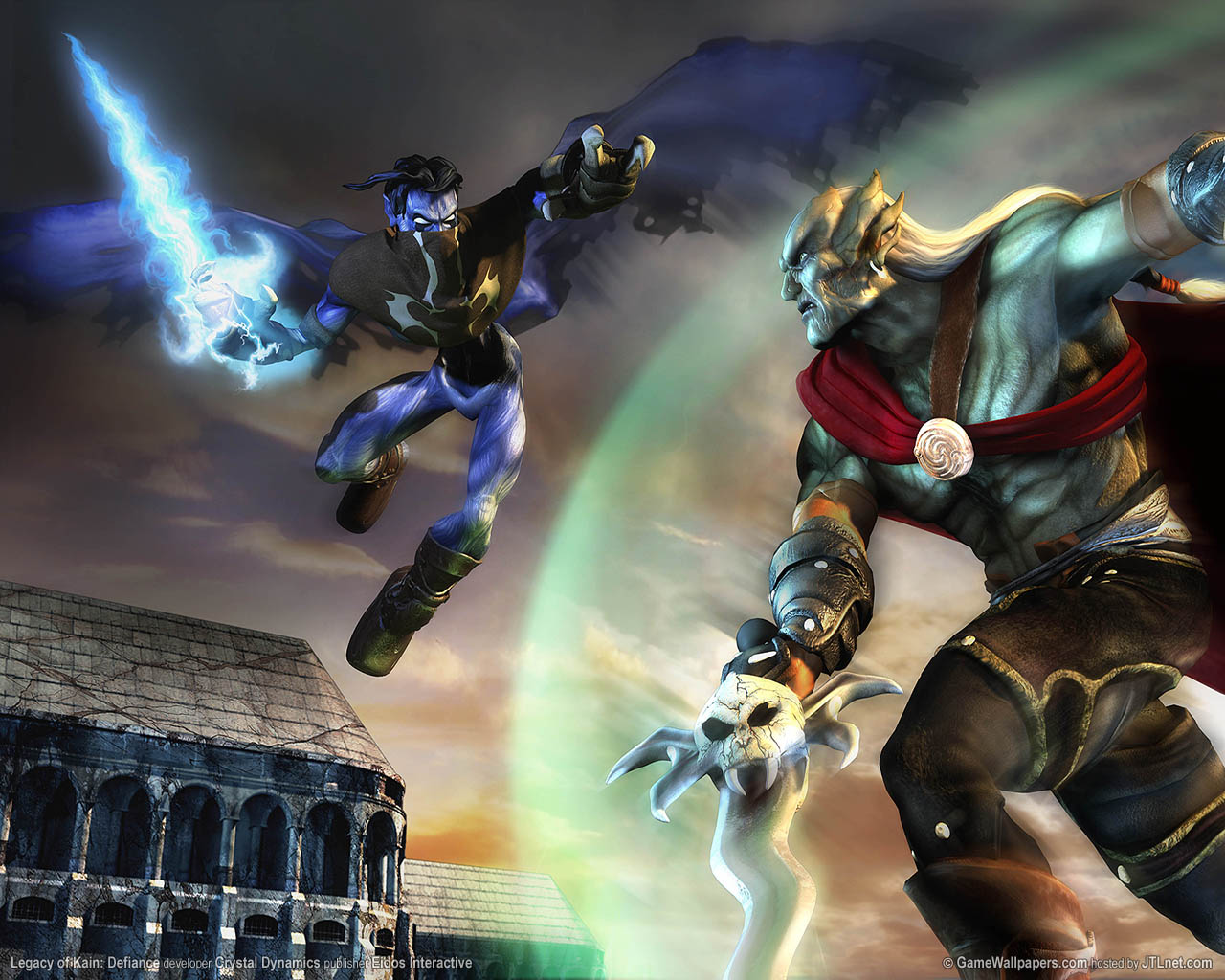
Tricked you - it's about Raziel AND Kain!
America's most popular 'tag's seem to fall into one of two groups: dialogue tree guys and Introspection d00ds. By dialogue tree guys, I mean characters that only say exactly what you tell them to say, but whose role in the story is otherwise fixed. A Commander Shepherd, if you will. The problem I have with these types is that they are very much a role, not a character. They are defined by their function, by the fact that they knock the story into place. They don't have flaws or personalities or arcs, they just chime in at mission-critical moments to keep things underway.

On the other end of the spectrum we have heartily defined protags like Max Payne and Ezio Auditore, whom I would call Introspection guys. They get enough exposition to drive me to suicide, but the actual action of the game is completely disconnected from their internal monologue. Max is totally fucked as a character because his search for purpose has nothing to do with cover-shooting in a graveyard, and his wanton murder streak goes a long way toward rendering the character a joke. Now we have a case where the protagonist has a persona, but is undercut by his status as an avatar. The player's love for killing things is making it impossible to connect with a character who shouldn't.

An alternative approach that pops up from time to time is Ishmael. You've read Moby Dick, right? You've got the famous first line tattooed across your shoulder-blades? "Call me Ishmael, but don't call me late for dinner!" Etc. To recap, Ishmael serves solely as a lens through which the audience views the drama. He himself is sidelined by the story arc. FFXII does this with ol' whatever-his-name is, Vahn, right? That's a weird name. Anyway, you play as Vahn, but he doesn't have anything to do with the story. It's about some losers named Bosch or Blathers or something. Don't think I liked the plot of that one. Too many evil bad-guy ghosts and secret twin brothers.

Anyway, it's silent protagonists that are the proper incarnation of Ishmael in gaming. Beyond all the mindless fan-adoration, Link has never been much of a hero at all. Sure, he usually brings together all the macguffins that draw the story towards its climax, but the true stories within each Zelda game are those of the non-player characters we meets along the way: Medli overcoming her timidity, Midna's exile, Makar doing whatever the fuck was the deal with him but god I loved that character, Groose accpting his own insignificance, etc. The greatest example, of course, is Majora's Mask, in which nearly every character has their own developing storyline encapsulated by the quest for the associated mask. Beyond Zelda, we could also have a look at Half-Life 2 and its narrative, viewed through Gordon Freeman but actually about Alyx and Eli Vance.
Remember the time in high school English when I filmed myself playing Wind Waker while one of my friends read from Moby Dick, and we called it a "re-enactment"?
I'm not saying "silent protagonists are the only good protagonists", even though it sounds like that's exactly what I said, because they were the only ones I discussed using a positive tone. There are plenty of good player characters that are correctly matched to the experience, like RE4's Leon Kennedy, quipmaster extraordinaire with just enough heart and charm to melt a young girl's icy heart. That said, young girls probably have the most meltable hearts out there. Legacy of Kain's Kain and Raziel are probably my all-time favorite leading men, thanks not only to stellar voice-acting, but in particular to their carefully drawn out and interweaving plot. Kain is developed through Raziel and vice versa. Jumping across chasms and solving switch-puzzles may not lend much to their characters, but their insatiable appetite and wanton destruction need to be witnessed to truly understand their roles as gods.

The end. Boy I'm tired of this post.