I totally forgot that I wrote 50% of this back in December then it got shelved during the hiatus. So it's time for...........
Game game game of the Yeaaaaaaaaaaaaar Awards!!!!!!!!!!!! 2013 Ed.
Alright. I know I'm excited. So in order to make this extra pointless, this year's GNG Game game games of the Yeaaaaaaaaaaaaar will be chosen from games new to me in 2013, not necessarily games that were published in 2013. Think of it more as a selected selection of selections, the cream of the crop of a creamy year of gaming, the choicest cut of many fine meats I've enjoyed playing. This isn't supposed to be an objective evaluation of these games or a means of rating them, it's just a way to recognize and point out to you the viewer some selections that you should ABSOLUTELY GO PLAY RIGHT NOW WITHOUT ANY HESITATION WHATSOEVER. Every game listed below comes with a 100% unmitigated endorsement, and I'll even be so kind as to tell you a little bit about why.
Since this is more a recommendations ceremony than an awards ceremony, each game is only eligible for a single mention. Anyway, there's nothing more annoying than reading through an awards presentation and seeing "Mass Effect 3 is the best RPG of the year, Mass Effect 3 is the best story of the year, Mass Effect 3 is the best racing game of the year". I get it. You like Mass Effect. Seriously, 75% of the past five years' "of the year" awards around the web have been dedicated in some way to Mass Effect. You could say the series has had a............................................. SHIT EFFECT. Zinged ya!
The battle system is solidly engaging with a nice large-scale challenge structure oriented around managing HP and TP (health and magic). There is a real satisfaction to surviving a dungeon with genuine risk/reward built into the exploration, thanks to the extremely sparse magic restoratives and revives. Definitely no grinding (early Final Fantasy) or training wheels (later Final Fantasy) here - success is driven by careful management of skills, not statistical advantage. It's not an absurdly hard game per se, but every victory feels earned. You've got to give it up for a game with such a neat way of handling random map battles (not gonna spoil it) that doesn't excise them entirely but somehow makes their triviality exciting.
Genre that is just okay: Best Platformer
Aw I'm just kiddin' ya guys. I love platformers! I guess? They are definitely a genre that is okay to play that reveals a lot of interesting ideas about stage design, something that carries over into just about ANY type of game, but they're primitive and thus my interest tends toward the scholarly rather than the funarly.
#2: Castle of Illusion Starring Mickey Mouse, Xbox 360, Sega Australia Ltd., 2013
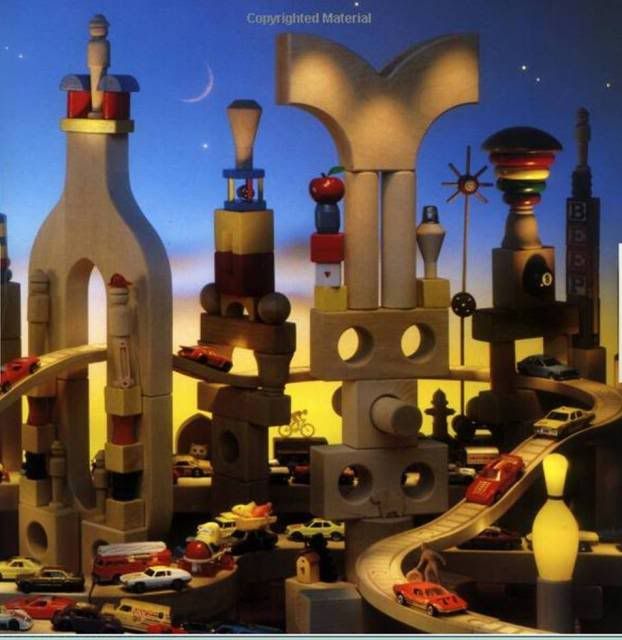
I've already gone on quite a bit about how much I love this game, but I do love this game. IT'S FUCKING MAGICAL, OKAY? I don't give a shit about the original or Mickey Mouse, I don't even particularly care for Fantasia. This was just a singularly atmospheric, gorgeous journey. It made me feel like I was actually exploring a land of colorful ghouls and giant globs of gelatin with detail after detail after detail. It sounds cliche, but everything in the game is just so overflowing with personality. It finally occurred to me what it reminds me of - those old I Spy books, with their photographed arrays of toys and trinkets arranged into surreal landscapes. The cotton-ball clouds, the cookie cookies, the playing card towers all pop with a realism that makes you feel as tiny as Mickey appears onscreen. The platforming itself is a litany of playful gimmicks that may not be Donkey Kong Country-precise, but work exceptionally well in further developing that sense of a real space without needing the crutches of hyper-realistic physics or octopus rifts.
 |
| The game does a fantastic job of laying out 2D paths without making them look 2D |
#1: Sonic Generations, Xbox 360, Sonic Team, 2011
In a blaze of cat, Sonic returns to America for the first time in the 21st century for the best racing action platformer on feet that you never thought you've played before. Sonic Generations is a really satisfying game both to explore and to master, and you'll master it as you explore. It makes the trademark Sonic speed refreshing by varying its application from stage to stage without artificially varying gameplay mechanics - the level design gives clear focus to everything from "supersonic platforming" to "supersonic mazes" to "supersonic murder" without needing transformations or team mechanics or a gigantic lineup of eleven furballs. I don't begrudge the other games their gimmicks (well, some), but there's a certain elegance to Sonic Generations - that you can visit each era of Sonic's history and get a taste of the gameplay that characterized it while still playing as the same character with the same mechanics. Maybe it only works because 20 years of game design has been condensed into a 6 hour campaign, but hey, it works. And it only gets more gratifying as you learn the ins and outs of each level and push yourself to play faster and faster.
 |
| Got places to go, gotta follow my rainbow! |
Kill 'em til they're dead: Best Shooter
Shooters are a genre that have really changed a whole bunch over the ages. Where once we had Gradius, now we have Fark Rye. Some people pretend those are different genres. For the point of this, it doesn't really matter, does it?
Honorable Mention: Kid Icarus: Uprising, Nintendo 3DS, Project Sora, 2012
Kid Uprising gets a mention for having some terrifically fun rail-shooting action, but I can't give it a wholehearted, unmitigated recommendation because of the weird 3rd-rate action stages that make up the bulk of the game. I'm not the first to say it, but the game just does not control like a third-person game should control - and when I say "should", all I'm suggesting is that I "should" feel in control of my perspective and my movement in relation to that perspective. But the auto-scrolling levels are solid (if easy) and I can't help but fawn over a game that does 3D rail-shooting. It's a genre that's existed for like twenty years and only seen like twenty games! The stereoscopic 3D looks great as well, it really gives the action a more dynamic feeling over games like Sin & Punishment, actively contributing to playability by allowing targets to be easier distinguished, grouped, and prioritized. Area-of-effect and melee attacks just feel more... distinguished when playing in 3D - you can literally better see the space they take up. IIRC (in IRC) whatsisname said they weren't making another one anytime soon, and I'm usually not a guy to demand sequels, but I really wish Sora or Nintendo or someone would take these on-rails levels and make them into a full-length game. I promise it's at least going on my to-do list for next week if no one else gets to it sooner.
#2 Saints Row: The Third, Xbox 360, Volition, 2011
 Liking this game doesn't exactly make me feel awesome about myself, as it's buried in perhaps the most moronically obnoxious presentation imaginable, but it's about as fun as a sandbox shooter can get. At first I pined for the full destructibility of Volition's earlier triumph, Red Faction: Guerilla, but as I played more I realized there was a certain satisfaction to be found in adapting havoc to Row's rigid city structure. Combined with the visceral and punishing third-person shooting, the world encourages players to get creative with their tactics. I guess using a pick-up truck as a battering ram to scatter a gang and ducking behind a building to lob grenades while waiting for the helicopter cavalry to show up just never got old for me. I appreciate a game that gives me the satisfaction of "realistic" weapons and physics (like baseball bats and grenade launchers) but throws them into utterly preposterous setups - like riding around in a tank on a helicarrier and shooting down jets. There's a great balance here between something totally over-the-top like Vanquish, which completely removes the player from reality for its absurd shenanigans, and something totally gritty and down to earth like Sleeping Dogs, which doesn't let the player indulge in the violence.
It's hard to express exactly what makes this game good. All the hype I read (before having played it) and even the above just comes across as "yeah, but isn't that every sandbox game? how is that different from GTA?". But every shooting/driving sandbox I've played before Saints Row (certainly every one made by Rockstar) is totally undone by a foundation of shit mechanics. Their hearts are in the right place but their heads are up their asses. Saints Row: The Third would be good even if it was a totally linear mission-oriented game (see Red Faction: Armageddon for essentially that) and that's what makes it work in an open world. You'll just have to take my word for it. Or fuck it, whatever.
#1 Capsized, XBLA, Alientrap, 2011
Yup, it's imperfect. Yup, it's raw. Yup, that works just damn fine. Capsized manages to combine the what-the-shit chaotic physics nonsense of a game like Red Faction: Guerilla or Worms with the strategic tension and ammo management of Resident Evil 4 with the atmosphere and methodical hunting of Metroid. How well do all those things mesh? Really weirdly! And that makes for a game that doesn't play quite like any other. It may seem to share gameplay with the brain-dead Bad Bots or be inferior to the carefully-wrought Bleed or lack the laborious architecture of Shadow Complex, but Capsized wields an awesome free-spirited naturalism that emancipates it from the oppressive digital nature that we typically treasure in "precise" games. Beyond the loosely mazey level design, the mechanics are imbued with a large factor of randomness. And that ratchets up the tension and makes the insane array of tools at the player's disposal feel a little more welcome. Capsized is a great game because it's not pure playground, it's not "Grand Theft Auto in spaceballs" - it forces the player to focus the absurdity of the action to an end. Lives and ammo are in short supply for each stage, so this isn't pure fucking around. The player needs to be able to gauge when to deploy method and when to deploy mayhem, and how to try to take control or at least recover once things inevitably get out of hand. That does a pretty good job making them feel like an astronaut lost in an alien jungle overflowing with way too much life.
Honorable Mention: Kid Icarus: Uprising, Nintendo 3DS, Project Sora, 2012
Kid Uprising gets a mention for having some terrifically fun rail-shooting action, but I can't give it a wholehearted, unmitigated recommendation because of the weird 3rd-rate action stages that make up the bulk of the game. I'm not the first to say it, but the game just does not control like a third-person game should control - and when I say "should", all I'm suggesting is that I "should" feel in control of my perspective and my movement in relation to that perspective. But the auto-scrolling levels are solid (if easy) and I can't help but fawn over a game that does 3D rail-shooting. It's a genre that's existed for like twenty years and only seen like twenty games! The stereoscopic 3D looks great as well, it really gives the action a more dynamic feeling over games like Sin & Punishment, actively contributing to playability by allowing targets to be easier distinguished, grouped, and prioritized. Area-of-effect and melee attacks just feel more... distinguished when playing in 3D - you can literally better see the space they take up. IIRC (in IRC) whatsisname said they weren't making another one anytime soon, and I'm usually not a guy to demand sequels, but I really wish Sora or Nintendo or someone would take these on-rails levels and make them into a full-length game. I promise it's at least going on my to-do list for next week if no one else gets to it sooner.
#2 Saints Row: The Third, Xbox 360, Volition, 2011
It's hard to express exactly what makes this game good. All the hype I read (before having played it) and even the above just comes across as "yeah, but isn't that every sandbox game? how is that different from GTA?". But every shooting/driving sandbox I've played before Saints Row (certainly every one made by Rockstar) is totally undone by a foundation of shit mechanics. Their hearts are in the right place but their heads are up their asses. Saints Row: The Third would be good even if it was a totally linear mission-oriented game (see Red Faction: Armageddon for essentially that) and that's what makes it work in an open world. You'll just have to take my word for it. Or fuck it, whatever.
#1 Capsized, XBLA, Alientrap, 2011
 |
| I was almost disappointed when I first saw the look of Capsized, only because I said "goddamnit, this was my idea for a game world!" |
I'm bored just talking about it: Best RPG
I had a huge resurgence in RPG popularity this past year. What I'm trying to say is that I have not liked RPGs for a long time and in 2013 all of a sudden I played like a thousand and was really lovin' 'em. It all goes back to Retro Game Challenge's Guadia Quest, a game that showed me that with a limited scope, I could actually still love a JRPG. I even took a slight detour into roguelikes and had a good time with Shiren the Wanderer before fully circumnavigating the globe back to that seminal WRPG classic, Ultima VII. But floating (or skyrocketing) to the top of that list we had....
#2 Crimson Shroud, Nintendo 3DS, Level 5, 2012
A short RPG?! Perish the thought! In fact, 2013 taught me that short RPGs are the way 2-B. I assume nearly every mechanic in Shroud is straight outta Dungeons and Dragons, but as I'm barely familiar with tabletop rules (I have one round to my name) I can only credit it all to the game. Shroud's got a neat terse tale to tell, following the old tradition of short/scary stories that are built entirely around one big reveal. There's no need for bullshit lore and an endless backstory to every character - it's all about moving the pieces forward to that big curtain-pull. That's just plain fun, and the handful of battles along the way are unique and challenging and follow the same mentality of stripping out the chaff. Only do anything once - and that'll make Shroud that much more fun a game to revisit.
 |
| The game had a really fun script and made just the right amount of winking nods to its D&D origins |
#1 Phantasy Star IV, Sega Genesis, Sega AM7, 1995/1993(JP)
So I have to admit that part of my love affair with Phantasy Star IV simply amounts to being swept off my feet. I wasn't ready to like a 16-bit JRPG. But Phantasy Star succeeded because it was fast and funny and kicked me in my emotional nuts before I was ready, and all the painfully cliche fantasy storytelling tropes were saved until the point where a character could react to an ancient apocalyptic prophecy with "Aw, man!" and I could feel exactly the same words echoing in my brain. The dialogue is dopey and innocent but heartfelt, genuine, and just witty enough to cut down any building fatigue. It helps that the biodome paradise scifi future has a truly unique look that escapes cliches of hyper-techno, post-apocalyptic, or utopian futurism, and that the gigantic battle sprites show off tons of memorable detail. Phantasy Star IV is, simply put, a one-of-a-kind adventure spanning beautifully developed worlds and starring a cast of unforgettable characters. That's all I want out of an epic, and as an epic this game shines.
So I have to admit that part of my love affair with Phantasy Star IV simply amounts to being swept off my feet. I wasn't ready to like a 16-bit JRPG. But Phantasy Star succeeded because it was fast and funny and kicked me in my emotional nuts before I was ready, and all the painfully cliche fantasy storytelling tropes were saved until the point where a character could react to an ancient apocalyptic prophecy with "Aw, man!" and I could feel exactly the same words echoing in my brain. The dialogue is dopey and innocent but heartfelt, genuine, and just witty enough to cut down any building fatigue. It helps that the biodome paradise scifi future has a truly unique look that escapes cliches of hyper-techno, post-apocalyptic, or utopian futurism, and that the gigantic battle sprites show off tons of memorable detail. Phantasy Star IV is, simply put, a one-of-a-kind adventure spanning beautifully developed worlds and starring a cast of unforgettable characters. That's all I want out of an epic, and as an epic this game shines.
 |
| The anime-style cutscenes add a great deal of personality and drama to the story, far more than is achieved in bland talking-headPGs like those made by Square |
------------------------------------------------------------------------------------------------------------
Come back tomorrow to see my top picks released in 2013 as well as my overall TOP 3 GAMES OF THE YEAR!!!!!!!!! Will GTAV make a sweep? Super Mario Bros.? Or will it be the underdog Flappy Bird in the top spot? You'll have to wait and see!