Showing posts with label top tens. Show all posts

Wednesday, February 19, 2014

Game game game of the Yeaaaaaaaaaaaaar Awards!!!!!!!!!!!! Part 2

at 8:39 PM
Continued from yesterday. You can see the rules in that post - remember, the top three are picks of games I played for the first time in 2013, not games that were released in 2013.

Game game game of the Yeaaaaaaaaaaaaar Awards!!!!!!!!!!!! 2013 Ed.

Special Baby Retard Category: Best Game released in 2013
You folks asked for it, so here it is: my vote for best game that was released in 2013. The reason I would never bother orienting a peer-to-teen choice awards contest around this idea alone is that I don't actually play enough games that come out in any given year to choose anything even remotely representative of "best of that year". I played maybe 20 of the, I dunno, 500+ (mainstream) releases of 2013. I'm not gonna judge a game I haven't played, no matter how much I've read about it. That's why... well, I'm not going to criticize the big boys. I'm sure they know what they're doing and they have their integrity and we all respect that. Anyway, the second runner-up to Best Game Released in 2013 WOULD HAVE TO BE:

#3: Killer Is Dead, Xbox 360, Grasshopper Manufacture, 2013
It's action. Reaction. Random interaction. Now who's afraid of a little abstraction?
Not I. And neither should be you. I like a nice formal narrative. Okay, does it really count as formalism versus bland David Lynch symbolism when a guy's secret twin brother appears in his dream and slices his breakfast of a single fried egg perfectly in two? No, but that's exactly what makes it funny! There's a fine line Suda walks here between depth and mockery, and that's what makes for great satire. Killer works as a compelling mystery of its own, carefully exploring the facets of Mondo Zappa's buried psyche, and also takes every opportunity to send up the video game industry's self-seriousness about sexuality while being incredibly sexist (see the Gigolo segments), existentialism while being incredibly preposterous (see the Alice-meets-lobster boss), and even bromance while being incredibly... bromantic (see the hilarious Gears of War mission). I must admit I wasn't left wanting for more of Killer Is Dead's combat, but it was fun while it lasted and tough enough that there was mastery on offer. [I also have to comment that my combat fatigue is probably more a testament to having played too many of this type of action game in the past year or two... Killer Is Dead is more unique than Platinum fare, but doesn't transcend the crowd like Arkham Asylum or No More Heroes 2] Considering that the game is nice and short (praise short!), looks like a impressionist painting, and has a soundtrack ranging from thrash to hip-hop to classical remixes (by Akira Yamaoka of course), it certainly justifies further plays to investigate the themes.

#2 DmC: Devil may Cry, Xbox 360, Ninja Theory, 2013
S-Stutter!!!!
Certainly this is one of the combat action games of the generation. This is combat that derives its depth from clever reactivity, the ability of the player to quickly analyze a split-second situation and be prepared with which tools can be deployed to handle it. Those tools are what make DmC particularly rewarding - like the original Devil May Cry, this isn't a game where you'll be stressing to remember which combo string does what and spending hours mastering the input timing to pull it off (a la Bayonetta or BlazBlue) - DmC is based around simple inputs with wildly varying results. If you want to play a game where you fight demons with swords and guns, it is hard to pick one that will make you feel more powerful and graceful than this. The chains (uh, physical chains that is, not combo chains) that pull Dante or enemies across the battlefield add such speed, dynamism, and - yes - chaos to the battles that you'll never feel you're repeating the same conflicts, and the bit of platforming they provide between fights strings the adventure along all the more fluidly. I may not have been a huge fan of the story, but few players will have time to worry about that amidst the endless combat variations. In fact, this is kinda the opposite of Killer Is Dead - where there the story inspires replays that the gameplay is just good enough to support, here the story is successfully kept out of the way enough not to ruin a first play-through which is sure to inspire more gameplay-based reruns. The stages are loaded with unique enemy combinations and scenarios that'll draw you back for score- (and collection-) based runs.

#1: Bit.Trip Runner 2: The Legend Runs On, XBLA, Gaijin Games, 2013
It's actually called Bit.Trip Presents... Runner 2: Future Legend of Rhythm Alien. For those worried about copyright infringement. If that's how that works.
I actually like my name better than the real one. Can we do anything about that? Tim? Name change? Tim's giving me a no. Runner 2 is the type of sequel that does exactly what the Bit.Trip series wasn't all about. Bit.Trip told a succinct and fluid story through gameplay, music, imagery, and a tiny handful of abstract cutscenes. Gaijin didn't have time for a typical video game sequel that reiterated gameplay concepts with better graphics, more songs, multiple playable characters, a world map, and dancing. They had an artistic vision to uphold. But people loved Bit.Trip Runner and they didn't give a shit about Artistic Vision: The Game, so Runner 2 is exactly that typical sequel I described. Thing is, as far below the genius of the original saga as it is, it's still an absolute blast. It is everything an arcade-style rhythm platformer could hope to be, overflowing with charm, style, gorgeous visuals, toe-tappin' tunes, a great sense of humor (if you like pickles), and one HELL of an addictive structure. I couldn't stop playing for days, and the game is cleverly crafted arcade greatness that always allows room for improvement while still providing multiple levels of satisfaction for skilled runs.

This is the epitome of a fun video game - one that is memorable and delightful even for unskilled players, and a sensory treat that demands mastery.

AND FINALLY: GOTYE 2013

Yes ladies and gentlemen, the moment has arrived. It is time to unveil my three very favorite games I played in the last year that every single one of you should go out and play right this very instant. The second runner-up, bronze-medalist, almost as good as the other ones Game of the Year 2013 IS:

#3: Mark of the Ninja, XBLA, Klei, 2012
Playing to terrify guards is one of the most challenging and satisfying strategies
Mark of the Ninja is a game that knows what it wants to be. It's a ninja game and it's a stealth game and it's a platformer. It's not a stealth-platformer starring a ninja. It's a ninja game and it's a stealth game and it's a platformer. To clarify the seemingly arbitrary semantic distinction I'm making here: over the course of the game, Klei cranks up all of its design elements independently and allows the player to choose how to approach each situation using distinctive gameplay methods. Your "tools" aren't just a set of interchangeable maguffins like night-vision goggles and lazer trip wires, they're gameplay styles like "slow and strategic, using items" or "fast as possible using precisely timed jumps". This gives the game an almost Sonic-the-Hedgehog-high-path-low-path feel, where knowledge, skill mastery, and choices can be applied to result in a totally different gameplay payoff. It's amazing how naturally Klei pulled this off without ever making the game feel like a series of discrete choices. Partly that owes to the stealth framework, wherein a mistake gives the player a chance to adapt (as in Sonic when a player falls to a lower path) rather than immediately sending them back to an earlier checkpoint. There's so much variable gameplay here, especially once the extra playable characters (costumes) are thrown into the mix. This game demonstrates that there are still new ways to do the classic platformer (without just throwing in puzzles, fuck you "indie" gaming). [it wasn't my #1 platformer just cuz I wanted to make it clear it was one of my absolute favorite games of the year, transcending genre, and that everyone should play it].

#2: Retro Game Challenge, Nintendo DS, indieszero, 2009/2007(JP)
This is such a great total experience that was completely undersold by everyone who pitched it as an anthology of faux-classics or a nostalgia trip. Retro Game Challenge is the story of two Japanese kids (one of whom happens to be a young Shinya Arino) growing up in the late '80s indulging in video game culture. The beauty of the game doesn't come from the neo-retro "8-bit" games (which are a dime a dozen these days anyway), it comes from the fictionalized experience of anticipating a new game, finally getting your hands on it, sitting down and going nuts trying to master it, reading magazines with fan letters and hints, and going through the entire cycle again with the next game. It's meta as hell, but it's a game about the experience of being a gamer, set in an idealized time we imagine as more optimistic and which many of us associate with our youth. Still, I think this experience would resonate with anyone who's ever been excited about games. The fact that you actually get to dig into eight cool original titles (that are just as fun as those they're based upon) is really just a bonus. 

#1: Ys: The Oath in Felghana, PC/Steam, Falcom 2012/2005(JP)
Oath is actually a remake of the SNES/Genesis/Turbo16 Ys III
This game made me so happy. I don't know how else to put it. I just felt extreme, unadulterated happiness every time I sat down to play it. Okay, that made it sound a little creepy. But there's a child-like sweetness to Oath in Felghana, a romantic simplicity to the classic story of innocence lost that pairs wonderfully with the gung-ho "cool" metal and hardcore action that characterizes the game's underworld. I think I can best explain it using the soundtrack. The game goes from the track on the left when you first arrive in town to the track on the right when you're in a dungeon. That's the span.


It's just... a perfectly straightforward, honest video game. It's a fairy tale, not an epic, a stylized adventure that serves theme over story or character. If there is action, there are fucking wailing guitars. If there is sensitive stuff, there are sad violins. The dialogue and cut-scenes are just enough to carry a through-line, the rest is entirely mood.

The essentially-one-button action follows that fuck-it-just-get-to-the-point mentality. Just because it's button-mashing doesn't mean it's easy or mindless - your character is so fragile and everything moves so quickly that you'll need to learn enemy patterns and probably die (or at least restart dungeons - no healing items here) a lot of times to perfect your skills. Once you get it down you'll feel like a steamroller completely crushing everything in your path - until, of course, you hit the shmup-style bosses with their strict patterned mechanics. Will you have to match your magic charge attacks to a color-changing boss' periods of vulnerability while dodging his attacks specifically designed to capitalize on that element's weakness? Or perhaps you'll be up against a trio of spirits who adapt their aggression as you pick them off? There's even a side-perspective 2D fight that had me thinking of Castlevania. The boss fights are the game's absolute highlights, calling back to the style of classic Treasure and Konami action. 

Ys: The Oath in Felghana is my game of the year because it captures what is for me the absolute essence of a video game experience. It immediately puts all the cards on the table and develops challenges from established mechanics, putting me into a continuous state of adaptation. Each situation is a puzzle in and of itself, fun to learn because of the enjoyable core action and a different kind of fun once perfected because of the uniqueness of the setting. The fighting is contextualized with a concise, purposeful story about the consequences of action and responsibility and adorned with a sweeping, roaring soundtrack and minutely detailed graphics that bring the game's inhabitants to life. The action doesn't have to be the greatest ever conceived nor the tale the greatest ever told for the experience as a whole to be what every action/adventure should aspire to parallel. 

Tuesday, February 18, 2014

Game game game of the Yeaaaaaaaaaaaaar Awards!!!!!!!!!!!! Part 1

at 6:54 PM
I totally forgot that I wrote 50% of this back in December then it got shelved during the hiatus. So it's time for...........

Game game game of the Yeaaaaaaaaaaaaar Awards!!!!!!!!!!!! 2013 Ed.


Alright. I know I'm excited. So in order to make this extra pointless, this year's GNG Game game games of the Yeaaaaaaaaaaaaar will be chosen from games new to me in 2013, not necessarily games that were published in 2013. Think of it more as a selected selection of selections, the cream of the crop of a creamy year of gaming, the choicest cut of many fine meats I've enjoyed playing. This isn't supposed to be an objective evaluation of these games or a means of rating them, it's just a way to recognize and point out to you the viewer some selections that you should ABSOLUTELY GO PLAY RIGHT NOW WITHOUT ANY HESITATION WHATSOEVER. Every game listed below comes with a 100% unmitigated endorsement, and I'll even be so kind as to tell you a little bit about why. 

Since this is more a recommendations ceremony than an awards ceremony, each game is only eligible for a single mention. Anyway, there's nothing more annoying than reading through an awards presentation and seeing "Mass Effect 3 is the best RPG of the year, Mass Effect 3 is the best story of the year, Mass Effect 3 is the best racing game of the year". I get it. You like Mass Effect. Seriously, 75% of the past five years' "of the year" awards around the web have been dedicated in some way to Mass Effect. You could say the series has had a............................................. SHIT EFFECT. Zinged ya!

Genre that is just okay: Best Platformer

Aw I'm just kiddin' ya guys. I love platformers! I guess? They are definitely a genre that is okay to play that reveals a lot of interesting ideas about stage design, something that carries over into just about ANY type of game, but they're primitive and thus my interest tends toward the scholarly rather than the funarly.

#2: Castle of Illusion Starring Mickey Mouse, Xbox 360, Sega Australia Ltd., 2013
The game does a fantastic job of laying out 2D paths without making them look 2D
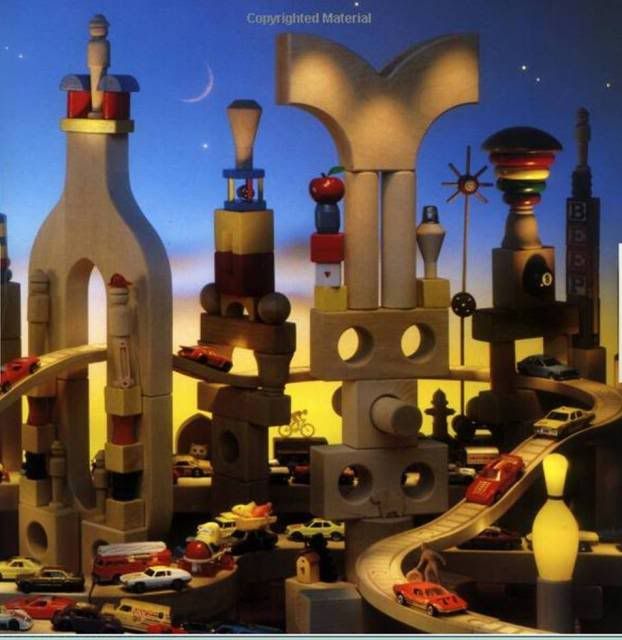
I've already gone on quite a bit about how much I love this game, but I do love this game. IT'S FUCKING MAGICAL, OKAY? I don't give a shit about the original or Mickey Mouse, I don't even particularly care for Fantasia. This was just a singularly atmospheric, gorgeous journey. It made me feel like I was actually exploring a land of colorful ghouls and giant globs of gelatin with detail after detail after detail. It sounds cliche, but everything in the game is just so overflowing with personality. It finally occurred to me what it reminds me of - those old I Spy books, with their photographed arrays of toys and trinkets arranged into surreal landscapes. The cotton-ball clouds, the cookie cookies, the playing card towers all pop with a realism that makes you feel as tiny as Mickey appears onscreen. The platforming itself is a litany of playful gimmicks that may not be Donkey Kong Country-precise, but work exceptionally well in further developing that sense of a real space without needing the crutches of hyper-realistic physics or octopus rifts.

#1: Sonic Generations, Xbox 360, Sonic Team, 2011
Got places to go, gotta follow my rainbow!
In a blaze of cat, Sonic returns to America for the first time in the 21st century for the best racing action platformer on feet that you never thought you've played before. Sonic Generations is a really satisfying game both to explore and to master, and you'll master it as you explore. It makes the trademark Sonic speed refreshing by varying its application from stage to stage without artificially varying gameplay mechanics - the level design gives clear focus to everything from "supersonic platforming" to "supersonic mazes" to "supersonic murder" without needing transformations or team mechanics or a gigantic lineup of eleven furballs. I don't begrudge the other games their gimmicks (well, some), but there's a certain elegance to Sonic Generations - that you can visit each era of Sonic's history and get a taste of the gameplay that characterized it while still playing as the same character with the same mechanics. Maybe it only works because 20 years of game design has been condensed into a 6 hour campaign, but hey, it works. And it only gets more gratifying as you learn the ins and outs of each level and push yourself to play faster and faster.

Kill 'em til they're dead: Best Shooter

Shooters are a genre that have really changed a whole bunch over the ages. Where once we had Gradius, now we have Fark Rye. Some people pretend those are different genres. For the point of this, it doesn't really matter, does it?

Honorable Mention: Kid Icarus: Uprising, Nintendo 3DS, Project Sora, 2012
Kid Uprising gets a mention for having some terrifically fun rail-shooting action, but I can't give it a wholehearted, unmitigated recommendation because of the weird 3rd-rate action stages that make up the bulk of the game. I'm not the first to say it, but the game just does not control like a third-person game should control - and when I say "should", all I'm suggesting is that I "should" feel in control of my perspective and my movement in relation to that perspective. But the auto-scrolling levels are solid (if easy) and I can't help but fawn over a game that does 3D rail-shooting. It's a genre that's existed for like twenty years and only seen like twenty games! The stereoscopic 3D looks great as well, it really gives the action a more dynamic feeling over games like Sin & Punishment, actively contributing to playability by allowing targets to be easier distinguished, grouped, and prioritized. Area-of-effect and melee attacks just feel more... distinguished when playing in 3D - you can literally better see the space they take up. IIRC (in IRC) whatsisname said they weren't making another one anytime soon, and I'm usually not a guy to demand sequels, but I really wish Sora or Nintendo or someone would take these on-rails levels and make them into a full-length game. I promise it's at least going on my to-do list for next week if no one else gets to it sooner.

#2 Saints Row: The Third, Xbox 360, Volition, 2011
Liking this game doesn't exactly make me feel awesome about myself, as it's buried in perhaps the most moronically obnoxious presentation imaginable, but it's about as fun as a sandbox shooter can get. At first I pined for the full destructibility of Volition's earlier triumph, Red Faction: Guerilla, but as I played more I realized there was a certain satisfaction to be found in adapting havoc to Row's rigid city structure. Combined with the visceral and punishing third-person shooting, the world encourages players to get creative with their tactics. I guess using a pick-up truck as a battering ram to scatter a gang and ducking behind a building to lob grenades while waiting for the helicopter cavalry to show up just never got old for me. I appreciate a game that gives me the satisfaction of "realistic" weapons and physics (like baseball bats and grenade launchers) but throws them into utterly preposterous setups - like riding around in a tank on a helicarrier and shooting down jets. There's a great balance here between something totally over-the-top like Vanquish, which completely removes the player from reality for its absurd shenanigans, and something totally gritty and down to earth like Sleeping Dogs, which doesn't let the player indulge in the violence.

It's hard to express exactly what makes this game good. All the hype I read (before having played it) and even the above just comes across as "yeah, but isn't that every sandbox game? how is that different from GTA?". But every shooting/driving sandbox I've played before Saints Row (certainly every one made by Rockstar) is totally undone by a foundation of shit mechanics. Their hearts are in the right place but their heads are up their asses. Saints Row: The Third would be good even if it was a totally linear mission-oriented game (see Red Faction: Armageddon for essentially that) and that's what makes it work in an open world. You'll just have to take my word for it. Or fuck it, whatever.

#1 Capsized, XBLA, Alientrap, 2011
I was almost disappointed when I first saw the look of Capsized, only because I said "goddamnit, this was my idea for a game world!"
Yup, it's imperfect. Yup, it's raw. Yup, that works just damn fine. Capsized manages to combine the what-the-shit chaotic physics nonsense of a game like Red Faction: Guerilla or Worms with the strategic tension and ammo management of Resident Evil 4 with the atmosphere and methodical hunting of Metroid. How well do all those things mesh? Really weirdly! And that makes for a game that doesn't play quite like any other. It may seem to share gameplay with the brain-dead Bad Bots or be inferior to the carefully-wrought Bleed or lack the laborious architecture of Shadow Complex, but Capsized wields an awesome free-spirited naturalism that emancipates it from the oppressive digital nature that we typically treasure in "precise" games. Beyond the loosely mazey level design, the mechanics are imbued with a large factor of randomness. And that ratchets up the tension and makes the insane array of tools at the player's disposal feel a little more welcome. Capsized is a great game because it's not pure playground, it's not "Grand Theft Auto in spaceballs" - it forces the player to focus the absurdity of the action to an end. Lives and ammo are in short supply for each stage, so this isn't pure fucking around. The player needs to be able to gauge when to deploy method and when to deploy mayhem, and how to try to take control or at least recover once things inevitably get out of hand. That does a pretty good job making them feel like an astronaut lost in an alien jungle overflowing with way too much life.

I'm bored just talking about it: Best RPG

I had a huge resurgence in RPG popularity this past year. What I'm trying to say is that I have not liked RPGs for a long time and in 2013 all of a sudden I played like a thousand and was really lovin' 'em. It all goes back to Retro Game Challenge's Guadia Quest, a game that showed me that with a limited scope, I could actually still love a JRPG. I even took a slight detour into roguelikes and had a good time with Shiren the Wanderer before fully circumnavigating the globe back to that seminal WRPG classic, Ultima VII. But floating (or skyrocketing) to the top of that list we had....

#2 Crimson Shroud, Nintendo 3DS, Level 5, 2012
The game had a really fun script and made just the right amount of winking nods to its D&D origins
A short RPG?! Perish the thought! In fact, 2013 taught me that short RPGs are the way 2-B. I assume nearly every mechanic in Shroud is straight outta Dungeons and Dragons, but as I'm barely familiar with tabletop rules (I have one round to my name) I can only credit it all to the game. Shroud's got a neat terse tale to tell, following the old tradition of short/scary stories that are built entirely around one big reveal. There's no need for bullshit lore and an endless backstory to every character - it's all about moving the pieces forward to that big curtain-pull. That's just plain fun, and the handful of battles along the way are unique and challenging and follow the same mentality of stripping out the chaff. Only do anything once - and that'll make Shroud that much more fun a game to revisit. 

#1 Phantasy Star IV, Sega Genesis, Sega AM7, 1995/1993(JP)
So I have to admit that part of my love affair with Phantasy Star IV simply amounts to being swept off my feet. I wasn't ready to like a 16-bit JRPG. But Phantasy Star succeeded because it was fast and funny and kicked me in my emotional nuts before I was ready, and all the painfully cliche fantasy storytelling tropes were saved until the point where a character could react to an ancient apocalyptic prophecy with "Aw, man!" and I could feel exactly the same words echoing in my brain. The dialogue is dopey and innocent but heartfelt, genuine, and just witty enough to cut down any building fatigue. It helps that the biodome paradise scifi future has a truly unique look that escapes cliches of hyper-techno, post-apocalyptic, or utopian futurism, and that the gigantic battle sprites show off tons of memorable detail. Phantasy Star IV is, simply put, a one-of-a-kind adventure spanning beautifully developed worlds and starring a cast of unforgettable characters. That's all I want out of an epic, and as an epic this game shines.
The anime-style cutscenes add a great deal of personality and drama to the story, far more than is achieved in bland talking-headPGs like those made by Square
The battle system is solidly engaging with a nice large-scale challenge structure oriented around managing HP and TP (health and magic). There is a real satisfaction to surviving a dungeon with genuine risk/reward built into the exploration, thanks to the extremely sparse magic restoratives and revives. Definitely no grinding (early Final Fantasy) or training wheels (later Final Fantasy) here - success is driven by careful management of skills, not statistical advantage. It's not an absurdly hard game per se, but every victory feels earned. You've got to give it up for a game with such a neat way of handling random map battles (not gonna spoil it) that doesn't excise them entirely but somehow makes their triviality exciting. 

------------------------------------------------------------------------------------------------------------
Come back tomorrow to see my top picks released in 2013 as well as my overall TOP 3 GAMES OF THE YEAR!!!!!!!!! Will GTAV make a sweep? Super Mario Bros.? Or will it be the underdog Flappy Bird in the top spot? You'll have to wait and see!

Monday, January 13, 2014

Andrew's 2013 GOTY People's Choice Awards Hosted By Woody Allen and His Cat

at 6:30 PM
What a year. Some of us started our careers, others traveled to distant lands to seek their fortune, and still others found talent and promise where it was least expected. The start of a new year is a time to reflect on the big and small: how much weight did I gain from Christmas/New Year's Eve/general eating habits? What am I doing with my life? How can I prioritize my video game/reading/netflix habits to optimize my entertainment utility?

I don't subscribe to New Year's resolutions, because they've never been effective for me. As someone who spends regular hours in the gym, I'm familiar enough with the new-year-rush, just as I'm familiar with the new-years-scoffing-at-the-new-years-rush. The folks doing the scoffing are *hopefully* people, like me, who at some point made going to the gym a full-fledged habit in their lives, and not just assholes who role in once a month. I go to the gym because it's something that I do. I used to avoid it, then later, looked forward to it. Now it really is just one of the few ways I spend my time; I get a very subdued satisfaction from it. Not a "wooo im being healthy and shit" feel-good moment, but a simpler and less pretentious high. All this to say that I believe there are absolutely positive changes folks can make in the new year, going to the gym more often being a classic example with which I am familiar. But I didn't start going to the gym because it was new year, I started because I didn't like how I looked and didn't like how many other people were stronger than me.

Working out, particularly weight-lifting, has taught me that we really can change things about ourselves given the right circumstances and sheer will power. Maybe not the core things, like being a generally shitty person or a kleptomaniac or something like that, but we can play around the edges. Sometimes, rarely, but sometimes, we can change our habits simply by making the decision to.

But christ is it hard. And that's why I at least can't make fun of the guy in the gym whose visits' periodicity decreases from 2 January onward. You might as well try, because even though chances are slim that whatever habit you're trying to form will stick, there's still a chance, and you're certainly not losing anything by spending a couple hours on the treadmill giving it a shot, wheezing, and looking like hell. If the start of a new calendar year gives you an excuse to role the dice on quitting smoking, or posting more on the blog, then it's as good a reason as any.

Wait what games did I like this year? Greg L. had one game, I have a few quick hits for you:

Luigi's Mansion: Dark Moon


Not done this one yet, but it really is the most polished game I've played in quite sometime. Much of the game play is straight out of the original, but the environment is neat and pretty, the mechanics tidy, and the puzzles fall right in that sweet spot (maybe just my sweet spot) of being easy enough not to slow me down but difficult enough that you get that single second of satisfaction from figuring out how to light the cob-webs on fire, or get the crystal out of the frozen refrigerator. LM: DM really demonstrates that yes, Nintendo first party games really are all we can expect me to play on my 3DS.

Mega Man 2


I was telling Yourself I should get some badge for beating this game for the first time, welcoming me into the Classic Gamers Club for the Insecure and the Neck-bearded. Tons of fun, and really distilled for me (see LM:DM above) why a little dollop of difficulty can in fact sometimes make a game better, despite my inclinations. Plus, man is the music good. You really don't hear catchy melodies like some of the best in MM2 in games anymore; we've moved towards music that emphasizes the atmospherics of the game more than shooting for good music in and of itself. And I'm not even a particularly big fan of chip-tunes.

Mighty Switch Force


I really didn't know what to expect from this game going in, but I was pleasantly surprised. Like MM2, it's challenging without being infuriating, taking a simple mechanic to its absolute gameplay limits. With a button press you make blocks around the stage become insubstantial while instantaneously other nega-blocks (get the reference??) become safe for landing. You play a curvacious-toon she-cop hunting curvacious-toon, scantly-clad she-lawbreakers, maneuvering around the stage with timed jumps combined with timed block switches. The game does a good job of making the puzzles a good mix of thinking and....well doing, as often to successfully navigate the player must plan well in advance but also be react quickly to an unaccounted for twist. This game is cheap and absolutely worth the money. Starting the second shortly.
 
Dishonored


Yourself did a very good (he pays me to compliment him on the blog) write-up of this one closer to its release, but I'm not one to play a game near its release and I am one to write about games that have been much-discussed. I didn't get the whole point Yourself was trying to make about killing, in the game, being super-meaningful or whatever hippy bullshit he was trying to pull. What I can say is that it was a super-well done stealth game in an interesting if not cohesive (wait whats the deal with the cult and the powers and how's it tie in with every other damn thing?) world. Most of the missions, which take place episodically, were unique jaunts, and the paths to murder varied. I might actually play this one again, which I think speaks to how successfully they pull off the role playing aspects...I went all stealth the first time, I wouldn't mind experimenting more with the weapons in game.

Final Fantasy VII


Yep this is on this list. I've played a lot of JRPGs in my day, but somehow managed to avoid one of the "greats" for this long. I honestly think if I had played it at age 13, it would no question be my favorite game of all time, despite my desire to disassociate myself with anything as wildly popular as FF7. There's so much to love here and no one needs me to go through it, especially no one reading this blog. But 16 years post-release there was enough about the controls, finding my way through prerendered mazes, and back-tracking to keep it from being one of the most epic and fulfilling gaming experiences of my life. I guess it's no surprise looking at the list above, but it had been a while since FF7 since I finished a game and truly missed it with all said and done. Still though, I'm not spending hours breeding chocobos. Ain't nobody got time for that.

Tuesday, December 17, 2013

Greg L's 2013 GOTY Award

at 4:39 PM
I just have the one.

When Nintendo released Wind Waker HD, everyone noted that the prospect was sad in one sense or another: one of Wii U's headliners was a remake. The console's first party offerings have been short on creativity. New Super Mario Bros. U continues the line of New Super Mario Bros. games that iterate rather than progress. Super Mario 3D World gives players a cast of characters with competing strengths and weaknesses, but it's a gesture that does little to hide that each stage is predictable and shallow.

(Maybe we can discuss Pikmin 3 and Game & Wario some other time.)

Enter New Super Luigi U. On the surface, it appears to be a shameless rehash, featuring assets already used for New Super Mario Bros. U. Luigi may jump higher, he may be more slippery, and he may only have 100 seconds to clear each stage, but there's no obvious change to the essence of New Super Mario Bros.

In reality, though, these modifications fuel sweeping changes. Because you have but 100 seconds to clear each stage, the stages are shorter. This leads to denser enemy placement. Flying squirrel enemies will land on your weighted platforms, disrupting your footing. Ice-throwing turtles will bump elbows with spiked fuzzballs, turning harmful obstacles into icy platforms. Elements interact more often, creating a more engaging playground. 

In one stage, Ice Bros. freeze your enemies to create platforms. It's definitely one of the better stages, and it showcases how original the Luigi U team got with old assets.

New Super Luigi U emphasizes a sense of chaos. Stages are not just punchier than usual; there's more going on in each individual moment. Normal New Super Mario Bros. stages have a series of challenges, but in New Super Luigi U, those challenges are all lumped over top one another. On top of that, Luigi's floaty jumps and slippery stops lend more weight to your button presses, increasing the sense of chaos.

Perhaps ghost houses speak the most to this change. These stages are all about employing deception to hinder your navigation. Normally, this means plopping a big old maze for the player to slog through; check each door, make a mental note of what you do, and eventually you'll walk out. New Super Luigi U instead restricts its deceptions to the span of one room. Rather than wander around a maze, you'll see a single scenario and figure the best way through it. In one stage, you're on a moving platform suspended over a bottomless pit, and it looks like it's about to hit a wall--there must be some way past, right? Try checking for an invisible passage through the wall. Moments like these make deception tense and exciting rather than long and drawn-out.

Given the time restriction on levels, the developers mixed crafty design with tension for ghost houses.

It's no revolution, but it's an experience unique to the Mario series in the same way that Lost Levels and Super Mario World carve unique spaces from the molds of Super Mario Bros. and Super Mario Bros. 3, respectively. It's an important distinction to make from other games that merely improve--New Super Luigi U deviates.

If Nintendo needs to turn to easy-to-make budget-priced DLC to regain its sense of daring, so be it. On that note, New Super Luigi U also makes me smile because it reflects Nintendo's growing realization that the internet can be your friend.

Games like Pandora's Tower, Chain Blaster, and The Wonderful 101 also made my year, but as an increasingly cynical Mario fan, New Super Luigi U stood above the pack as Game of the Year.

Tuesday, February 12, 2013

The 3est Protagonists

at 1:36 PM
Did you see how it looks kinda like "Best" but actually is going to be about the 3 ___est (superlative) protagonists? Eh you'll get it in a second. Then you'll laugh, and laugh, and laugh, and cry, then laugh again, then cry again, by which point the slow-acting poison I've injected into your lunch will have taken effect and you'll be lifeless on the floor. Did you know that last year, over thirty-five blog-readers were killed by slow-acting poisons? Not readers of this blog, of course. I assure you, you're perfectly safe here. Nowhere on the Internet could be as safe as gnggames.blogspot.com. We even have built-in airbags!

So this is a silly idea I had that developed from what I now look back and realize was a better idea, to list my ten funnest protagonists. Instead, I've outsourced the work to the other bloggers, each of us bringing you a list of three protags adorned with appropriate superlatives. I'm gonna kick us off - stay tuned for the (probably better) lists from Greg, Ezio, Andrew, and Elesia, comin' atcha each Tuesday for the next monthish.

Villainousest: Max Payne / Kirby (tie)
It'd be nice if we could take a step back to days when a hero could be pacifistic (or at least a bit toned down), but while the most popular genre of game remains "First Person Shooter", I don't think it's going to happen. So let's fuck it all and just admit it: our protagonists are often villains. Not antiheroes - full-blown villains. Marcus Fenix (Gears of War), Nathan Drake (Uncharted), Optimus Prime (Fall of Cybertron), Wei Shen (Sleeping Dogs) - regardless of supposed values and platitudes, they're thieves, warmongers, and murderers. Kain (Blood Omen) is in fact one of my favorites simply because he is openly so. Of this vast selection of evil protagonists, however, two in particular stand out.

Max Payne is basically a complete shithead. And whoever wrote his dialogue probably shares that trait. I've talked before about how much I hate this character. Max whines and whinges on about what a sorry state his life is in, how he drinks to forget and doesn't have any reason to keep going. In fact, his entire character can be summed up in a short scene:
This is supposed to be "existential" or something, because someone at Rockstar saw a film noir movie, read one paragraph on Wikipedia about the subject, then tried to base this character around it. In fact, it's kinda humorous, and if you gave Max a maniacal laugh, he'd essentially be a more brutal Joker. He kills an endless stream of people (hundreds, if not thousands, by the time Max Payne 3 has closed) because he can't figure out a reason not to. His mantra: "I'll kill until I can figure out why I'm killing".

Kirby isn't particularly more murderous than the traditional platforming head-bopper (though his modus operandi of devouring foes makes his quest a bit more gruesome); like Max, what makes him particularly evil is his purpose, or lack thereof. Kirby has occasionally accomplished something like saving Dreamland (I think? did Adventure even have a story? 64?), and in these cases he can probably be cut some slack (even though he appears to be genociding the inhabitants of the very world he is supposedly preserving). But let's take for example Kirby's Squeak Squad. In this instance, a gang of mice (get it? Squeak Squad?) has run off with... a slice of shortcake Kirby was about to eat. Kirby could get another slice at whatever his local bakery situation may be, but he wants justice. Fair enough. The question this game begs, however, is whether wantonly slaughtering an entire population who likely had nothing to do with the theft is "justice". I have to wonder - is Kirby just indulging his murderous tendencies in the facade of being wronged, or is he delusionally imagining that every person/creature/monster he meets is part of some vast conspiracy to steal his cake?

Loneliest: Sir Lonely (Ghosts'n Goblins series)
Here's the deal with Sir Lonely:
If that doesn't touch your heart, I don't know what will. A hero propelled by his own loneliness through one of the most frustrating, hostile quests of all time. Like five times. As Youtube commenter gentrygh (?!) writes: "I feel Sir A. Lone indeed!" Thanks, gentrygh, for putting into words what I never could!

On a side note, I really wish there was a way to change my Youtube username.

Least OP'd: The Master/God (ActRaiser and ActRaiser II)
There's a little word we use around my home that often comes in handy for situations like this: OP'd (oh-peed). OP'd is long for OP, which is short for Over-Powered. Yes, occasionally a game contains some character, unit, or move that is so unbalanced that the only word to describe it is "OP'd". But that isn't the correct usage of the term. Like many terms of art, the meaning has become a bit removed from the etymology; from a gamer's perspective, the meaning of OP'd is simple: anything used to defeat me. If I lose a match of Marvel vs. Capcom 3, the opposing character is clearly OP'd. So OP'd. That special attack he used to defeat me is even more OP'd. It's just bullshit. That Dragonite that defeated my entire Pokemon team is totally OP'd. So on.
Let's ignore that paragraph. Pretend it never happened, like that time in childhood when your... well, sometimes it's better to forget. In a game where the player takes the role of God (called The Master in the NA release), he would probably expect to feel a little OP'd. As a matter of fact, OP'd = OP = OverPowered < OmniPotent = OP = God = holyshiiiiiiiiiit! But the ActRaiser games completely twist your expectations, providing a substantial platforming challenge (particularly II). After a short time with the game, the player might actually arrive at just the opposite conclusion - that every single fucking enemy is utterly OP'd. We're talking about a game where God (yes, the Christian God, Lord Almighty, Praise His Name on High, Shalom) can be defeated by a dragonfly. A large dragonfly, sure, but a dragonfly nonetheless. Maybe this is the reason for it, but I don't remember any parts of the Bible where Jesus hides behind a bush to trick a bug into passing him over. Or, wait, is that what that Passover nonsense is all about?

Tuesday, December 18, 2012

15 games that everyone should have played, for <$20

at 8:22 PM
To Andrew: oh I thought it was rhetorical when you mentioned PS3; after you said something about camping I thought maybe that's why you were looking for handheld games. Here are ten games you can get for less than $20 (or if you happen to be my IRL friend, I'm happy to lend any of them if you want to hang out sometime).

In rough order of preference, NO ONE should miss:
1.) Knights in the Nightmare (DS)
2.) Muramasa (Wii)
3.) Vanquish (PS3/360)
4.) Sin & Punishment: Star Successor (Wii)
5.) No More Heroes 1 or 2 (Wii)
6.) Dead Space (PS3/360)
7.) Bastion  (360)
8.) The Witcher 2 (360)
9.) El Shaddai (PS3/360)
10.) Red Steel 2 (Wii)
11.) Shadows of the Damned (PS3/360)

Don't forget the litany of VC classics that I shouldn't need to tell you about. There are far too many to open the can of worms implied by 'best', but 5 absolute MUST-play retro games available for download are:
1.) Ogre Battle 64 (VC - N64) / Ogre Battle (VC - SNES) / Tactics Ogre (PSN - PSX)
2.) Rez (XBLA - PS2)
3.) Alien Soldier (VC - Genesis)
4.) Wonder Boy III (VC - SMS)
5.) ActRaiser (VC - SNES)

(oh and P.S. to Andrew: I assume Mikey has Skyward Sword, so although that isn't as cheap as those listed here, you should definitely play it)

Tuesday, December 4, 2012

The Top of the Ten SRPGs: Ogre Battle 64

at 4:09 PM
What dost thou hold within thy sword? Ardor? Passion? Belief?
Just try to answer that question disingenuously. What player, confronted by that choice, could try to lever it toward a concrete goal? This question, as part of a series, serves as an introduction to the vaunted, Shakespearean tone of Ogre Battle 64: Person of Lordly Caliber. This, you know as soon as you start, is going to be a fucking serious game. It wants you to think beyond the notion of dialogue as a minigame.

You know what really struck me about Person of Lordly Caliber when I first played it? The element that made the strongest impression on my 12-year-old brain? It was the profanity. I'd heard the "fucking damn"-word before, but this was different. This was in a video game that my mom bought me. Suddenly I had my hands on something rare and precious. A real adult world. 

Imagine a game where murder is considered bad...
It went beyond profanity. The game portrays bigotry, murder, and even rape with an uncompromising frankness, simply as a part of the unromanticized truth of humanity. Though the setting may be fantasy, the heroes and villains are people, victim to human vices and real-world injustice. The set-dressing creatures, from the titular ogres, to Greco-Roman inspired griffins, gorgons, and cerberuses, are natural beings, simply a part of the earth and subject to humanity's whims. They don't create evil - it comes from men's hearts. The only monsters, according to Ogre Battle, are greed, lust, and ambition.

The dark and pessimistic nature of this tale is magnified by the struggle undergone by the player avatar. While a lawful/chaotic meter does serve as a vague indicator of the character your actions are creating, the consequences run deeper. While the general structure of the plot remains the same regardless of how it's played, the tone of these events is set by choices between revolutionary factions, whether one executes opponents or allows them to surrender, and the manner in which civilian populations are treated. One of the watershed moments for the narrative comes a few chapters into the game, when the player is given a choice whether to release or execute the leader of the enemy forces. Whichever you choose, this enemy survives and you soon find yourself on his side of the war. Nonetheless, the option makes all the difference to the character. Fate is inevitable - so does one take the wheel and steer his own life, or allow himself to be washed along? This is the type of dilemma that Ogre Battle presents.

If I haven't said much about the gameplay, it's because the mechanics aren't what make the work beautiful. It'd be like starting an analysis of a painting by discussing the brushstrokes. Yet don't take that as an assertion that story is everything. Far from it. Everything about Ogre Battle 64 revolves around the themes of fate, mercy, and order, from the battlefield to the dialogue. The game can't be understood as simply a series of real-time unit-based battles or class evolution and statistical systems. We have to go from the top down to look at how these elements are woven into the greater tapestry, how they play into each other to create a whole.
...B, Battle!?
Of course that wasn't much of a discussion of it's SRPG-iness, but I'd rather take the time to properly introduce the game, since it's something I'm going to be revisiting often. It'd be worth writing a thesis if I had time to go around writing theses all over the place.

Wednesday, November 28, 2012

Top Ten SRPGs: Part Threeve

at 4:12 PM
Wait, Earthbound isn't a Strategy RPG, that reference makes no sense. Can't change it now. Must... move... forward... to talk about a few unique occupants of the genre.

7. Gladius
Here's obscure for ya. A non-Star Wars LucasArts game from the middle of the Gamecube's life-cycle that I've never heard mentioned even once by another player. Did anyone out there play this game?

The game's advertisement is immediately misleading - it's not really a game about gladiators. Well, it's a game about tough guys who fight to the (kinda) death in a ring, but it's not historically set. The first (or second) quarter of the game takes place in an ancient-Rome analogue, but it turns out that this Roman nation sits directly next to Dark Ages Scandanavia, ancient Egypt, and the Asian steppes. These worlds are populated both by their traditional warrior classes and mythological beasts. This gives a memorable best-of-mythology feel to the setting where you'll see secutors duking it out with giant scorpions, mummies, and bearskin-adorned barbarians.

The game utilizes a combination of group tactics, rock-paper-scissors, and timed/metered critical hits along with a streamlined command system (where you can skip through movement turns directly to actions) to create generally fluid and fast battles that feel less disjointed than in other strategy titles. Some games go full-on board game and use turn breaks as an escape from realism, but Gladius (and as we're about to discuss, XCOM) feels like it could play out in real-time if you stopped the pauses for commands. This draws the player closer to the battle, making each decision feel more immediate and weighty.

8. XCOM: Enemy Unknown
A game I've of course much discussed recently, I debated for a while whether Enemy Unknown is really an RPG. I'm not gonna go through my entire justification here; the main role-playing principle which is indeed a central element of the game is your relationship to characters. They may not speak except for zingy one-liners and have no relation to the plot, but they provide a medium for the player to express himself uniquely. I doubt anyone could get through Enemy Unknown without feeling like they've been in the trenches with their squaddies, feeling every alien kill and human death in congruence with their collective avatar. This projected emotion is executed better than XCOM far better than many by-the-books RPGs, so it's clearly more deserving of the label.
The game feels almost like it needs to be labeled 'action' as well, but in reality there are no coordination-based efforts. XCOM's pacing is nerve-racking, between the fog of war obscuring anything outside the soldiers' fields of view, the permanent character deaths, and the immediacy with which friend can become foe. Even with its futuristic setting and extraterrestrial threat, the game displays the emotional depth of a true war narrative. The "terror missions" in particular evoke images of 21st century urban unrest and its consequences.

9. Knights in the Nightmare
Admittedly, I feel like it's almost an insult to include this game here, since it so completely defies the conventions of genre as recently discussed. Knights in the Nightmare (and many of St!ng's other games) picks and chooses what appear to be a few familiar ideas and mixes them so wildly that it's no longer recognizable as any remotely familiar formula.

KITN (I read it as "kitten") is SO weird. It's a game about ghosts. Each battle has you reliving the final moments of a new set of knights lives, as you are gradually worked into the immediately-post-apocalypse story. You play as the cursor (wha?) as it silently revives these tragic dying memories. Honestly it's all a bit beyond my capacity to describe. The story is a Germanic tragedy, one which in this presentation seems to say... nothing matters and all life is doomed? K, so we listen to death metal all of a sudden?
Don't try too hard to understand the gameplay from video. Just go try the DS version yourself.
Thus rooted in insanity, it's no surprise the gameplay should be so far off the rails. As you piece together your lost memories and one-by-one raise an army of dead knights, you'll be trying to construct logic out of a similarly disparate hodgepodge of systems that remind of this jigsaw approach to the whole. KITN is a narrative in which time does not necessarily pass linearly, but rather contracts toward a point. It is a game about taking small parts and embracing them without understanding (but eventually experiencing) what makes the sum work so well together.

How can you top the bizarre masterwork of KITN? Well I'd say you'd not only have to go off the genre rails, but you'd have to do it with like a goddamn Shakespeare of a plot. Which game is it? Come on, anyone who's reading this has to know by now.

Oh, sorry, not to blue-balls ya. Here:

Monday, November 19, 2012

Top Ten SRPGs 2: ContinYOUd

at 4:18 PM
This is the part of the strategy RPG cake where I take you down memory lane to look at some genre classics that provide popular tweaks on a generally accepted framework of Chess Plus. What I mean by that is grid-based gameplay with alternating turns and pieces that only have one type of action. These games vary mostly in their implementation of the notion of role-playing, as you'll come to lovingly understand.

What?

Anyway.

4. Fire Emblem: Pick Which One You Like Best
As the years have passed, Fire Emblem seems to have evolved the least of Nintendo's mainline series. Complain all you want about Zelda and Mario being formulaic, but they take us on journeys through worlds. Link sailed across the ocean and soared through the skies while Mario sunbathed in the tropics and reached for the stars. The adventure and discovery make old mechanics new again. Fire Emblem loses this because its trademark is the setting, not the characters. The heroes change every time, and the castles stay castles. So there isn't much to see - oh well, strategy games were never about the scenery anyway.

The Fire Emblem model is very cut and dry. Units have flavors which define their relationships: axe beats lance beats sword, archer beats magic, so on. There's not much rolling of the dice on the battlefield; once the machinery begins to turn, you won't be surprised (or have to react) to the results. That makes Fire Emblem a preparation game, all about choosing the right units and the right equipment. The choice to take a character into battle carries a greater weight because they each have their own back-story and persona. They may chat with the characters next to them, or perhaps have a town or enemy to uniquely interact with. 

5. Shining Force II
Of the Shiny Forces, I've only played II, so this is a freebee. At first glance, Shining Force is just an even boringer Fire Emblem. Seems like the battles go slower, you have less units, etc. Yawn. Actually what you're witnessing is that Shining Force is more a traditional JRPG than its other SRPG compatriots. You're first clued in by structure of the game. You walk around in towns, chat about, and explore a world map. There are shops and churches and castles, as one would see in Dragon Warrior or Ultima. Battles can be escaped and replayed. This sets a leisurely pace for the game. 

Shining Force wants you to get in there, take your time, and beef up your team. You'll hit the wall occasionally, even if you think you're playing with strategic perfection. Part of the experience is investing time in each character, learning their individual strengths and weaknesses. There aren't the rock-paper-scissors hierarchies, so each unit is more well-rounded and self-sufficient. I'm saying you can grind, got it? To some that is a most comforting notion.

6. Romance of the Three Kingdoms VII
Alright, finally, something interesting. Romance VII is a large-scale, territorial strategy game. Based in historical scenarios, some would call the game a simulation, as it demands that the player manage economy, culture, and diplomacy across his very own Ancient Chinese Dominion. It's true that Romance VII presents itself as a numbers game, all about allocating resources and

Wow you know I'm realizing here how boring strategy games are to write about. Admittedly, plenty of people find them boring to play as well, but I find something impossibly soothing, engrossing, and rewarding about these games. When I sit down to play Romance of the Three Kingdoms, I know I'm going to lose a few hours of my life, and yet am satisfied to see the growth of my sandcastle. There is a quantifiable element of success that goes beyond a high score or kill/death ratio, a constructive effort with nigh-tangible results. The more granularity the game provides and the more hardship one must overcome to amass his little kingdom, the more gratifying it is to witness it come to be.

ROTK7 offers exactly as much control and granularity as you need, through its RPG element. You don't rule directly over the land and all of its day-to-day business, rather this is handled by warlords with individual statistics and predispositions. These characters allow for indirect and personalized development of your domain, keeping the details hidden while you watch your borders expand.

Come back next time to learn about some non-traditional, and maybe even Western!, strategy RPGs. 

Friday, November 9, 2012

Top Ten SRPGs: The first three, TRPGs

at 1:49 PM
Allow me to copy the top ten rules here, they apply the same as ever. Same as it ever was....
DESERT ISLAND DISC! These are the ten games I would take if all other qualifiers were forever destroyed. That means there is a strong preference to take only one game per series/creative unit; however, this is not a strict rule. I may find myself unable to dispose of either Highway 61 (Revisited) or John Wesley Harding.
NO RANKING! The ten are presented arbitrarily ordered unless otherwise noted.
NO COLLECTIONS! Re-releases and remakes are okay, but no anthologies. Games must be originally intended as a standalone work.
WHAT I SAY GOES! These are my choices. They aren't the games considered the best, or that were the most influential or successful. They are my subjective preferences. I will provide as much objective reasoning as I can, but at the end of the day, I like what I like and am always right, and you like whatever stupid things you like, because you're an idiot.

If you weren't with us last time, you'd be wise to read the intro, where you'll learn the difference between Strategy RPGs and their subset, Tactical RPGs. The first three games I'll cover will fall into the Tactical category.

Give me let you a little history of tactics games. 1995's Japan-only Tactics Ogre: Let Us Cling Together seems to have instantiated the genre standard, and was closely followed by Final Fantasy Tactics, which brought the idea to Western shores. Though LUCT was published by Enix and FFT by their arch-rivals Square, both games were directed by the legendable Yasumi Matsuno. LUCT itself was the bastard child of two games: Ogre Battle (also Matsuno-directed) and Fire Emblem (a then-Japan-only Nintendo franchise). Ogre Battle laid out the class and terrain systems that the genre would adhere to, as well as the notion of unit facing (side- and back-attacks), while Fire Emblem was responsible for appropriating the grid-based antics of strategy and tabletop games, themselves likely inspired by simple old chess.

Until recently, the original LUCT and FFT were very expensive to get one's hands on, and Fire Emblem required a Famicom to play. Proving that there is a Baby Jesus in heaven, in the last five years all three games have been remade and released in the West on DS or PSP. You won't see them on this list, because I haven't gotten around to buying a PSP to play LUCT and FFT, and Fire Emblem... well, let's just say another Fire Emblem might make an appearance later on. But it isn't a TRPG, so erase it from your brain for the time being! With a pencil eraser! Because your brain is a pencil!

----------------------------------------------------

1.) Final Fantasy Tactics Advance (GBA, 2003)
Hey, I said FFT wouldn't be on the list, didn't mention anything about the pseudo-sequel. This game saw the reunion of Quest with their former compatriot Matsuno under the Square Enix banner, where they produced their second, and probably last, tactics game together.

The game's greatest strength is a superb job system, which requires frequently rotating your characters' classes in order to give them ridiculously broad skill sets. It can get a bit unbalanced, but never requires grinding, and keeps your army in a constant state of flux. No character ever becomes useless. A range of character races provides further variety to the system. There are hundreds of possible class permutations, and (as always when such numbers are tossed about) while some are superficial and will only be explored by the most hardcore players, the result is that every player will feel like he has a unique set of characters of his very own engineering.

A weird feature that I feel obligated to mention is that the world map starts off blank, with a bunch of empty spaces where towns and battlegrounds will be. As the story necessitates the introduction of new areas, it gives you an icon to place on whichever space you choose. This customizable world map seems to serve little purpose, but hey, it's unique.

2.) Tactics Ogre: Knight of Lodis (GBA, 2001)
We jump from the most popular Western Tactics series, to the most acclaimed in the East. I haven't played LUCT, but if every other Quest game is any indication, I'm sure it's fantastic. Until then, we have Knight of Lodis. This side-story (gaiden!) to the original Tactics Ogre tells the backstory of a character who I won't reveal, because it's a pretty big shocker (or so I'm told by fans of the original).

Knight of Lodis implemented the concept of Achievements long before they were foolishly made an OS-level idea on Xbox (quick question: do you pay more attention to your Achievements or your Mii?). Characters are defined not by their numerical statistics, but by what they've done (represented by medals they're awarded). Kill too many beasts? You'll never become a Beast Tamer. One-hit kill a weak enemy? You're now eligible to be a Berzerker. Killing lawful opponents will sway a character towards chaos and vice-versa.

This is role-playing at its finest. Characters defined not by what they say or choose, but what they do. Show me, don't tell me. There are consequences to every action, rewards and punishments, and they'll influence the story in ways you weren't expecting. Which of the plethora of endings you reach will depend on ambiguous dialogue branches (not of the save/kill variety, but rather philosophical musings on the purpose of war and the reality of love), your choice of soldiers (did all of your men fall to chaos?), and who died or lived through the final battles.

Ogre Battle is a series for which I have endless praise (don't think you've seen the end of it on this list, let alone this blog), and Knight of Lodis upholds its shining standard.

3.) Disgaea: Hour of Darkness (PS2, 2003)
Prinnies, dood! Disgaea is real fucking weird. You probably aren't expecting how weird. It's irreverent and bizarre humor may be in line with anime tradition (it calls to mind FLCL in particular), but you still probably won't expect it when a spaceship shows up in Hell to try to blow you up. Also, prinnies are half-penguin, half-bombs, which I believe are said to be created from human souls.

What the game is primarily known for, and of course the key element to winning a cult following, is that the content is essentially bottomless. Every single item in the game contains a dungeon. Every character can be leveled up to... Lvl 9999 I think? And it's not like they move way faster than in a normal game - that's going at a pretty standard pace. I think my characters were like level 30 when I beat the game for the first time. And you're meant to reset them to level 1 all the time! You can also go to Demon court and try to pass Demon laws, and then fight the Demon jury if they don't Demon pass.
I must admit I never quite "got" all these weird systems in Disgaea. It seemed neat, but I'm not the kind to dump six hundred hours into a single game. The reason I've included the game here is that the battles themselves are quite clever. While most TRPG battles are interchangeable (note that I barely mentioned those in FFTA and Knight of Lodis), Disgaea throws in puzzle elements. Sometimes you can't kill your opponents, or every square on the battle field is instant death. Certain mechanics (namely including these uh gem thingies) need to be manipulated to solve each battlefield. Sometimes the battles play out straightforward, and other times you have to fight nearly fifty enemies all crammed side-by-side onto the same tiny grid.

----------------------------------------------------

Next time we'll be departing from the Tactics subgenre to discuss some more traditional (and sometimes much older!) Strategy RPGs.

Wednesday, November 7, 2012

Strategy RPGs: Intro to a Top Ten

at 2:47 PM
Hey y'all, it's snowing! Or, it was supposed to snow today. How romancetic. There's nothing I like better than curling on a cold winter's day. Yes, curling, the sport of true men and brooms all across the world.

What's with "curling up by the fire" or whatever such oft-repeated Cold Winter's Day Xpressions? I hate that kind of phoned-in memory imagery. You know what it looks like because you've heard the expression before. Were that not the case, you'd hear "curling up by the fire" as someone calculating ∇ × F where F is the rate at which that bank I just blew up burns to the ground. No you wouldn't. Why would anyone need to know the curl of that function? It would be useless. It wouldn't even be a vector field for that matter.
Remember on exams when they would make you draw stupid vector fields like this, then add stuff like the curl? If you haven't been there, you may not realize how impossibly annoying it is to hand-draw this many tiny arrows and distinguish their angles and lengths by such a small factor, while the clock ticks away your three hours. Hey, where did everybody go? This is interesting!
On an afternoon like this, I like to divergence up under the covers and grab a nice fresh Japanese Tactics RPG. I originally intended to make a list of just TPRGs, but it turns out there aren't enough worth playing to really sustain a top ten. So instead I'm going to broaden the category to Strategy RPGs in general. Allow me to distinguish the terms, since careless writers (EVERYONE BUT ME) tend to jumble them interchangeably.
This is what a TRPG will always look like; you probably recognize it like your own mother. Whom, by the way, you definitely should not have strangled. That wasn't nice at all!
I use the term T[actical]RPG to impose the tightest possible genre restriction. It refers strictly to games that play exactly like Tactics Ogre (to my knowledge the first to define the standard, as well as the tradition of using the word "Tactics" right there in the title). These form a sub-genre which fully falls under the larger SRPG salsarito. If you're blind and couldn't see that image, let me wordalize the concept of the TRPG: it's set on an isometrically-viewed elevated grid, usually sized to the screen, with individual character placement and facing, using a traditional experience-leveling system with jobs/classes/skills and persistent units.
Check out Valkyria Chronicles as an example of an SRPG will very little in common with TRPGs

As TRPGs carve out their own niche within SRPGs, SRPGs are themselves encapsulated in the larger RPG salsarito. However, they can also be considered a subset of strategy games, as they share elements with XCOM, Nobunaga's Ambition, and Famicom/Advance Wars. So really they're an intersection of Strategy and RPG. I'm trying to phrase this as set theory since I've unwisely chosen a mathematics motif for this post. The main defining element of an SRPG is that the player controls a force (strategy) of independently developing components (RPG). A pure strategy game has you controlling generics (essentially descended from chess), while a pure RPG puts you in control of a uniquely developing singular control unit (either a single character or a party). 

I'm not going to bother listing examples from either genre, because the list will give you plenty if you still don't get it. Plus I don't want to spoil anything. So come back in a little while as I kick off another Thrilling Ten Tops: SPERG edition.